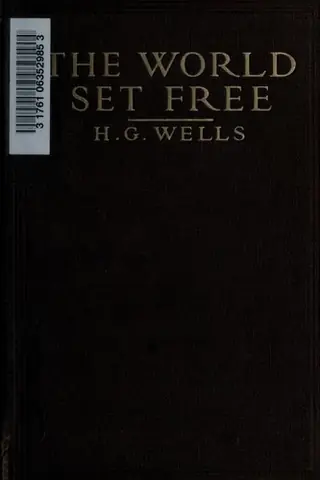
The World Set Free
a story of mankind
by H. G. Wells, Ellen Marriage · first published 1914
20% recommend73% neutral7% critical
https://archive.org/details/ElMundoSeLibertaH.G.Wells
Affiliate links. As an Amazon Associate I earn from qualifying purchases.
Mentions per year
What Hacker News says
Related books
 2021–2026
A Psalm for the Wild-Built
Becky Chambers
Recommended by 21 · mentioned by 2321 recommend · 23 mention21 recommend · 2321 recommend
 2011–2026
Imperial Earth
Arthur C. Clarke
Recommended by 2 · mentioned by 152 recommend · 15 mention2 recommend · 152 recommend
 2015–2026
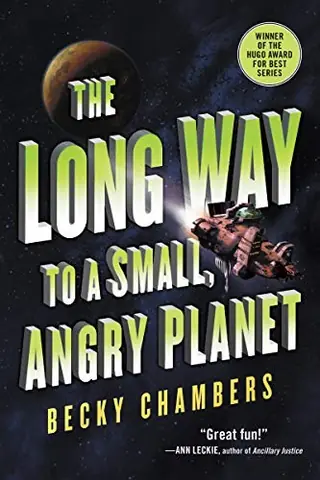
The Long Way to a Small, Angry Planet
Becky Chambers
Recommended by 24 · mentioned by 4024 recommend · 40 mention24 recommend · 4024 recommend
 2008–2026
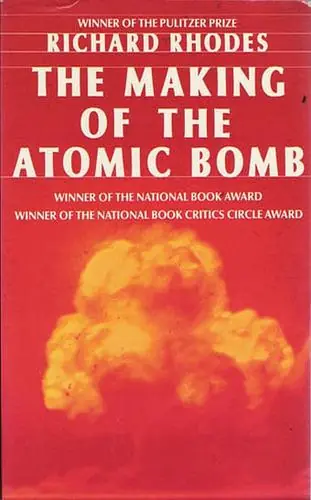
The making of the atomic bomb
Richard Rhodes
Recommended by 117 · mentioned by 161117 recommend · 161 mention117 recommend · 161117 recommend
 2010–2026
The Windup Girl
Paolo Bacigalupi
Recommended by 43 · mentioned by 6843 recommend · 68 mention43 recommend · 6843 recommend
 2009–2026
Candide
Voltaire
Recommended by 28 · mentioned by 8028 recommend · 80 mention28 recommend · 8028 recommend
 2021–2026
Project Hail Mary
Andy Weir
Recommended by 131 · mentioned by 221131 recommend · 221 mention131 recommend · 221131 recommend
The World Set Free - HG Wells (I wanted to put in the Shape of Things to Come but it doesn't quite make the cut)
on “Ask HN: What are your favorite books or essays written at least 100 years ago?” ↗Also relevant: “The World Set Free” by H.G. Wells (1913). It continues to stand the test of time, and addresses exactly the same issues as Schneier is discussing, but without the information systems approach (and proposes a different…
on “Bruce Schneier’s Plan to Reinvent Democracy” ↗Here's a back-tingles moment: the SLAM, with its open reactor - sans its H-bombs - is in principle almost exactly H.G. Wells' "Atomic Bombs"[1] from his The World Set Free. Radiation-jetting objects that bounce all over the place, blasting everything. That novel has a good claim to inventing the nuclear bomb, at least the concept of it. Leó Szilárd, after reading the novel…
on “Atomic Rocket” ↗You might like H.G. Wells’s utopia “The World Set Free.” It’s as relevant now as it was when it was written.
on “Solarpunk” ↗Sure we do. Go read H.G. Wells "The World Set Free". It's pre WWII, covers these exact topics, and could have been written yesterday. When it was written none of the problems were new. The book is a utopia, written in the hope that, with unlimited…
on “Talkin’ about a Revolution” ↗…global energy consumption. It's infuriating that rather than increasing the cost of energy by 1%, we decided to destroy the entire planet. It's even more infuriating now that I've read H.G. Well's "The World Set Free.", which was written in 1913, and covers the same topics as this article, but with a more savvy take on current day energy politics. The problems it focuses on haven't been addressed, and we're living…
on “All poverty is energy poverty” ↗…hook used to introduce the bigger story. But even so, he's not wrong. Szilard did have (or claimed to have) a sudden epiphay, which according to Rhodes was significantly informed by H. G. Wells' "The World Set Free", which does foretell nuclear war and "a way to the future, death into the world" etc.
on “Why They Called It the Manhattan Project (2007)” ↗Before nuclear weapons were built, the only examples of their large-scale destruction were in fiction. The World Set Free by H.G. Wells is the main example I can think of: https://en.wikipedia.org/wiki/The_World_Set_Free It got some of the details wrong (i.e. the atomic bombs exploded over a long period of time vs instantly),…
on “OpenAI Charter” ↗…Rutherford. Rutherford, known to many as the father of nuclear physics, was discussing the newly prophesied release of energy from atoms, most notably by science-fiction pioneer H G Wells in his book The World Set Free. In his baritone voice, Rutherford, acknowledged master of the atomic domain, dismissed this fanciful idea as nonsense. Any thought of releasing the energy locked in atoms, he said, was "moonshine". ...…
on “The Reluctant Prophet of Effective Altruism” ↗…kilowatt-hours. Kim Stanley Robinson uses the idea in his Re-Green-Blue Mars series, and Buckminster Fuller discussed the concept. The earliest reference of which I'm aware is H.G. Wells 1914 story The World Set Free, As Wells wrote: The world had already been put upon one universal monetary basis. For some months after the accession of the council, the world's affairs had been carried on without any sound currency…
on “What is money? (1913)” ↗The World Set Free by H.G. Wells is from about 1912is, I mean scifi could be considered far fetched but he isn't exactly an obscure author, radium was already a thing.
on “Japan has 33k businesses at least a century old” ↗…reactions are seldom mentioned. It got me thinking about what H.G. Wells (surely!) had to say on the topic. (Of course.) I ran across this: "H G Wells coined the term “atomic bomb” in his 1914 novel The World Set Free, which depicted a mid-20th-century war fought with radioactive bombs that exploded – and then kept exploding, poisoning the area with radiation." [https://theconversation.com/even-before-hiroshima-people-kne...]…
on “Creatures of the dawn: How radioactivity unlocked deep time” ↗…MP, but the first third (?) is about how nuclear physics developed in the early 1900s (Rutherford, the Curies, Fermi, etc) as well. Szilard was actually 'inspired' by H. G. Wells' (sci-fi?) novel The World Set Free: * https://en.wikipedia.org/wiki/The_World_Set_Free See also his: * https://en.wikipedia.org/wiki/The_Shape_of_Things_to_Come
on “Nuclear waste is a solved problem” ↗…(1975). You'll also find it in Kim Stanley Robinson's Mars Trilogy. Clarke seems all but certainly to have encountered the idea in the work of his own hero, H.G. Wells, where it is a major theme in The World Set Free (1914). (That's mentioned elswehere in this thread: <https://news.ycombinator.com/item?id=32725668>) The Nobel-prize laureate chemist Frederick Soddy advanced the notion in his own work in economics.…
on “All poverty is energy poverty” ↗…tottering, the stock exchanges were scenes of feverish panic;–this was the reverse of the spectacle, these were the black and monstrous under-consequences of the Leap into the Air. - H.G. Wells, The World Set Free (1914), speaking of the consequences of the coming availability of limitless energy production. https://www.fulltextarchive.com/book/the-world-set-free/ This book was about 100 years ahead of its time,…
on “The case for energy optimism” ↗