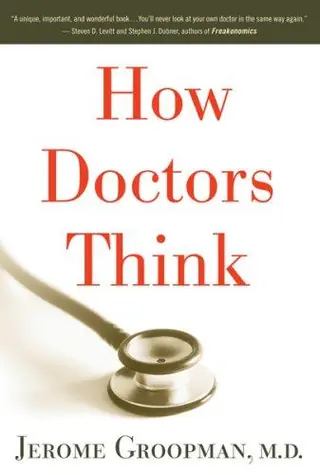
How Doctors Think
by Jerome Groopman · first published 2007
75% recommend25% neutral
Why HN recommends it
Examines how physicians reason and why misdiagnosis happens, including systemic flaws in medical practice. Suited to anyone curious about clinical judgment or working in healthcare.
Summarised by Claude from recommending comments
A physician discusses the thought patterns and actions that lead to misdiagnosis on the part of healthcare providers and suggests methods that patients can use to help doctors assess conditions more accurately.
Affiliate links. As an Amazon Associate I earn from qualifying purchases.
Mentions per year
What Hacker News says
Related books
 2009–2022
Better
Atul Gawande
Recommended by 12 · mentioned by 1912 recommend · 19 mention12 recommend · 1912 recommend
 2012–2025
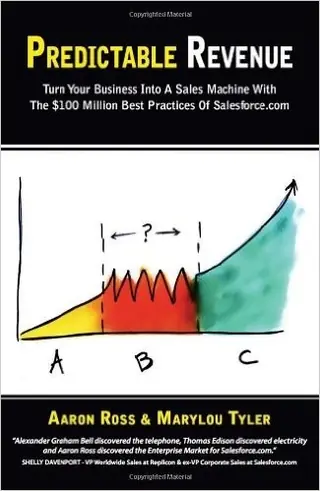
Predictable Revenue
Aaron Ross
Recommended by 23 · mentioned by 2923 recommend · 29 mention23 recommend · 2923 recommend
 2010–2026
The Idea Factory
Jon Gernter
Recommended by 94 · mentioned by 12194 recommend · 121 mention94 recommend · 12194 recommend
 2007–2026
Siddhartha
Hermann Hesse
Recommended by 138 · mentioned by 186138 recommend · 186 mention138 recommend · 186138 recommend
 2007–2026
Getting to yes
Roger Drummer Fisher, Bruce Patton, William Ury
Recommended by 105 · mentioned by 135105 recommend · 135 mention105 recommend · 135105 recommend
 2013–2026
The Martian
Andy Weir
Recommended by 117 · mentioned by 207117 recommend · 207 mention117 recommend · 207117 recommend
 2012–2026
The Power of Habit
Charles Duhigg
Recommended by 127 · mentioned by 191127 recommend · 191 mention127 recommend · 191127 recommend
 2015–2026
Sapiens
Yuval Noah Harari
Recommended by 201 · mentioned by 376201 recommend · 376 mention201 recommend · 376201 recommend
…medical outcomes are attributed to most, if not all forms of back surgery. Physical therapy outperforms most or all back surgery with much fewer side effects, etc. This is covered extensively in the book How Doctors Think (https://www.amazon.com/How-Doctors-Think-Jerome-Groopman/dp/...) as well as articles like this Ars Technica one: https://arstechnica.com/science/2017/02/doctors-lower-back-p.... You see the same with…
on “An epidemic of unnecessary and unhelpful medical treatments” ↗Similar topic: "How Doctors Think" (http://www.amazon.com/How-Doctors-Think-Jerome-Groopman/dp/0...) is a great book. Amazon blurb: "How Doctors Think is a window into the mind of the physician and an insightful examination of the all-important…
on “When Patients Read What Their Doctors Write” ↗…Non-fiction: Predictable Revenue - Aaron Ross How We Got to Now: Six Innovations That Made the Modern World - Steven Johnson The Idea Factory: Bell Labs and the Great Age of American Innovation - Jon Gertner How Doctors Think - Jerome Groopman Frankenstein's Cat: Cuddling Up To Biotech's Brave New Beasts - Emily Anthes Zero to One - Peter Thiel
on “Ask HN: What are some good books you have recently read?” ↗The Four Steps to the Epiphany - Steve Blank Steve Jobs - Walter Isaacson Artificial Life - Steven Levy On Writing - Stephen King Machine Learning for Hackers - Drew Conway and John Myles White How Doctors Think - Jerome Goopman Cholesterol Clarity: What The HDL Is Wrong With My Numbers? - Jimmy Moore & Eric C. Westman Barbarians at the Gate: The Fall of RJR Nabisco - Bryan Burrough & John Helyar
on “Ask HN: Books with a high signal to noise ratio?” ↗On the topic of "Doctor Fallibility" there's a really good book that I recommend to pretty much everybody: How Doctors Think by Jerome Groopman. There's a lot of info in there on how and why doctors make mistakes and, more to the point, information on how you - as a patient - can avoid being the victim of a mistake (more specifically,…
on “You Will See the Doctor’s Fallibility Now” ↗The book How Doctors Think makes that point very explicit and provides some useful tips for working with your doctor(s) to get the best treatment. I highly recommend it to anybody and everybody, FWIW. Doctors are not infallible.…
on “Ask HN: If doctors are right, why would you still research online?” ↗…the other day that it takes on average seven years to correctly diagnose a medical condition. Some diseases, like celiacs, have an average time until diagnosis of 10 years. If you haven't already read How Doctors Think, it's truly horrifying. Unless you have something like strept throat, you're generally pretty screwed even if you have great medical insurance. And I'm speaking from personal experience here; about three…
on “Cost of Health Care By Country, as Compared to Life Expectancy” ↗…opportunities. Read "The Power of Habit" because it's an incredible book, but then also read books specific to the domains to which you're applying those skills. Working for a healthcare company? Read "How Doctors Think". Jane Jacobs for urban planning, Foucalt for history... It's wonderful that you (and likely half of the people on HN) have read many of these books, and I think having this list is useful for people…
on “Founder Books” ↗If you find this article interesting you might consider the book "How Doctors Think". It's basically an entire book dedicated to the subject of misdiagnosis and how our modern medical system has some systematic flaws that contribute to it. If I think about just how often I'm incorrect…
on “Most Americans will get a wrong or late diagnosis at least once in their lives” ↗Your comment makes no sense. I didn't say never. Anyway, I found what I was looking for; I had read an excerpt of a book called How Doctors Think, where the author discusses the availability heuristic: In the theory, "availability" is defined as the tendency to judge the likelihood of explanation for an event by the ease with which relevant examples…
on “Hunting Down My Son's Killer” ↗The problem of "how doctors think" was well-documented over 15 years ago by Jerome Groopman. As a result, I think the problem is well understood, at least by those who are aware of books like Groopman's. Unfortunately, his message hasn't…
on “Auto-brewery syndrome in a 50-year-old woman” ↗…doctor once every 3 months... do you think she is going to remember every detail that you told her last time, without mentally conflating something with something influenced by another patient. The book How Doctors Think talks a lot about how cognitive biases like "availability bias" affect doctors. Given all that, you'd be nuts to go in with a mindset that "the doctor is always totally informed, and always right".…
on “Ask HN: If doctors are right, why would you still research online?” ↗"I'm happy to say I have found a doctor who does practice the scientific method. Unfortunately, not all do." In the book How Doctors Think, they show a statistic that the vast majority of doctors make up their minds about what's wrong with you in the first thirty seconds and then never reconsider no matter what you say or the evidence suggests.…
on “Surgeons in England to adopt checklists - expect to halve death rate” ↗…participated in lots of school clubs or whatever. This seems like more or less a recipe for selecting candidates with low intellectual curiosity. And as for empirical evidence, I believe it's also the book How Doctors Think book that quotes the statistic that the vast majority of doctors couldn't name a single finding published in their field's leading journal within the last year.
on “Cost of Health Care By Country, as Compared to Life Expectancy” ↗…death camps." Well I mean it's not like I'm making this up, it's what the IOM and the AMA are saying. As well as the Commonwealth Fund, the NEJM, and basically every other credible source. Having read How Doctors Think and other similar books, I realize that much of medicine is very difficult, and there are good reasons for why things go wrong sometimes. But at the same time, doctors really shouldn't be cutting off…
on “How to stop hospitals from killing us” ↗