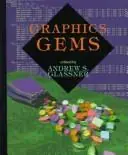
Graphics gems
by Andrew S. Glassner · first published 1990
58% recommend38% neutral4% critical
Why HN recommends it
Short, self-contained chapters on practical graphics tricks and algorithms, such as quaternions, fast square root and rational approximation. Suits graphics and game programmers who like dipping into a reference.
Summarised by Claude from recommending comments
Affiliate links. As an Amazon Associate I earn from qualifying purchases.
Mentions per year
What Hacker News says
Related books
 2008–2025
Computational Geometry in C
Joseph O'Rourke
Recommended by 3 · mentioned by 33 recommend · 3 mention3 recommend · 33 recommend
 2009–2026
Game Programming Gems
Mark DeLoura
Recommended by 8 · mentioned by 198 recommend · 19 mention8 recommend · 198 recommend
 2010–2026
Physically Based Rendering
Matt Pharr, Greg Humphreys, Wenzel Jakob
Recommended by 92 · mentioned by 10992 recommend · 109 mention92 recommend · 10992 recommend
 2008–2026
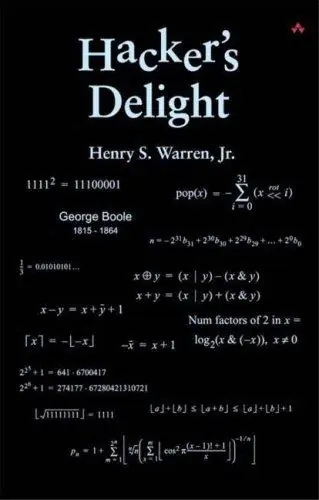
Hacker's Delight
Henry S. Warren Jr.
Recommended by 105 · mentioned by 142105 recommend · 142 mention105 recommend · 142105 recommend
 2007–2026
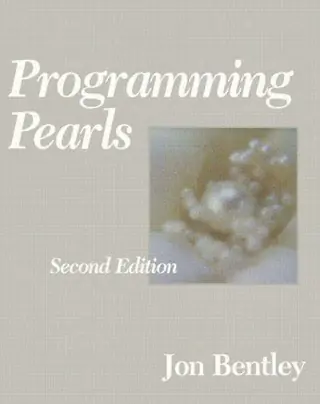
Programming Pearls
Jon Bentley
Recommended by 158 · mentioned by 245158 recommend · 245 mention158 recommend · 245158 recommend
 2007–2026
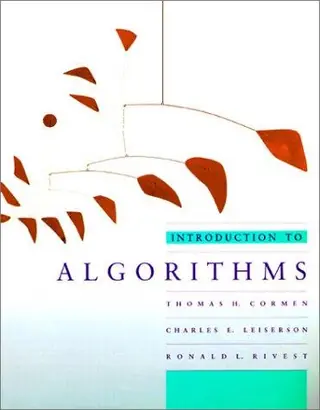
Introduction to Algorithms
Thomas H. Cormen, Charles E. Leiserson, Ronald L. Rivest, Clifford Stein
Recommended by 274 · mentioned by 712274 recommend · 712 mention274 recommend · 712274 recommend
 2007–2026
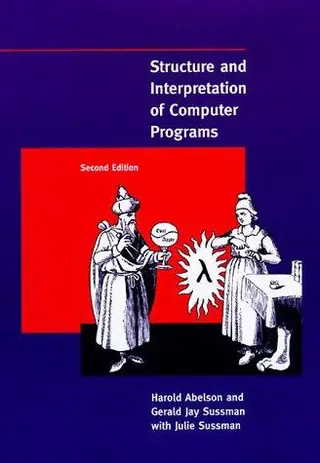
Structure and Interpretation of Computer Programs
Harold Abelson, Gerald Jay Sussman, Julie Sussman
Recommended by 347 · mentioned by 602347 recommend · 602 mention347 recommend · 602347 recommend
 2007–2026
The art of computer programming
Donald Knuth
Recommended by 336 · mentioned by 1,125336 recommend · 1,125 mention336 recommend · 1,125336 recommend
Look for the original Graphics Gems I and II books (circa 1991) https://www.glassner.com/portfolio/graphics-gems/
on “Show HN: Old School Graphics Algorithms” ↗Back in the 90s there was a series of books "Graphics Gems" that was a great resource in learning these tricks. Most people are further removed from drawing directly into a frame buffer today, https://www.amazon.com/Graphics-Gems-Andrew-S-Glassner/dp/01...
on “Why is this C++ code faster than my hand-written assembly (2016)” ↗As a sidenote that "someone" is Andrew Glassner [0] :) - i.e. the editor of the venerable Graphics Gems series and much else. The books you refer to are here https://www.glassner.com/portfolio/deep-learning-from-basics... As another examples Google's Filament PBR renderer has beautiful documentation written…
on “Ask HN: What software should I use to write a textbook?” ↗…interested in networking, any of the classic "TCP/IP Illustrated Vols I/II/III", W. Richard Stevens, [3] contain a ton of C code to implement components of TCP/IP. If you are interested in Graphics, then "Graphics Gems", Andrew Glassner [4] is a good source. "An Introduction to GCC", Brian Gough, [5] to understand the tooling and its various bells and whistles. My learning swimming by jumping into the deep end of…
on “Ask HN: How do I learn C properly?” ↗…https://en.wikipedia.org/wiki/Alan_W._Paeth And his original web page that I linked to, now via archive.org: https://web.archive.org/web/20050228223159/http://people.ouc... If you liked this trick, check out Alan Paeth's "Graphics Gems" series of books. Kudos and thanks to the OCF at UC Berkeley which has hosted my web page there for more than a quarter century with just about zero maintenance on my part. And thanks for the trip down…
on “Rotation of Sprites Using Three Shears” ↗I would submit that the “Graphics Gems” series of books does document a lot of rendering techniques in their historical context. They were written to be current for practitioners at the time, but the connections are drawn. Similarly Michael…
on “Let's Not Dumb Down the History of Computer Science (2014)” ↗Track down the Graphics Gems series of books, it's what most of the game devs back in that era used to get tricks like fast square root, etc. https://www.realtimerendering.com/resources/GraphicsGems/
on “How Duke Nukem II’s parallax scrolling worked” ↗…(these books are from the early 2000s) and 2) some of the content can be found online for free. They're still good resources to have on your shelves IMO. In the same vein, I recommend the GPU Gems and Graphics Gems for realtime graphics programming. --- "Programming Game AI by Example" by Buckland is a great, hands on, practical approach to game programming. It is not academic or theoretical by any means, but…
on “The Game AI Programmer's Bookshelf” ↗…different algorithms. So learning only a few most common is simply PERFECT! 2). For all the "hard-times" buy a handbook with things that you think you might need in future (for me it's whole series of Graphics Gems :) 3). To get some grip on what you missed - try the MIT Video Courses. They have an "Introduction to Computer Science". The course is very cool and easy to follow, and should cover some of your gaps.…
on “Ask HN: What if I missed the good stuff in my undergraduate education?” ↗You're welcome! Scratchapixel was new to me, so thanks for that link. PBRT (which you already have) is definitely a favorite. You also cited Graphics Gems IV but I enjoy dipping into all of them. Other suggestions: * http://tog.acm.org/resources/RTNews/html/ (Somewhat dead, but the archives are great) * http://ompf2.com/ (Active, lots of ray tracing…
on “Deciphering the Business Card Raytracer” ↗…precisely as possible with a ratio of two integers that are, themselves, as small as possible. I was writing code to program an RF synthesizer chip the other day and found myself going back to an old Graphics Gems chapter by Ken Shoemake, after discarding three or four newer implementations of rational approximation solvers that I wasn't happy with for various reasons. Ken's application was for intersection testing…
on “What’s So Great about Continued Fractions?” ↗…what a 4x4 matrix multiply can do, you have most of the key ideas. You need that to use OpenGL effectively. Actually, you only need about 10% of each of those areas of math, but you do need that 10%. "Graphics Gems" has some good background. (Physics engines, though... I used to work on that, and struggled through two-volume books on nonlinear differential equations.)
on “Pixar in a Box – Khan Academy” ↗Ken Shoemake also has an article in Graphics Gems IV. Section III.1 page 175. Theory and Sample program included. This is the only thing I needed to read to understand quaternions.
on “Quaternions: A Practical Guide” ↗There is a nice article providing more information about gamma in Graphics Gems 3 Chapter 24, available at https://developer.nvidia.com/gpugems/gpugems3/part-iv-image-...
on “Linearly interpolating pixels that are in a gamma encoded color space” ↗…https://www.nvidia.com/en-us/drivers/gpu-gems-home/ Free Computer Books https://freecomputerbooks.com/ Other free book sites https://freecomputerbooks.com/otherBooks.html Some computer & Machine Learning Free Books Creative Commons License Graphics Gems Series Use ayour favorite search engine https://www.intechopen.com/
on “Ask HN: Learn Graphics Programming, Recommendations?” ↗