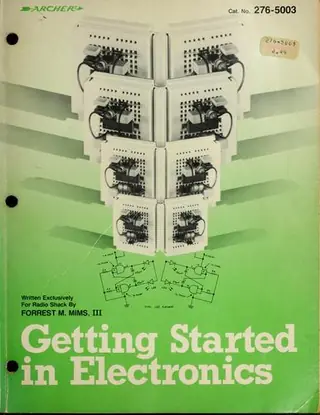
Getting started in electronics
by Forrest M. Mims · first published 1983
74% recommend21% neutral5% critical
Why HN recommends it
Accessible, hand-drawn introduction to electronics with friendly cartoons and simple hobbyist projects; suits kids, beginners and anyone starting from zero before moving to heavier texts like Art of Electronics.
Summarised by Claude from recommending comments
Affiliate links. As an Amazon Associate I earn from qualifying purchases.
Mentions per year
What Hacker News says
Related books
 2018–2026
Engineer's mini-notebook
Forrest M. Mims
Recommended by 4 · mentioned by 64 recommend · 6 mention4 recommend · 64 recommend
 2009–2026
Practical Electronics for Inventors
Paul Scherz
Recommended by 51 · mentioned by 6451 recommend · 64 mention51 recommend · 6451 recommend
 2020–2022
Electricity Demystified
Stan Gibilisco
Recommended by 1 · mentioned by 21 recommend · 2 mention1 recommend · 21 recommend
 2008–2026
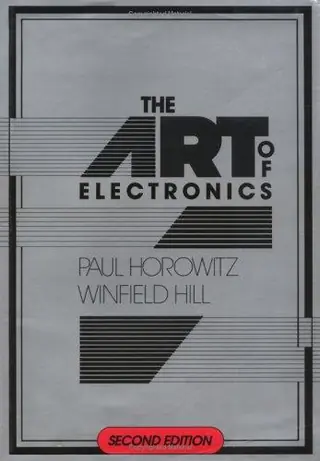
The art of electronics
Paul Horowitz, Winfield Hill
Recommended by 153 · mentioned by 230153 recommend · 230 mention153 recommend · 230153 recommend
 2015–2025
How to diagnose and fix everything electronic
Michael Jay Geier, Norman Gjord
Recommended by 4 · mentioned by 44 recommend · 4 mention4 recommend · 44 recommend
 2009–2025
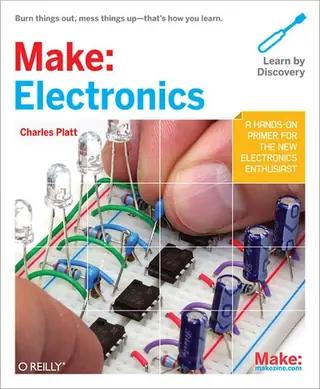
Make
Charles Platt
Recommended by 15 · mentioned by 1615 recommend · 16 mention15 recommend · 1615 recommend
 2011–2026
Foundations of analog & digital electronic circuits
Anant Agarwal
Recommended by 5 · mentioned by 95 recommend · 9 mention5 recommend · 95 recommend
 2009–2020
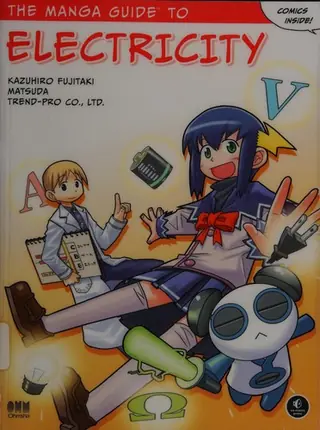
The Manga Guide to Electricity
Kazuhiro Fujitaki
Recommended by 2 · mentioned by 52 recommend · 5 mention2 recommend · 52 recommend
Step 1: Buy Getting Started in Electronics by Forrest M. Mims, or any other book by him. Step 2: Build all the projects in his books. You'll only need a proto board and a few other cheap components. You'll build up an intuition in electronics…
on “Show HN: Learn how to build electronics with monthly kits” ↗Do yourself a favour and learn about electronics then before starting to debate what is possible in electronics with people who design and build electronics. 'getting started in electronics' by forrest mims is not a bad starting point. 10kv can be perfectly safe and is in the same ballpark as the static charges you get from nylon sweaters. Also, funny you should mention nuclear reactors,…
on “Richard Stallman: How I do my Computing” ↗I highly recommend Getting Started in Electronics by Mims. It's widely considered a classic for getting kids/young people interested in electricity.
on “Ask HN: What books for beginners in electronics and programming” ↗I learned a lot about the basics with "Getting started in Electronics" by Forrest M. Mims III, it's very (very) accessible and I find the drawings very amusing. Or else you have the Bible of the trade, or "The Art of Electronics" by Paul Horowitz and Winfield Hill that…
on “How to turn an Arduino-based proof of concept into a final prototype” ↗Getting Started in Electronics by Forrest Mims III is a good one for a gentle introduction. But the standard bible, which is also a great source for beginners, is the Art of Electronics by Horowitz & Hill (just came out with 3rd edition).…
on “Why Learn Basic Electronics? [video]” ↗How deep do you want to go? There's hobbyist books like Forrest Mims's classic "Getting Started in Electronics" or the more recent "Practical Electronics For Inventors". For a more in-depth treatment, you might take a look at Horowitz and Hill's "Art of Electronics".
on “Good basic circuit design books?” ↗Although not quite a comic, Forrest Mims' Getting Started in Electronics is considered a classic. http://mightyohm.com/blog/2008/12/the-greatest-electronics-b... Citizen Engineer is a comic book / zine / electronics kit. Unfortunately, they haven't released a volume 2 yet.…
on “Soldering is easy - 7 page comic book about how to solder” ↗Buy this. - Getting Started in Electronics - by Forrest M. Mims, III. - http://www.w5yi.org/catalog_details.php?pid=34&sort=21 It is thoroughly excellent and the electrons all have little faces.
on “World's Simplest Electric Train [video]” ↗Getting Started in Electronics by Forrest Mims III. It's got happy little pictures of electrons. :)
on “The Art of Electronics, 3rd Edition, to be released April 2015” ↗Is there any chance you (William) could add hand-drawn illustrations and flow-charts? :) This makes a book outright welcoming IMHO. I loved that style in Grokking Algorithms (or even in Getting Started in Electronics by Forrest M. Mims III, if you want a distant example). Thanks for your initiative, will buy the book soon as it is available.
on “Grokking Deep Learning” ↗Forest M. Mims III was a master at using cartoons in his electrical engineering books. Just look at the happy and sad lightbulbs on page 1 of Getting Started in Electronics[1]. Using cartoons a great way to disarm the reader, especially children, into believing the subject matter will be understandable. I don't know if Mims used cartoons to make engineering appeal to children,…
on “How to teach technical concepts with cartoons” ↗…protoboard - common resistor pack - common capacitor pack - Some basic components like 555 timers, flip flops, op amps, leds, variable resistors/knobs, small speaker, etc. For books, I highly recommend Getting Started in Electronics, Forrest Mims - [1] Spend some money and get a good power supply, soldering iron, and multimeter. You need an oscilloscope as well but you don't need to break the bank. You can get started without…
on “Ask HN: How to self-learn electronics?” ↗Getting Started in Electronics by Forrest Mims. The entire book is hand written and hand drawn. I think this is why the book is concise and direct. It is a work of art.
on “Ask HN: Your favourite tutorial for total beginners?” ↗…this is the first result (the reason I came to comment.) I've tried and failed many times to pick up a fundamental, from the ground-up understanding of electronics and electrial theory. Forrest Mims' "Getting started in electronics" was good, but the All About Circuits text book had the depth and accessibility and I was looking for. And it's free!
on “Ask HN: What are some good resources to learn how electricity works?” ↗Depending on the level of electronics background, I have great luck have people fall in love with the subject using Forrest M. Mims III authored books. Specifically with the "Getting Started in Electronics" and his "Engineer's Mini-Notebook" series.
on “My self-study plan for electrical engineering” ↗