Federalist PAPERS
by Alexander Hamilton, John Jay, James Madison · first published 1977
14% recommend82% neutral4% critical
Why HN recommends it
Essays by Hamilton, Madison and Jay explaining the reasoning behind the Constitution; Nos. 10, 46 and 51 analyze factions, checks and balances, and divided power. Useful for anyone wanting the founders' arguments.
Common criticism: Some argue the essays are dated and not a reliable guide to modern constitutional intent.
Summarised by Claude from recommending comments
Affiliate links. As an Amazon Associate I earn from qualifying purchases.
Mentions per year
What Hacker News says
Related books
Economic Interpretation of the Constitution of the United States
Charles Beard
Recommended by 2 · mentioned by 22 recommend · 2 mention2 recommend · 22 recommend
 2009–2026
Second Treatise of Government
John Locke
Recommended by 5 · mentioned by 205 recommend · 20 mention5 recommend · 205 recommend
 2010–2026
Discourses on Livy
Niccolò Machiavelli, Harvey C. Mansfield, Nathan Tarcov, Alissa Ardito
Recommended by 11 · mentioned by 2311 recommend · 23 mention11 recommend · 2311 recommend
 2009–2025
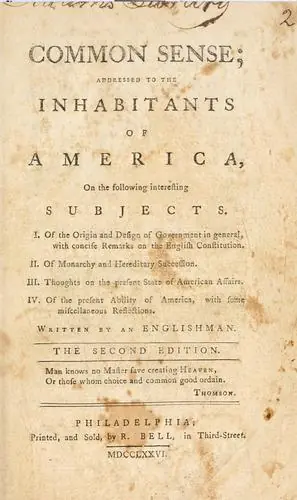
Common Sense
Thomas Paine
Recommended by 9 · mentioned by 599 recommend · 59 mention9 recommend · 599 recommend
 2009–2026
Democracy in America
Alexis de Tocqueville
Recommended by 27 · mentioned by 7627 recommend · 76 mention27 recommend · 7627 recommend
 2008–2026
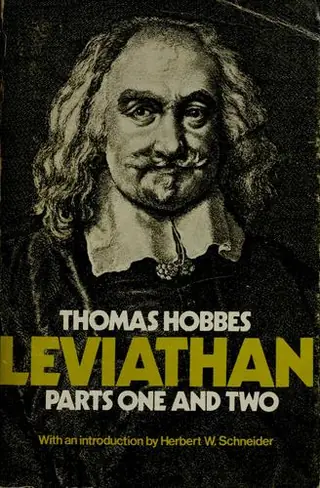
Leviathan
Thomas Hobbes
Recommended by 22 · mentioned by 10322 recommend · 103 mention22 recommend · 10322 recommend
 2008–2026
On Liberty
John Stuart Mill
Recommended by 45 · mentioned by 9545 recommend · 95 mention45 recommend · 9545 recommend
 2008–2026
Mein Kampf
Adolf Hitler
Recommended by 15 · mentioned by 53515 recommend · 535 mention15 recommend · 53515 recommend
…many accounts pretty culturally uniform and egalitarian/meritocratic, at least for citizens. * * * I think the best analysis I know is still Tocqueville’s Democracy in America. I also recommend The Federalist Papers, particularly Nos. 10 and 51, for a pragmatic solution to these kinds of problems, based on the decades of first-hand experience some smart blokes like Madison and Jefferson had trying to run fledgling…
on “Medieval Iceland and the Absence of Government” ↗A fantastic find. If you read the Federalist Papers, it quickly becomes clear that the founders were not so much wide-eyed idealists as many Constitution-thumpers would have it, but a fairly cynical bunch who were as worried about the inability of people…
on “The Fallacy of Human Freedom” ↗…already have the National Guard [1] --aka militias-- which provide ample check from the State level against a would-be dictatorship at the Federal level. For further self-education, one may want to read The Federalist Papers, in particular no 46 written by Madison (see [2] for a discussion of the issue). [1] https://en.wikipedia.org/wiki/National_Guard_of_the_United_S... [2] http://tracinskiletter.com/2018/03/21/the-advantage-of-being...
on “Google Workers Urge C.E.O. To Pull Out of Pentagon A.I. Project” ↗…millennia. I'm just reading a wonderful book that it's based on not trusting people and which, nevertheless, has had an immense positive influence, I'm talking about the collection of articles called "The Federalist Papers" by Madison, Hamilton and Jay.
on “You Can't Have Denmark Without Danes” ↗…democracies suggest that bicameralism is a benefit (ex http://wikisum.com/w/Lijphart:_Patterns_of_democracy). Again, that's not saying that's what they were considering then, but also read some of the Federalist Papers (Madison in particular) and how much they were weighing factions/balance of power into some of these solutions.
on “The Revolution Against the Revolution: Looking Back on Shays’ Rebellion” ↗…oversight of the people's arms was not only not the intent in using the phrase in the 2nd amendment, it was precisely to render the government powerless to do so that the founders wrote it. Read the Federalist Papers (specifically #46), in which Hamilton, Madison, etc, give significant insight into the intent behind the Amendments. It is plain that they intended the 2nd Amendment to not restrict the people's ability…
on “The 2nd amendment allows gun control. Scalia didn't” ↗…the government for redress of grievances” in the First Amendment. Big-moneyed special interest and influence was specifically something that James Madison was concerned about. I recommend reading "The Federalist Papers." [1] https://www.opensecrets.org/lobby/clientsum.php?id=D00000059... [2] https://www.opensecrets.org/orgs/lobby.php?id=d000000088 [3] https://www.opensecrets.org/orgs/summary.php?id=d000000082
on “H&R Block and Intuit Lobbying Against Simpler Tax Filing (2017)” ↗The best interpretation of this type of dispute comes from the Federalist Papers #10, written in the (about-to-be) USA by James Madison in 1787. I'll paraphrase it here, but a lot gets lost in simplifications and it might be best to just read it: http://www.constitution.org/fed/federa10.htm…
on “Democracy is hard” ↗…consent. Seriously this is not some strange thing I should have to explain -- these issues were all debated during the discussions surrounding the adoption of the constitution, as you can read in the Federalist Papers. See especially no. 10. https://founders.archives.gov/documents/Madison/01-10-02-017... It is why we do not live in a democracy, but in a Federal Republic. The house is the hotbed of populism, that's…
on “How credit cards make money” ↗…differences, etc. * * * The why is in my opinion best described in Machiavelli’s Discourses on Livy, Montesquieu’s Spirit of the Laws, Tocqueville’s Democracy in America, and Madison/Hamilton/Jefferson’s Federalist Papers (and you might look at Locke, Rousseau, Hobbes, etc. too if you’re feeling extra ambitious). The complexities are somewhat longer and more involved than is appropriate for this venue. If you haven’t…
on “Too Rich to Live?” ↗I'm rereading the Federalist Papers right now, as it happens. I can't help thinking that most of HN would dismiss Hamilton and Madison as 'statist thugs' if I were to start quoting or paraphrasing the views of those gentlemen on topics…
on “Email exchange between Edward Snowden and former GOP Senator Gordon Humphrey” ↗It's important to remember the context in which the Federalist Papers were written. The Constitution had been written but not yet adopted, and American politics was divided between Federalists, who believed that the Constitution was fine as it was and should be adopted…
on “Tech and Liberty” ↗…the US is genuinely divided, but I object to a tiny tiny minority with outsized power. Contrary to popular belief, James Madison was actually against too much minority power and had a few rants in the Federalist Papers about how democratic systems should be majority rule-only
on “The bulldozer vs. vetocracy political axis” ↗…Militia, being necessary to the security of a free State, the right of the people to keep and bear Arms, shall not be infringed." I am not a historian but I believe that this quote from James Madison in The Federalist Papers helps give some context to the second amendment: "Besides the advantage of being armed, which the Americans possess over the people of almost every other nation, the existence of subordinate governments,…
on “Mental illness, mass shootings, and the politics of American firearms (2015)” ↗…horse (and I highly doubt it took a week from Monticello to Philadelphia), they designed things so that only the most capable citizens would be elected to leadership. They say this explicitly in the Federalist Papers (ok, maybe that bit was Hamilton, but still). They rejected direct democracy: by framing the nation as a "republic", with the assumption that only landowners would vote, through the electoral college,…
on “Hyperarchy: Democracy for the Digital Era” ↗