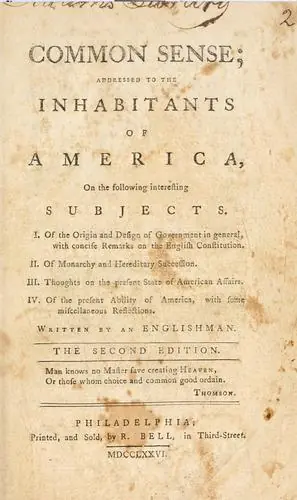
Common Sense
by Thomas Paine · first published 1776
15% recommend85% neutral
Why HN recommends it
Short, forceful pamphlet that argues for American independence in plain language. It shaped the revolutionary mood and offers a clear look at the origins of American political thought.
Summarised by Claude from recommending comments
Throughout history, some books have changed the world. They have transformed the way we see ourselves – and each other. They have inspired debate, dissent, war and revolution. They have enlightened, outraged, provoked and comforted. They have enriched lives – and destroyed them. Now Penguin brings you the works of the great thinkers, pioneers, radicals and visionaries whose ideas shook civilization, and helped make us who we are.
Affiliate links. As an Amazon Associate I earn from qualifying purchases.
Mentions per year
What Hacker News says
Related books
The State
Franz Oppenheimer
Recommended by 1 · mentioned by 31 recommend · 3 mention1 recommend · 31 recommend
 2008–2025
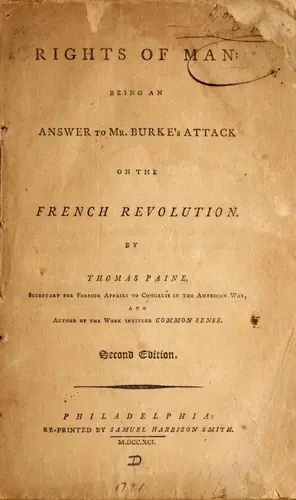
Rights of Man
Thomas Paine
Recommended by 4 · mentioned by 224 recommend · 22 mention4 recommend · 224 recommend
Moby Dick by Herman Melville
Herman Melville
Recommended by 5 · mentioned by 125 recommend · 12 mention5 recommend · 125 recommend
 2007–2025
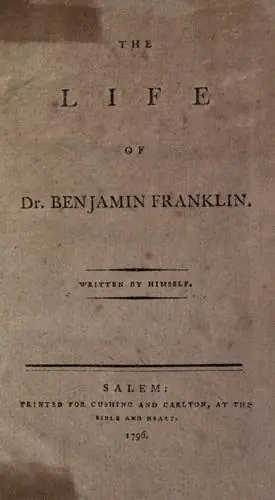
The Autobiography of Benjamin Franklin
Benjamin Franklin
Recommended by 23 · mentioned by 3623 recommend · 36 mention23 recommend · 3623 recommend
 2010–2026
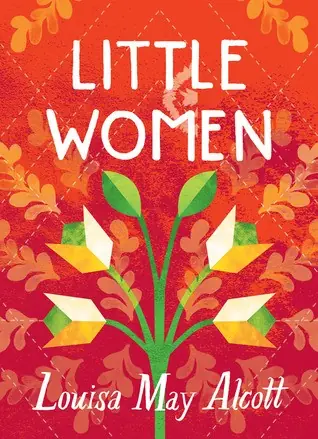
Little Women
Louisa May Alcott
Recommended by 4 · mentioned by 154 recommend · 15 mention4 recommend · 154 recommend
 2009–2026
Democracy in America
Alexis de Tocqueville
Recommended by 27 · mentioned by 7627 recommend · 76 mention27 recommend · 7627 recommend
 2010–2024
Civil Disobedience
Henry David Thoreau
Recommended by 5 · mentioned by 235 recommend · 23 mention5 recommend · 235 recommend
 2012–2026
Dead Souls
Nikolaĭ Vasilʹevich Gogolʹ
Recommended by 14 · mentioned by 2714 recommend · 27 mention14 recommend · 2714 recommend
…very most influential book is the King James ("Authorized") English-language translation of the Bible (not on the list, which apparently focuses on books published in America). I think Thomas Paine's Common Sense (1776) (which I have read, and which relies heavily on the Bible for its argument) was also very influential.
on “Books That Shaped America” ↗…the doing of one or two men like Clive or Hastings. Let me close my argument by asking you to read a document that warned of British intentions to the Americans just before the American revolution - Common Sense by Thomas Paine. All the things he warned America about the British crown came true for India, whereas America which was also not united at the time - there were more loyalists than revolutionaries and…
on “Is There Anything Good About Men?” ↗…Professionally: Peter F. Drucker's books. Personally: "Meditations" by Marcus Aurelius, "A Treatise of Human Nature" by David Hume, "The Law" by Frédéric Bastiat, "Autobiography" by Benjamin Franklin, "Common Sense" by Thomas Paine, "Gespräche mit Goethe" by Johann Peter Eckermann, "The Old Regime and the Revolution" Alexis de Tocqueville, "On Liberty" by John Stuart Mill, "The Man Versus the State" by Herbert…
on “Ask HN: Non-tech books that have helped you grow professionally?” ↗…however much they may have initially limited the definition of a citizen. They expected the citizens to make reasoned choices, to be educated, to be well-read and to be rational actors. I highly suggest 'Common Sense' by Tom Paine.
on “The United States’ Unamendable Constitution” ↗For the most part, I like your list better, but I do think everyone should read the works of Thomas Paine. In particular, I think that every single American should have to read Common Sense first in high school, and then annually as a part of registration process for voting (Along with the Declaration of Independence, the Constitution, and the Bill of Rights.) I also happen to think that…
on “Neil DeGrasse Tyson’s Eight Books Everyone Should Read” ↗A great list. I'd also add Common Sense by Thomas Paine, which was a huge influence in the zeitgeist of the time.
on “Why Big Tech Is More Competent Than the US Government” ↗Moneyball is another great one for baseball fans. Common Sense by Thomas Paine is another good one for people interested in American politics.
on “Ask HN: What are some must read books?” ↗…(austerity measures). Incidentally, a very similar issue came up during the French Revolution (Bastille) at least according to Thomas Paine who wrote about it in passing in his Rights of Man (1770s). That and Common Sense are both very interesting reads if you can make the time. In my opinion, power should be entrusted to the people's representation in a republic with important limitations enforced independently to preserve…
on “Risky bank debt makes customers safer” ↗…are a few favorites that didn't just win their year; they stood out for centuries. 70 AD: The Gospel of Mark. Chronologically the first book of the New Testament, and look what that unleashed 1778: Common Sense by Thomas Paine. The boldest, fiercest justification for the American Revolution, and one that's still a touchstone today for anyone with a deep interest in the theory or practice of democracy. 1963:…
on “The Best Essay” ↗…beginning to wane and they are going down kicking and screaming. We will see what is ultimately required to root them out entirely. Just think what would have become of the revolution if Thomas Paine's Common Sense went unread because everyone was too busy watching TV broadcasted by what were indeed 4 separate entities, but entities all friendly to the Crown which had already allotted them privileges and protection,…
on “The next SOPA” ↗…education in the US, the rise of the religious right, and other factors is in my view kinda silly. " The newspaper and printing press back in the day was the social media equalizer. What about pamphlets like Common Sense by Thomas Paine? Was education more common back in those times than today? The average American in a day reads more information/published material than an "American" back in 18th century, or even 19th…
on “Why the past 10 years of American life have been uniquely stupid” ↗…Kipling Non-Fiction: "The Art of War" by Sun Tzu "The Republic" by Plato "Leviathan" by Thomas Hobbes "Democracy in America" by Alexis de Tocqueville "The Prince" by Niccolò Machiavelli "Common Sense" by Thomas Paine "The Communist Manifesto" by Karl Marx and Friedrich Engels "The Interpretation of Dreams" by Sigmund Freud "The Autobiography of Benjamin Franklin" by Benjamin Franklin "The…
…literally just been reading Kay's mini-book on the history of Smalltalk. Here's a quote on literacy: "Literacy, for example, is being able to fluently read and follow the 50 page argument in Paine's Common Sense and being able (and happy) to fluently write a critique or defense of it. Another kind of 20th century literacy is being able to hear about a new fatal contagious incurable disease and instantly know…
on “Mindstorms: Children, Computers, and Powerful Ideas (1980) [pdf]” ↗…new question. Even moving to agrarian living had growing pains. The best example philosophically detailing this, I think, is the work by Thomas Paine called Agrarian Justice. (that's the same Paine as Common Sense, Rights of Man, and Age of Reason) Agrarian Justice is a short pamphlet that I think everyone should read. It details in simple terms how civilized society is different from those who live off the land…
on “Confessions of A Job Destroyer” ↗Thomas Paine's "Common Sense" and "The American Crisis" would have been considered "misinformation", "propaganda" or "harmful content". These are considered "the two most influential pamphlets at the start of the American Revolution,…
on “Platforms' current attempts to regulate misinformation amplify opinion power” ↗