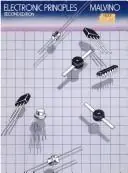
Electronic principles
by Albert Paul Malvino · first published 1973
10mentions
3recommended by
4HN commenters
2009–2026first – last mentioned
75% recommend25% neutral
Affiliate links. As an Amazon Associate I earn from qualifying purchases.
Mentions per year
What Hacker News says
Related books
 2016–2025
Learning the art of electronics
Thomas C. Hayes
Recommended by 14 · mentioned by 1914 recommend · 19 mention14 recommend · 1914 recommend
 2010–2025
Bebop to the Boolean boogie
Clive Maxfield
Recommended by 5 · mentioned by 65 recommend · 6 mention5 recommend · 65 recommend
 2008–2026
The art of electronics
Paul Horowitz, Winfield Hill
Recommended by 153 · mentioned by 230153 recommend · 230 mention153 recommend · 230153 recommend
 2009–2026
Practical Electronics for Inventors
Paul Scherz
Recommended by 51 · mentioned by 6451 recommend · 64 mention51 recommend · 6451 recommend
 2008–2026
The Elements of Computing Systems
Noam Nisan, Shimon Schocken
Recommended by 204 · mentioned by 268204 recommend · 268 mention204 recommend · 268204 recommend
I actually lost them. However, after an hour of digging through Schneier's blog, I found some of them. For analog and PCB, there's this: Electronic Principles 8th Ed Malvino http://www.amazon.com/Electronic-Principles-Albert-Malvino/d... Note: Look up the 2nd edition or something as I got it for $2. Principles of analog don't really change. Super-easy to read…
on “I decided to make a graphics card for my Amiga 2000” ↗This looked promising: https://contextualelectronics.com Also, get some edition of Malvino's Electronic Principles. Easiest to understand book I saw looking into electronics.
on “Build a Modern Computer from First Principles: Nand to Tetris Part II” ↗…http://www.amazon.com/Art-Electronics-Student-Manual-Exercis... The ARRL handbook is also a very practical intro text, but quite broad. [edit] Oh, another decent book that's aimed at technician level students: Electronic Principles by Malvino. I've got an older edition from my high school days, and it's a real easy read with lots of explanation of transistor circuits. http://www.amazon.com/Electronic-Principles-Albert-Malvino/d...
on “Ask HN: An alternative to Horowitz and Hill?” ↗Any of you doing that might try Malvino's Electronic Principles. An EE recommended it to me as explaining the stuff better than most with some practical advice mixed in. Got a relevant edition for under $3 on Amazon. Finally understand quite a few things. Still suffers…
on “Make: Electronics Book Bundle” ↗…book he stumbled on in a thrift store. I found one of its editions for $2 on Amazon. Great balance of explaining the basics, showing math, and practical advice of do's & don't. https://www.amazon.com/Electronic-Principles-Simulation-Albe... Also just found this. Use it as backup copy if you buy the book. http://www.talkingelectronics.com/Download/Malvino_Electroni...
on “Show HN: Learn how to build electronics with monthly kits” ↗…mind). At the time I had a music degree and very little undergraduate mathematics and only high-school physics. More recently I've been dabbling with electronics again. Someone recommended Malvino's "Electronic Principles" (I bought the 5th Edition second hand), which I found much clearer for circuit theory than AoE. Sedra and Smith will probably be my next purchase but I doubt it should be your first. Also, "beginner"…
on “The Art of Electronics (2015)” ↗…outside university both on line and in person. If we're talking books, get a second hand copy of Grob's "Basic Electronics." Once that's covered you can move on to semiconductors. I can recommend Malvino's "Electronic Principles," but this book won't teach you about resistors, capacitors and inductors. After that I think the Art of Electronics would be approachable. And also more specialised topics like digital design or operational…
on “Project Patchouli: Open-source electromagnetic drawing tablet hardware” ↗…of the basics: http://nand2tetris.org/book.php For analog electronics and PCB's, the latest list of books I found was this: http://www.circuitstoday.com/4-great-books-to-study-basic-el... Malvin's Electronic Principles, which I got for $2 on Amazon, was also much more readable than Horowitz and Hill. Another thing to know is resources are usually almost all hands-on or all theory. Gammel's Contextual Electronics course…
on “Ask HN: What are hardware development learning web tutorials?” ↗I don't know crap about analog electronics. Just got Electronic Principles by Malvino as a start. Authors explanation seems clearer than anything I've seen so far. Even contradicts some online descriptions. So, I downloaded your book. Not time for deep explanations for now…
on “How transistors really work (1995)” ↗Electronic Principles, Gray & Searle, 1969 edition. https://archive.org/details/ElectronicPrinciples All explanations do suck, but I don't think this explanation is an exception. If anyone wants to read along with me, hit…
on “How transistors really work (1995)” ↗