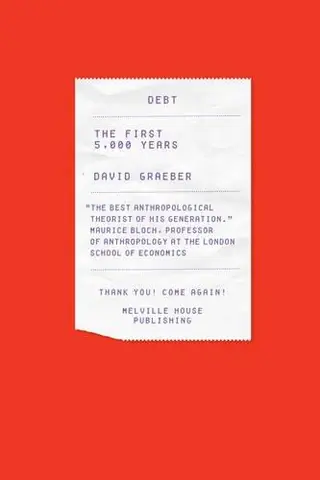
Debt
The First 5,000 Years
by David Graeber · first published 2011
60% recommend35% neutral5% critical
Why HN recommends it
Anthropological history of money and credit that challenges the barter-origin myth, showing credit ledgers and debt forgiveness predate coins. Suits readers curious about what money and obligation really are.
Summarised by Claude from recommending comments
The author shows that before there was money, there was debt. For 5,000 years humans have lived in societies divided into debtors and creditors. For 5,000 years debt and debt forgiveness have been at the center of political debates, laws and religions. The words “guilt,” “sin,” and “redemption” come from ancient debates about debt. These terms and the ideas of debt shape our most basic ideas of right and wrong. [source][1] [1]: http://www.amazon.com/Debt-Updated-Expanded-First-Years/dp/1612194192/ref=dp_ob_title_bk
Affiliate links. As an Amazon Associate I earn from qualifying purchases.
Mentions per year
What Hacker News says
Related books
 2020–2026
The Dawn of Everything
David Graeber, David Wengrow
Recommended by 111 · mentioned by 167111 recommend · 167 mention111 recommend · 167111 recommend
A treatise on money
John Maynard Keynes
0 recommend · 2 mentioned0 recommend · 2 mention0 recommend · 20 recommend
 2017–2022
Fragments of an Anarchist Anthropology
David Graeber
Recommended by 6 · mentioned by 96 recommend · 9 mention6 recommend · 96 recommend
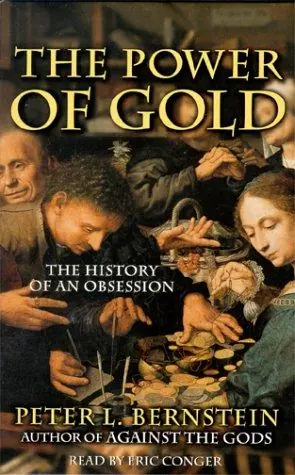 2022–2024
The Power of Gold
Peter L. Bernstein
Recommended by 5 · mentioned by 65 recommend · 6 mention5 recommend · 65 recommend
 2009–2024
The ascent of money
Niall Ferguson
Recommended by 42 · mentioned by 4942 recommend · 49 mention42 recommend · 4942 recommend
 2021–2024
Opening the heart of compassion
Martin Lowenthal
Recommended by 2 · mentioned by 22 recommend · 2 mention2 recommend · 22 recommend
 2019–2022
The cash nexus
Niall Ferguson
Recommended by 2 · mentioned by 22 recommend · 2 mention2 recommend · 22 recommend
Some good books on the general topic that I've read over the years are Debt: The First 5000 Years by Graeber: * https://en.wikipedia.org/wiki/Debt:_The_First_5000_Years Money: The True Story of a Made-Up Thing by Goldstein (also of NPR's Planet Money): * https://www.goodreads.com/book/show/50358103-money…
on “What is money, anyway?” ↗Fundamentally changed are so big words but these were pretty cool: - Douglas Hofstadter's GEB: An Eternal Golden Braid - Debt: The First 5,000 Years by David Graeber - Ursula K. LeGuin's The Word for World is Forest - Propaganda by Edward Bernays - Collapse: How Societies Choose to Fail or Succeed by Jared Diamond - Empires:…
on “Ask HN: What books fundamentally changed the way you think about the world?” ↗Also, Debt: The First 5,000 Years covers the religious origins of debt, money, markets, capital, value, values, etc. https://www.amazon.com/Debt-First-5-000-Years/dp/1612191290 My TLDR for this thread: Capitalism…
on “How religion shaped modern economics” ↗Terrible, terrible arrangement of ads alongside, and hilarious chart in article graphic. Read this instead. [http://www.amazon.com/Debt-The-First-000-Years/dp/1612191290]
on “5000 Years of Interest Rates” ↗Only marginally related, but I highly recommend reading Debt: The First 5000 Years [0] by David Graeber. By examining and analyzing anthropological records, the author proposed a heterodox economic theory. Unlike the conventional economic model which says the human…
on “US debt surpasses $23T for first time” ↗"Debt" by David Graeber goes into early Islamic markets where religious-inspired regulation kept the markets freer, by discouraging hoarding of wealth, for example. It's an amazing book I'd recommend to anyone.
on “Is Capitalism Saving Us?” ↗Debt: The First 5000 Years by great late David Graeber. It opened up my mind to a whole new reality which was hidden in plain sight.
on “Ask HN: Which books you have read till now that were worth investing time in?” ↗…http://mises.org/mysteryofbanking/mysteryofbanking.pdf I have always found the "back stories" on how/why our economy came into existence to be "pulled out of thin air". I just started reading this new book: http://www.amazon.com/Debt-First-5-000-Years/dp/1933633867 I'm only about 1/3 the way into it, but so far impressed.
on “Ask HN: what are some good resources to understand economics?” ↗…it. The author is an anthropologist and tells his story from this perspective. So far, If I understand correctly what I'm reading, I think the author would not agree that 'savings' is the opposite of 'debt'. I also don't see the author as trying to get the reader worked up. Its a very interesting and though provoking read thus far. [1] - http://www.amazon.com/Debt-First-5-000-Years/dp/1933633867
on “How Debt Has Defined Human History” ↗Not just the Mayans. The Babylonians, Assyrians, Egyptians, Chinese, medieval Christians... all of those civilizations would periodically wipe all debt away. If you have heard about Jubilee years, in large part they involved all debts being forgiven. See the truly excellent book Debt by David Graeber for a very analytical take on debt and how our modern…
on “Debt Strike and Debt Forgiveness - Debt Strike /Kick-Stopper” ↗…neighbors, our relationship wouldn't be about market transactions (unless I suppose we're hostile and untrusting, so we'd better trade simultaneously so we don't rip each other off). I think Graeber's _Debt: The First 5,000 Years_ is the most illuminating source on the subject. (http://www.amazon.com/Debt-The-First-000-Years/dp/1933633867)
on “Where has all the money in the world gone?” ↗…that helped: * "End the Fed" by Ron Paul * "Economics in One Lesson" by Henry Hazlitt * "The Mystery of Banking" by Murray Rothbard * "What has government done with our money?" by Murray Rothbard * "Debt: The First 5000 Years" by David Graeber
on “Internal FBI risk assessment of Bitcoin network [pdf]” ↗…in favor of barter myths. To someone like Neal Degrasse Tyson, raised in that mythology, it seems plausible that such a human social arrangement is in fact a force of nature. But if you read Graeber's Debt: the First 5000 Years, or maybe even Chomsky's Understanding Power, the myths get deflated. (http://www.zcommunications.org/debt-slavery-and-our-idea-of-...) (Though I suppose with capitalism's negative…
on “Neil DeGrasse Tyson’s Eight Books Everyone Should Read” ↗Debt: The First 5,000 Years by David Graeber. I'm cautious to say it changed my life, but it definitely changed my view on many things. I'm more aware of the ubiquity and power of debt, and I can no longer…
on “Ask HN: What book changed your life in 2014?” ↗It may “make sense”, but it’s also an ahistorical just-so story. If you want a more accurate description, I recommend the first half of David Graeber’s book Debt: The First 5000 Years, also mentioned by another top-level comment.
on “What is money? (1913)” ↗