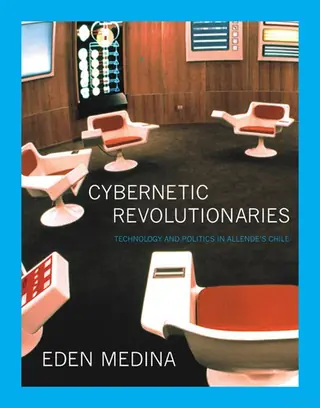
Cybernetic revolutionaries
by Eden Medina · first published 2011
62% recommend38% neutral
Why HN recommends it
A well-researched history of Project Cybersyn, Stafford Beer's attempt to run Allende's Chile through cybernetic feedback. It details Chilean politics and culture and stands as the strongest work on the subject.
Summarised by Claude from recommending comments
Eden Medina tells the history of two intersecting utopian visions, one political and one technological. The first was Chile's experiment with peaceful socialist change under Salvador Allende; the second was the simultaneous attempt to build a computer system that would manage Chile's economy. Neither vision was fully realized—Allende's government ended with a violent military coup; the system, known as Project Cybersyn, was never completely implemented—but they hold lessons for today about the relationship between technology and politics. Drawing on extensive archival material and interviews,
Affiliate links. As an Amazon Associate I earn from qualifying purchases.
Mentions per year
What Hacker News says
Related books
 2014–2023
From Newspeak to Cyberspeak
Slava Gerovitch
Recommended by 3 · mentioned by 33 recommend · 3 mention3 recommend · 33 recommend
 2008–2024
Designing freedom
Stafford Beer
Recommended by 5 · mentioned by 55 recommend · 5 mention5 recommend · 55 recommend
 2014–2023
Towards a new socialism
W. Paul Cockshott
Recommended by 8 · mentioned by 158 recommend · 15 mention8 recommend · 158 recommend
 2008–2026
Brain of the firm
Stafford Beer
Recommended by 9 · mentioned by 129 recommend · 12 mention9 recommend · 129 recommend
 2010–2026
Red Plenty
Francis Spufford
Recommended by 71 · mentioned by 9271 recommend · 92 mention71 recommend · 9271 recommend
 2010–2026
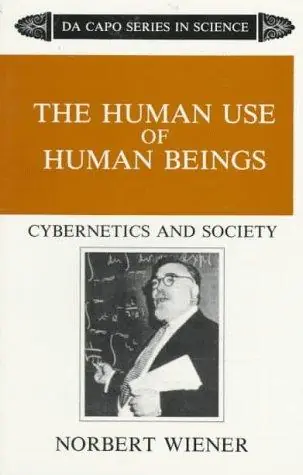
The Human Use of Human Beings
Norbert Wiener
Recommended by 12 · mentioned by 3212 recommend · 32 mention12 recommend · 3212 recommend
 2019–2026
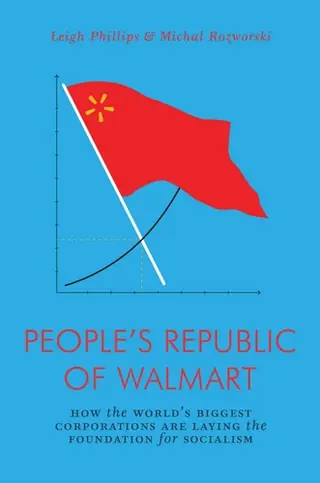
The People's Republic of Walmart
Leigh Phillips
Recommended by 12 · mentioned by 2312 recommend · 23 mention12 recommend · 2312 recommend
For a more recent study about the Chilean approach, I can recommend "Cybernetic Revolutionaries" by Eden Medina (2011, MIT Press, [link](https://mitpress.mit.edu/books/cybernetic-revolutionaries)).
on “A Software Engineer’s Guide to Cybernetics” ↗…where they can be analysed and quickly sent back to the workers you have in reality stumbled upon people who are trying to build CyberSyn 2.0, probably without knowing it and less socialist branding. Cybernetic Revolutionaries: Technology and Politics in Allende's Chile by Eden Medina is a good, in depth book on the topic.
on “Project Cybersyn and the Origins of the Big Data Nation (2014)” ↗I second this. For anybody who cant be fucked sear hing up the link on wikipedia the Eden Medina book is called 'cybernetic revolutionaries'. It's a great piece of research (although, in my opinion, lacking somewhat on both political and technological analysis. It seems to be the best book out there on cybersyn). Also, for anybody interested…
on “Project Cybersyn (1971)” ↗Recommended Eden Medina's Cybernetic Revolutionaries: http://mitpress.mit.edu/books/cybernetic-revolutionaries
on “The Socialist Origins of Big Data (2014)” ↗Eden Medina's Cybernetic Revolutionaries is a good resource on this topic. The way it worked beginning in the 80s was that once you had your local in-country research network, you eventually felt compelled to hook it up to NSFNET (maybe after…
on “There were almost two internets. Then, the CIA destroyed one” ↗The best thing to read is Eden Medina’s “Cybernetic Revolutionaries” (https://mitpress.mit.edu/9780262525961/cybernetic-revolution...). There’s also a good Tech Won’t Save Us episode featuring the author: https://podcasts.apple.com/ie/podcast/tech-wont-save-us/id15...
on “Cybernetic Culture Research Unit” ↗…cover specific topics in history, most of which have great theoretic interest: Agar's "The Government Machine," dealing with the evolution of technology and expertise within the UK government; Medina's "Cybernetic Revolutionaries," about Beer's Cybersyn project; and Ensmenger's "The Computer Boys Take Over," about the cultural development of the "programmer," are all great reads. Also, you can look beyond pure technology for…
on “Ask HN: Good Books on the History of Technology?” ↗…For similar reasons, I feel like I learned a tremendous amount about Chilean political history and culture, more than all other sources combined (except perhaps contemporary Chilean newsprint) reading "Cybernetic Revolutionaries: Technology and Politics in Allende's Chile". There are fundamental truths about a culture that are revealed by the fine details of how historical events unfold, independent of the larger context (i.e.…
on “China’s assault on Cathay Pacific” ↗The only book discussing the history of Project Cybersyn is, I think, Cybernetic Revolutionaries: Technology and Politics in Allende's Chile by Eden Medina. (https://www.amazon.com/dp/B006NY5426) Here's my Amazon review: https://www.amazon.com/gp/customer-reviews/R1IBPD2HGZ6UVA/ The project was…
on “Markets are efficient if and only if P = NP (2010)” ↗…you have the more general (philosophical, "woolly") part that's filled with comparisons to biology, that deals with society and variety, general patterns, etc. I once gave a friend of mine Medina's "Cybernetic Revolutionaries", and I think he found it hard to get through because of the latter kind of cybernetics, even though he was very familiar with the former kind.
on “Introduction to Cybernetics (1957)” ↗…the history then Ronald Kline's The Cybernetic Moment (John Hopkins, 2015) is the cannonical American history, and Slava Gerovitch's From Newspeak to Cyberspeak (MIT, 2002) is the Soviet. Eden Medina's Cybernetic Revolutionaries (MIT, 2002) covers its role in Allende's Chile, but compared to the US or Soviet this is marginal. The Cybernetic Hypothesis is a very violent reading, definitely wouldn't recommend as a first port of…
on “The cybernetics scare and the origins of the Internet (2009)” ↗…closed loop rather than a top down hierarchy, and he knew about and was hostile towards the Soviet GOSPLAN type economy. If you're interested in Cybersyn then there is a recent book by Eden Medina called "Cybernetic revolutionaries" which describes the system and its development.
on “Project Cybersyn, a 1971-73 Chilean Experiment in Computer-Assisted Economy” ↗Back when I read "Cybernetic Revolutionaries" I followed it up with "People's Republic of Walmart" and came away with a bit of a different conclusion to your point 1. IMO lots of US-based hyperscalars are managing what are effectively command economies,…
on “Project Cybersyn” ↗That's what Allende's supporters say, yes. But one of the things I took away (of my own accord) from the book, "Cybernetic Revolutionaries: Technology and Politics in Allende's Chile", is that the conservatives were rightfully fearful of Allende's government moving inexorably toward communist central planning. (Note: the book is, IMO, unbiased…
on “Why the Soviet Union did not build a nationwide computer network (2008) [pdf]” ↗There's also an interesting story about Chile under Allende trying to implement some cybernetic systems in the 70's https://en.wikipedia.org/wiki/Project_Cybersyn There's a book called "Cybernetic Revolutionaries" about it, I haven't read it yet though.
on “Soviet computer has been forgotten for 30 years [video]” ↗