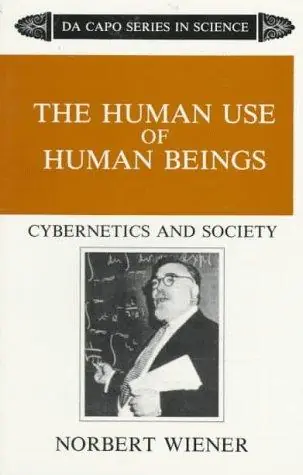
The Human Use of Human Beings
by Norbert Wiener · first published 1950
38% recommend63% neutral
Why HN recommends it
Wiener's accessible introduction to cybernetics, covering control loops, communication and social control. A short, foundational starting point for people in computing or curious about technology and society.
Summarised by Claude from recommending comments
"Only a few books stand as landmarks in social and scientific upheaval. Norbert Wiener's classic is one in that small company. Founder of the science of cybernetics--the study of the relationship between computers and the human nervous system--Wiener was widely misunderstood as one who advocated the automation of human life. As this book reveals, his vision was much more complex and interesting. He hoped that machines would release people from relentless and repetitive drudgery in order to achieve more creative pursuits. At the same time he realized the danger of dehumanizing and displacement.
Affiliate links. As an Amazon Associate I earn from qualifying purchases.
Mentions per year
What Hacker News says
Related books
 2015–2026
Cybernetics, or control and communication in the animal and the machine
Norbert Wiener, Doug Hill, Sanjoy Mitter
Recommended by 4 · mentioned by 104 recommend · 10 mention4 recommend · 104 recommend
Portrait of Dorian Gray
Robert Boettcher, Oscar Wilde
Recommended by 2 · mentioned by 32 recommend · 3 mention2 recommend · 32 recommend
 2008–2024
Designing freedom
Stafford Beer
Recommended by 5 · mentioned by 55 recommend · 5 mention5 recommend · 55 recommend
 2010–2019
The Dancing Wu Li Masters
Gary Zukav
Recommended by 3 · mentioned by 33 recommend · 3 mention3 recommend · 33 recommend
 2009–2026
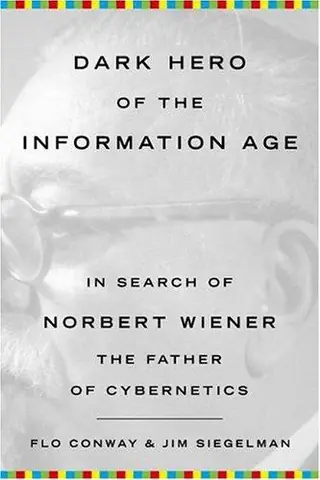
Dark Hero of the Information Age
Flo Conway
Recommended by 8 · mentioned by 98 recommend · 9 mention8 recommend · 98 recommend
 2012–2026
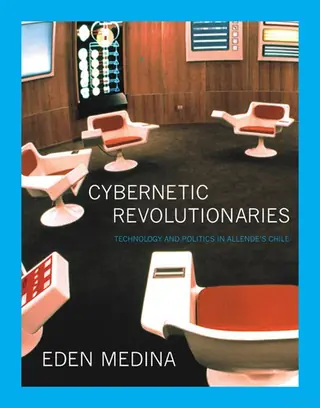
Cybernetic revolutionaries
Eden Medina
Recommended by 8 · mentioned by 138 recommend · 13 mention8 recommend · 138 recommend
 2010–2022
Existentialism Is a Humanism
Jean-Paul Sartre
Recommended by 6 · mentioned by 106 recommend · 10 mention6 recommend · 106 recommend
 2009–2024
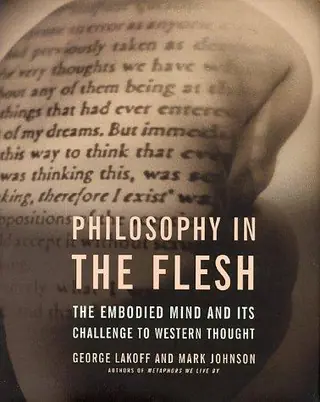
Philosophy in the flesh
George Lakoff
Recommended by 14 · mentioned by 2014 recommend · 20 mention14 recommend · 2014 recommend
…logic, interaction, and some new state -- a basic control loop or OODA loop. That's the basic premise of Norbert Wiener (Cybernetics https://www.worldcat.org/title/cybernetics-or-control-and-co... and The Human Use of Human Beings https://www.worldcat.org/title/human-use-of-human-beings-cyb... -- horrible title, great book), Alfed Kuhn, The study of society : a multidisciplinary approach https://www.worldcat.org/title/study-of-society-a-multidisci...),…
on “Ask HN: How do we stop the polarization/toxicicity filling the web?” ↗You may enjoy one of his books, "The Human Use of Human Beings" https://monoskop.org/images/5/51/Wiener_Norbert_The_Human_Us...
on “Claude Shannon Invented the Future” ↗+1. I always recommend starting with the foundational document, Cybernetics by Norbert Wiener (and the companion title, The Human Use of Human Beings).
on “Ask HN: Top Skills to Learn for 2023?” ↗Another good one is The Human use of Human Beings by Norbert Wiener.
on “What a Sixty-Five-Year-Old Book Teaches Us About A.I” ↗Huge mass of stuff to sort through; I highly recommend "The Human Use of Human Beings." Anyone have other recommendations from the lists?
on “Peter Norvig's Library” ↗Start from the horse's mouth, either Wiener's book Cybernetics, or better yet his "layman's introduction", The Human Use of Human Beings. If you're interested in the history then Ronald Kline's The Cybernetic Moment (John Hopkins, 2015) is the cannonical American history, and Slava Gerovitch's From Newspeak to Cyberspeak (MIT, 2002) is…
on “The cybernetics scare and the origins of the Internet (2009)” ↗You absolutely have a point- and yes it opposes the other. The other point is valid from a scientific perspective though. I highly recommend you read Norbert Weiners "Cybernetics the human use of human beings" to be able to grapple with the dualism at play. In particular he discusses the manichaean vs augustinian version of evil. He could not reconcile the two but reflecting on the general ways that information…
on “Open letter to Mark Zuckerberg: act now on child and adolescent mental health” ↗re: Cybernetics, a better start is probably Wiener's The Human Use Of Human Beings: Cybernetics And Society
on “Ask HN: Best Philosophical Books?” ↗…Surely You're Joking Mr. Feynman Thorstein Veblen (econ; one of the most cynical econ books I've ever read--in a good way) - The Theory of the Leisure Class Norbert Weiner (philosophy, robots) - The Human Use of Human Beings: Cybernetics and Society
on “Ask HN: Good books?” ↗…unknown amount of subtle complexities (within messages) still successfully conveyed. This idea (amongst many other gems) comes from a great short book I just finished on cybernetics (old, old book) The Human Use of Human Beings (1950) by Norbert Weiner But I'm more on your side, only because I think we should be able to elaborate on the elements that faded to the unconscious, since if we cannot, we will not be able to apply…
on “Coding is not the new literacy” ↗…rake-that-rich-a$$-across-thee-coals dive into our superficial obsession with the digitally privileged. Muah!Best book I've read in years + the appendix/biblio holds 20 pages or so of FURTHER awesome reading. "Human Use of Human Beings" by: Norbert Weiner An awesome transportation into 1950 MIT professor who calls out the problems of "progress" and explores communication in the neatest way. Everything he mentions is still a problem…
on “Ask HN: What book that you read in 2015 significantly affected how you think?” ↗…Communication in the Animal and the Machine =Smullyan= * Diagonalization and Self Reference Squishy Human Things: Thomas Kuhn - The Structure of Scientific Revolutions Norbert Weiner - The Human Use of Human-Beings Bertrand Russell - A History of Western Philosophy Karl Popper - The Open Society and Its Enemies Daniel Dennet - Consciousness Explained E. Abbot Abbot - Flatland
on “Ask HN: What books have made the biggest impact on your mental models?” ↗He thought and wrote about such matters with some depth, though he wasn't that worldly wise. I still liked his books like "The Human Use Of Human Beings" very much. He also wrote a novel about a patent troll, called "The Tempter", in 1959!
on “On Norbert Wiener's Relationship with Bertrand Russell” ↗This subject is more than 70 years old and profoundly reshaped social control and modern society. I cannot advise more to read all books written by Weiner like "The human use of human beings" And being in CS indusry sice 25 years im always amazed to state that 99% of people involved in this industry are total ignorant about cybernetic often associated with cyberpunk and scifi
on “Cybernetics (The Science of Effective Management)” ↗…omniscience, omnipotence, and worship (gadget worship). It has very prescient stuff on blackbox learning/distillation, reinforcement learning/reward hacking, alignment through human feedback. His The Human Use of Human beings and Cybernetics are extremely good too and have more of a mash of the themes between Rerum Novarum and Magnifca Humanitas, and more near-term automation.
on “Magnifica Humanitas (Encyclical Letter)” ↗