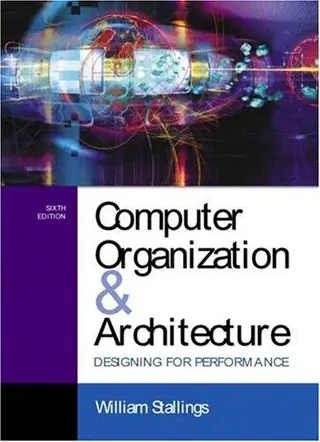
Computer organization and architecture
by William Stallings · first published 1987
30% recommend70% neutral
Affiliate links. As an Amazon Associate I earn from qualifying purchases.
Mentions per year
What Hacker News says
Related books
 2011–2026
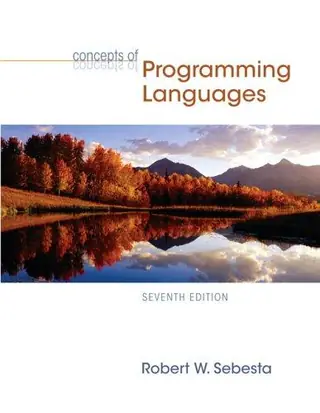
Concepts of programming languages
Robert W. Sebesta
Recommended by 4 · mentioned by 74 recommend · 7 mention4 recommend · 74 recommend
 2012–2023
D is for digital
Brian W. Kernighan
Recommended by 7 · mentioned by 127 recommend · 12 mention7 recommend · 127 recommend
 2012–2026
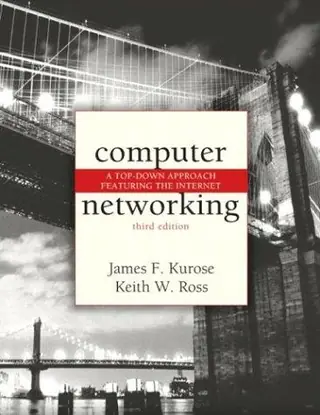
Computer networking
James F. Kurose, Keith W. Ross
Recommended by 30 · mentioned by 4530 recommend · 45 mention30 recommend · 4530 recommend
 2008–2026
Code
Charles Petzold
Recommended by 243 · mentioned by 287243 recommend · 287 mention243 recommend · 287243 recommend
 2008–2026
Introduction to the theory of computation
Michael Sipser
Recommended by 66 · mentioned by 8966 recommend · 89 mention66 recommend · 8966 recommend
 2008–2026
Computer organization and design
David A. Patterson
Recommended by 50 · mentioned by 8450 recommend · 84 mention50 recommend · 8450 recommend
 2007–2026
A short history of nearly everything
Bill Bryson
Recommended by 102 · mentioned by 123102 recommend · 123 mention102 recommend · 123102 recommend
 2007–2026
Artificial Intelligence
Stuart J. Russell, Peter Norvig
Recommended by 60 · mentioned by 13660 recommend · 136 mention60 recommend · 13660 recommend
Top 5 will never cover the field. Here's my top 10 * Brookshear and Brylow - Computer Science - An Overview * Forta - Teach yourself SQL in 10 minutes * Stallings - Computer Organization and Architecture * Stallings - Operating Systems - Internals and Design Principles * CLRS * Kurose, Ross - Computer Networking - A Top Down Approach * Sipser - Introduction to The Theory of Computation * Stallings,…
on “Mathematics for Computer Science (2018) [pdf]” ↗Computer Organization and Architecture by Stallings http://www.amazon.com/Computer-Organization-Architecture-Sta...
on “Ask HN: Where can one learn about how computers work?” ↗…architecture course will teach you. It should be pretty standard for CS undergrads to be at least familiar with some ISA. edit: undergrand -> undergrad PS: I highly recommend Patterson and Hennessy Computer Organization and Architecture (pick the Arm, RISCV or MIPS edition... any will do) to actually learn about all these things and more.
on “ARMv8 AArch64/ARM64 Full Beginner's Assembly Tutorial” ↗* Computer Organization and Architecture [1] * Algorithms [2] * The 50th Law [3] * Applied Predictive Modeling [4] When I get a breather from school... * Cibola Burn [5] 1: http://amzn.com/013293633X ; 2: http://amzn.com/032157351X ; 3:…
on “Ask HN: What Books Are You Reading?” ↗…Organization, 5th ed Prentice Hall, 2006 Patt, Y and Patel, S Introduction to Computing Systems: From Bits and Gates to C and Beyond, 2nd ed. McGraw Hill, 2004 Null, L and Lobur, J The Essentials of Computer Organization and Architecture, 2nd ed Jones and Bartlett Publishers, 2006
on “Ask HN: Learning to code, without a computer?” ↗I am planning to go through this book later this year. Can you help me understand what the difference is between this and Hennessey Patterson's book Computer Organization and Architecture? Like, why would/should I study x86_64/ARM/RISC V/MIPS/anything else? Is there a difference in approach or the architecture?
on “Ask HN: What, in your opinion, are the greatest and most useful textbooks?” ↗> how people start with game emulators? I had some Computer Organization and Architecture classes in university, and a previously-existing burning desire to understand emulation. I decided that the NES would be a good target; it was the oldest game hardware that I had personal interest in.…
Probably not. Devices would run out within a generation. It ain't ever going to happen because people can write these things called books. And computer organization and architecture books already exist and there are many 10k's copies of them. What should be captured in modern computer organization books is applied science aspects of the history until now and the tricks that made…
on “What if humanity forgot how to make CPUs?” ↗assembly is a good first language if you have a simple instruction set or machine. When I saw new people learn java, easily the hardest initial bump to get over was "what the hell is public static void main(String[] args) ?" or "eclipse didn't build it for some reason" Python is much easier to introduce someone to because there's no boilerplate and the tooling is very simple. Assembly on x86 mach
on “Machine Code Isn't Scary” ↗I am doing a course on Computer Organization and Architecture from YT. And following John P Hayes's textbook. I think programming things could help me up. PS: I saw that there are courses on udemy regarding CPU design. And I am planning to take that course as well.
on “Ask HN: Which processor to pick for learning assembly?” ↗I am trying to implement X:=AB+CC in a two-address machine. I implemented shorter than John P. Hayes in his textbook of Computer Organization and Architecture. So, I suspect I am doing something wrong. Here's my implementation: MUL A,B //A=AB MUL C,C //C=CC MOVE X,C //X=C ADD X,A //X=X+A=CC+AB
on “Ask HN: Implementing instruction in a two-address machine?” ↗…fundamentals book by thomas l floyd most parts. And I am again reading them. However I realized it lacks contents on memory(It has chapters but it is basic stuffs). It does not prepare you enough to take take a Computer Organization and Architecture class, where you will learn about designing control unit and stuffs like that. Thus i am sitting in hackernews, asking about recommendations on what should be my next book? Since I am interviewing…
on “Ask HN: Logic design books to follow after reading Thomas L Floyd?” ↗