Calculus, Early Transcendentals
by James Stewart · first published 1991
33% recommend53% neutral13% critical
Why HN recommends it
A standard calculus textbook with many exercises, well suited to self-study and useful either as a supplement or as a primary text for learning calculus.
Common criticism: Some suggest more rigorous or proof-oriented texts like Spivak for deeper understanding.
Summarised by Claude from recommending comments
Appropriate for the traditional 2 or 3-term college calculus course, this textbook presents the fundamentals of calculus. Topics include, but are not limited to: a review of polynomials, trigonometric, exponential, and logarithmic functions, followed by discussions of limits, derivatives, applications of differential calculus to real-world problem areas, an overview of integration, basic techniques for integration, a variety of applications of integration, and an introduction to (systems of) differential equations.
Affiliate links. As an Amazon Associate I earn from qualifying purchases.
Mentions per year
What Hacker News says
Related books
 2018–2024
Precalculus
James Stewart, Lothar Redlin, Saleem Watson
Recommended by 3 · mentioned by 53 recommend · 5 mention3 recommend · 53 recommend
 2017–2024
Thomas' calculus
Maurice D. Weir
Recommended by 5 · mentioned by 125 recommend · 12 mention5 recommend · 125 recommend
Schaum's outlines
Seymour Lipschutz
Recommended by 10 · mentioned by 1510 recommend · 15 mention10 recommend · 1510 recommend
 2008–2026
Linear algebra
Stephen H. Friedberg, Arnold J. Insel, Lawrence E. Spence
Recommended by 10 · mentioned by 1710 recommend · 17 mention10 recommend · 1710 recommend
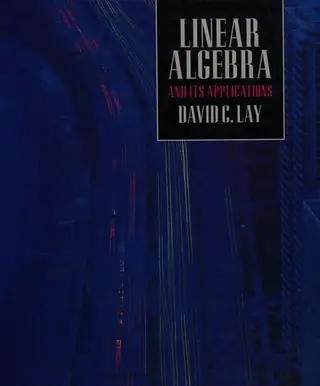 2008–2026
Linear algebra and its applications
David C. Lay, Lay, Davic C. Lay, Steven R. Lay
Recommended by 22 · mentioned by 3022 recommend · 30 mention22 recommend · 3022 recommend
 2008–2026
Principles of Mathematical Analysis
Walter Rudin
Recommended by 52 · mentioned by 8852 recommend · 88 mention52 recommend · 8852 recommend
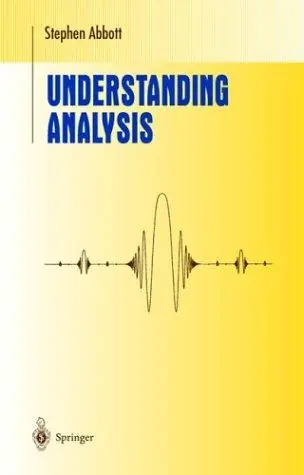 2010–2026
Understanding Analysis
Stephen Abbott
Recommended by 31 · mentioned by 3831 recommend · 38 mention31 recommend · 3831 recommend
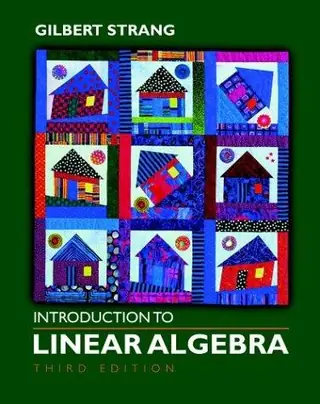 2007–2026
Introduction to linear algebra
Gilbert Strang
Recommended by 37 · mentioned by 5837 recommend · 58 mention37 recommend · 5837 recommend
In that case, I recommend starting out with Zill's Precalculus with Calculus Previews and then working through Stewart's Calculus: Early Transcendentals!
on “So you want to study mathematics” ↗Of the math textbooks I've used, two've been good enough to keep so far: Linear Algebra: http://www.amazon.ca/Linear-Algebra-Applications-CD-ROM-Upda... Calculus: http://www.amazon.ca/Calculus-Early-Transcendentals-Tools-En... on the more computer-sciency side, Introduction to Algorithms has a lot of good word-of-mouth. I'm not such a fan, myself, but here it is: http://www.amazon.ca/Introduction-Algorithms-Thomas-H-Cormen...
on “Math Books for CS Undergrads” ↗I haven't finished it but I read most of the late James Stewart's "Calculus: Early Transcendentals" and found it very instructive. It would make a good supplement for anyone learning Calculus.
on “Calculus Learning Guide” ↗…Here's a detailed learning plan, broken down into four stages: Stage 1: Building a Strong Foundation Mathematics: Linear Algebra: "Linear Algebra and Its Applications" by Gilbert Strang Calculus: "Calculus: Early Transcendentals" by James Stewart Probability & Statistics: "Probability and Statistics for Engineers and Scientists" by Ronald E. Walpole, Raymond H. Myers, Sharon L. Myers, and Keying E. Ye Optimization: "Convex…
on “Ask HN: I am a full stack developer, where do I start learning for AI” ↗For calculus, I found Thomas' Calculus (https://www.amazon.com/Thomas-Calculus-Early-Transcendentals...) the most helpful. It's a textbook but has a lot of exercises.
on “Ask HN: What are the best general math workbooks?” ↗…real analysis" from those it recommends Spivak's "Calculus". I'd consider promoting Spivak to essential, but using it for calculus rather than real analysis, replacing their recommendation of Stewart's "Calculus: Early Transcendentals". By doing calculus with a more rigorous, proof-oriented introductory calculus book like Spivak, there is a good chance you won't need a separate introduction to proofs book so can drop the recommended…
on “So you want to study mathematics” ↗…Algebra. For now I'm studying precalc (Stewart). Next steps are: Probability: Introduction to Probability - Blitzstein & Hwang. Statistics: Introduction to Mathematical Statistics - Hogg & al. Calculus: Calculus, Early Transcendentals - James Stewart & al. Linear Algebra: Introduction to Linear Algebra - Gilbert Strang. What are your picks in those subject? Are these enough? Edit: preferably books that use the metric system.
on “Ask HN: What are the best textbooks to study in order to learn math for ML?” ↗As long as textbooks in North America keep being so ridiculously expensive[0] I wont take "pirate" as a valid moral argument. [0]https://www.amazon.com/Calculus-Early-Transcendentals-James-...
on “The Rise of Pirate Libraries (2016)” ↗…one. As an example, lots of people are recommending Spivak's "Calculus", or "Calculus Made Easy", from some other author, but the one listed is "Calculus" from James Stewart. Same happens for the book "Calculus: Early Transcendentals". Sun Tzu's Art of War is also repeated with two different editions.
on “Show HN: 40k HN comments mentioning books, extracted using deep learning” ↗…are explanations interspersed throughout the problems, these mostly seem to be the bare minimum you need to work the problems. When I compare it to the calculus textbook I keep alongside it (Stewart’s “Calculus Early Transcendentals”) it barely seems enough.
on “500 days of math” ↗…you'll see that they have much more experience. In music you sight read. Doing the same thing with math, physics, engineering, etc will result in the same increase in talent. [1] https://smile.amazon.com/Calculus-Early-Transcendentals-Jame... [2] https://smile.amazon.com/Linear-Algebra-Its-Applications-3rd... [3] https://smile.amazon.com/Differential-Equations-Tools-Printe... [4] https://smile.amazon.com/Fundamentals-Physics-David-Halliday...…
on “Ask HN: How do I learn math/physics in my thirties?” ↗…- Blitzer (ISBN-13 978-0134178943 ) - College Algebra - Blitzer (ISBN-13 978-0321782281) - Precalculus - Blitzer (ISBN-13 978-0321559845) - Precalculus - Stewart (ISBN-13 978-1305071759) - Thomas' Calculus: Early Transcendentals (ISBN-13 978-0134439020) - Calculus - Stewart (ISBN-13 978-1285740621) The main goal of learning is to understand the ideas and concepts at hand as “deeply” as possible. Understanding is a mental process…
on “Everyone is capable of, and can benefit from, mathematical thinking” ↗…(4th edition) by Larson, Hostetler, and Edwards for my calc 1 and 2 courses and I would not recommend it for independent study. Consider Calculus by Briggs and Cochran instead ( http://www.amazon.com/Calculus-Early-Transcendentals-Briggs-... ) for good explanations with example problems and for the superior images, which are particularly helpful for multivariate calculus.
on “Ask HN: How can I start learning physics?” ↗"A textbook author in Toronto made enough money from his calculus textbook to afford a $20 million house." I know that calculus textbook. http://www.amazon.com/Calculus-Early-Transcendentals-James-S... It's workmanlike, but certainly not inspiring like Spivak's textbook. http://www.amazon.com/Calculus-Michael-Spivak/dp/0914098918/
on “Textbooks must die” ↗…continuous at x. (Walter Rudin, "Principles of Mathematical Analysis", 3rd edition, p. 104) Or: Theorem 2.1 If f is differentiable at x = a, then f is continuous at x = a. (Robert Smith and Roland Minton, "Calculus -Early Transcendentals", 4th edition, p. 140) It's true that your f(x) = (x² - 1)/(x - 1) has a removable discontinuity at x = 1, since if we define g(x) = f(x) for x ≠ 1 and g(1) = 2, then g is continuous. Was this what you…
on “Derivative at a Discontinuity” ↗