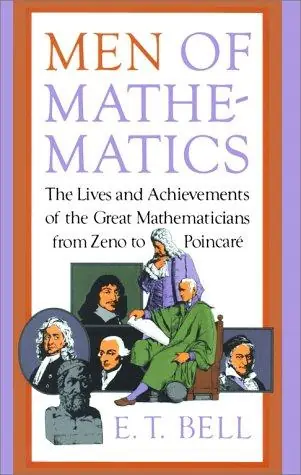
Men of mathematics
by Eric Temple Bell · first published 1900
60% recommend35% neutral5% critical
Why HN recommends it
Biographies of great mathematicians from Zeno to Poincaré that double as a primer on how mathematical ideas arose; praised for inspiring people toward math careers and giving historical context to what you study.
Summarised by Claude from recommending comments
A collection of biographies describing the lives and achievements of 29 mathematicians. Includes Zeno, Descartes, Fermat, Pascal, Newton, and Leibniz.
Affiliate links. As an Amazon Associate I earn from qualifying purchases.
Mentions per year
What Hacker News says
Related books
 2008–2026
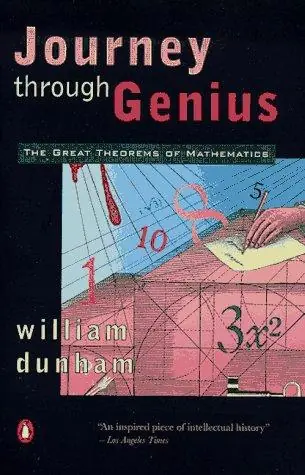
Journey Through Genius
William Dunham
Recommended by 25 · mentioned by 2725 recommend · 27 mention25 recommend · 2725 recommend
 2014–2021
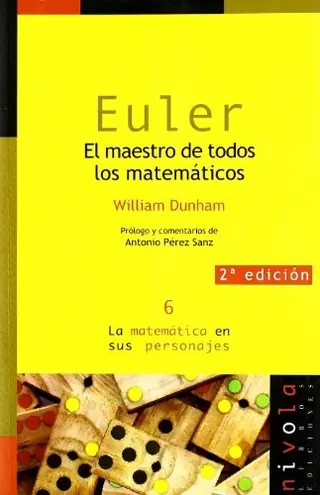
Euler
William Dunham
Recommended by 5 · mentioned by 65 recommend · 6 mention5 recommend · 65 recommend
 2008–2025
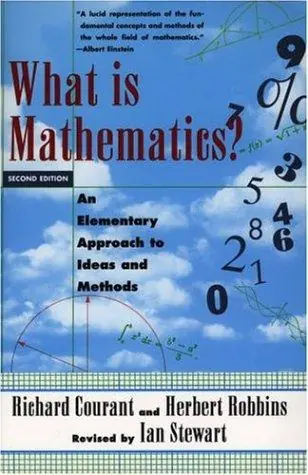
What is mathematics?
Richard Courant, Herbert Robbins
Recommended by 45 · mentioned by 5145 recommend · 51 mention45 recommend · 5145 recommend
 2010–2025
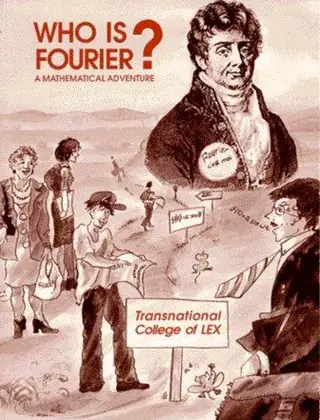
Who is Fourier?
Transnational College of Lex
Recommended by 15 · mentioned by 1615 recommend · 16 mention15 recommend · 1615 recommend
 2009–2023
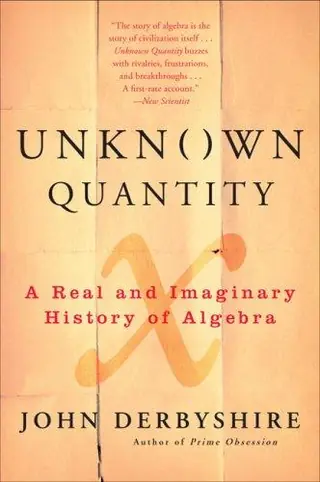
Unknown Quantity
John Derbyshire
Recommended by 6 · mentioned by 96 recommend · 9 mention6 recommend · 96 recommend
 2008–2025
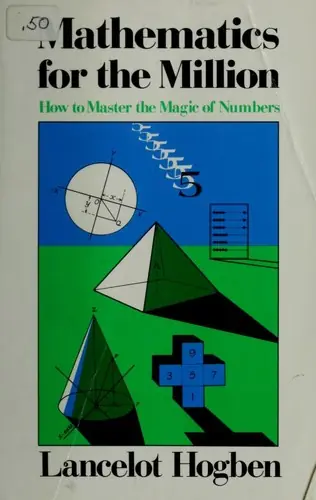
Mathematics for the million
Lancelot Thomas Hogben
Recommended by 19 · mentioned by 2219 recommend · 22 mention19 recommend · 2219 recommend
 2010–2026
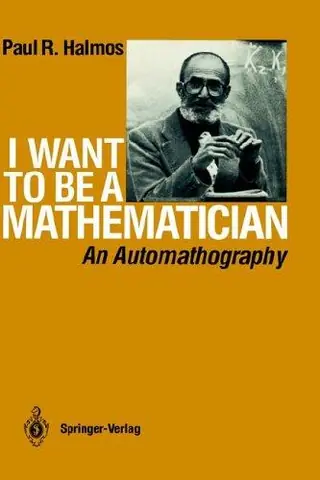
I want to be a mathematician
Paul R. Halmos
Recommended by 6 · mentioned by 106 recommend · 10 mention6 recommend · 106 recommend
 2008–2025
Mathematics for the Nonmathematician
Morris Kline
Recommended by 12 · mentioned by 1412 recommend · 14 mention12 recommend · 1412 recommend
…did the ideas you're trying to learn (Abstract Algebra, Topology, Vector Analysis, etc.) come about? This will add an immense amount of meaning to your subjects. I recommend the following books: - "Men of Mathematics" by ET Bell. Also "The Development of Mathematics" by the same author. - "A Concise History of Mathematics" by Dirk Struik, - "A History of Mathematics" by Boyer - And of course, the internet. 3.…
on “Ask HN: How Do I Get Math?” ↗Men of Mathematics is both a biography, and an interesting primer on math that I enjoyed tremendously: http://www.amazon.com/Mathematics-Touchstone-Books-E-T-Bell/...
on “‘The Fractalist,’ Benoit B. Mandelbrot’s Math Memoir” ↗For books i'd suggest Men of Mathematics that has inspired countless people to math careers or Terence Tao's Solving Mathematical Problems, which is excellent. Now, if money's no object, i.e. you're willing to spend around $200, the gomboc…
on “Ask HN: Graduation Present for Aspiring Math Major?” ↗Men of Mathematics: The Lives and Achievements of the Great Mathematicians from Zeno to Poincaré Reading about the personalities of mathematics really widened my perspective of the motivations behind the math and the wide…
on “Ask HN: Books that made you fascinated to learn more mathematics?” ↗…Borrow or Steal these and make every kid read them. None of the "Modern" popular science books can hold a candle to these books. - https://archive.org/search.php?query=creator%3A%22YAKOV+PERE... 2. Men of Mathematics and Mathematics: Queen and Servant of Science both by E.T.Bell - https://archive.org/search.php?query=creator%3A%22Bell%2C+Er... 3. More recently, i found Who Is Fourier?: A Mathematical Adventure excellent.…
on “Ask HN: Books that made you fascinated to learn more mathematics?” ↗Men of mathematics (E T Bell) and A mathematician's apology (G H Hardy).
on “Ask HN: Good books on mathematics for somebody who's only taken high school math?” ↗…of the network that relates them. It became a lot more enjoyable. I'd recommend checking out some history of mathematics if you'd like to get a better sense of that (my personal intro recommendation: "Men of Mathematics" by E.T. Bell or maybe "Mathematics and the Imagination," which isn't history so much, but serves a similar goal). If you're looking for something on algorithms specifically the book recommended by the…
on “Teach Yourself Computer Science” ↗…communication, leading others, achieving in teams, etc., etc., etc. If I knew then what I know now, I would have skipped the classes and just joined the fraternity. And, yes, I do go to Barnes & Noble and read "Men of Mathematics", "GEB", and the work of Dawkins just for fun. Funny, I didn't appreciate any of it when I was forced to read it.
on “Dangerous Ideas: Sorry Paul Graham, I Think it Does Matter Where You Went to College” ↗…different angle. It covers a wide range of famous economists and describes the high points of their theories along with some biographical detail, in a very engaging style. It's the economics version of "Men Of Mathematics", which is also a fascinating book.
on “Ask HN: Best book(s) to learn about the basics of economics?” ↗I've spent a lot of time looking for books that'd teach some mathematical ideas while keeping the original progression of motivations/concepts in tact. I'd first recommend "Men of Mathematics" by E.T. Bell. It's a collection of short biographies on 20 or so Mathematicians, also discussing a few of the most salient points of each's work. It's an enjoyable introduction, useful for getting a…
on “A Mathematician’s Lament (2002) [pdf]” ↗…much more distracted by people who are trying to get my attention than I am by background noise. This article reminds of an anecdote about Poincare that can be found on page 533 of the excellent book "Men of Mathematics"[1] "...when a distinguished mathematician had come all the way from Finland to Paris to confer with Poincare on scientific matters, Poincare did not leave his study to greet his called when the maid…
on “I’m Thinking. Please. Be Quiet.” ↗…rather than merely how to use some existing system. It also helped me understand what's interesting and why in mathematics to read in philosophy of mathematics and math history, and popularizations, etc. "Men of Mathematics" is quite good, as are "Gödel's Proof" and "Mathematics and the Imagination." Once I was immersed in it for a while, I started getting into more CS related mathematics: things in computation theory,…
on “Ask HN: How or where to begin learning mathematics from first principles?” ↗Is there a book other than Bell’s “Men of Mathematics” that broadly covers the lives of a lot of mathematicians? I loved that book when I read it as an undergraduate, but I wouldn’t mind having a second opinion.
on “How Euler Did It, by Ed Sandifer” ↗…technology they must understand historical context as well. When you're trying to motivate kids, especially, role models and stories from history and today can be useful, which is why ET Bell published Men of Mathematics [2] which inspired folks like Freeman Dyson, and we today include Power in Numbers by Talithia Williams, Mathematically Gifted and Black at https://mathematicallygiftedandblack.com/, Lathisms at https://www.lathisms.org/,…
on “How did American “wokeness” jump from elite schools to everyday life?” ↗Oh wow, funny this should turn up here. I had of course read the story in Men of Mathematics, and when I saw this question posted on MathOverflow in 2015, I decided the existing answers were inadequate (for me at least), so I went super deep on this question[0], reading some obscure papers in…
on “How did Cole factor 2^67−1 in 1903?” ↗