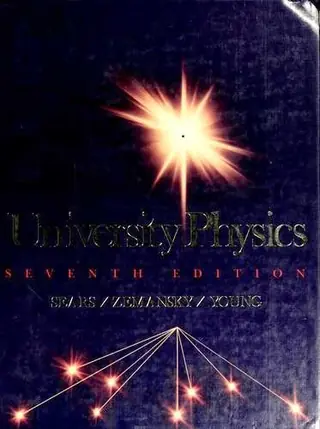
University physics
by Francis Weston Sears, Mark Waldo Zemansky, Hugh D. Young, Roger A. Freedman · first published 1949
32% recommend63% neutral5% critical
Why HN recommends it
A standard calculus-based introductory physics text serving as a foundation for first-year university physics, with worked examples that build understanding of core mechanics and related topics.
Summarised by Claude from recommending comments
Affiliate links. As an Amazon Associate I earn from qualifying purchases.
Mentions per year
What Hacker News says
Related books
 2012–2026
Course of Theoretical Physics
L.D Landau
Recommended by 8 · mentioned by 168 recommend · 16 mention8 recommend · 168 recommend
 2010–2026
Introduction to electrodynamics
David Jeffrey Griffiths
Recommended by 14 · mentioned by 2814 recommend · 28 mention14 recommend · 2814 recommend
 2008–2025
The Character of Physical Law
Richard Phillips Feynman, Frank Wilczek, Sean Runnette
Recommended by 14 · mentioned by 2814 recommend · 28 mention14 recommend · 2814 recommend
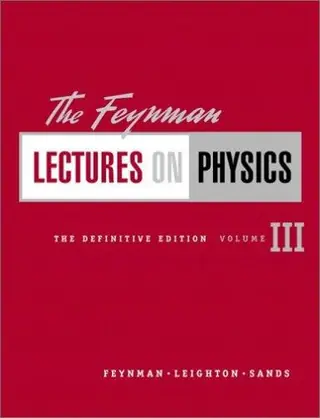 2008–2026
The Feynman Lectures on Physics
Richard Phillips Feynman
Recommended by 69 · mentioned by 12669 recommend · 126 mention69 recommend · 12669 recommend
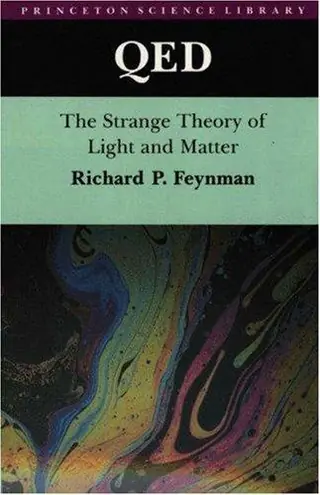 2008–2026
QED
Richard Phillips Feynman, A. Zee
Recommended by 60 · mentioned by 7760 recommend · 77 mention60 recommend · 7760 recommend
Freshman university textbooks have what you need. Two of the most popular are: - University Physics by Young and Freedman - Fundamentals of Physics by Halliday, Resnick, Walker - Modern Physics by Krane You might guess that real physics is not actually in freshman textbooks, and you are right. Modern…
on “Ask HN: Expository/Succinct Books on Modern Physics” ↗…not a thing. May I suggest a good book on first year physics? https://www.amazon.com/s?k=Sears+%26+Zemansky%27s+University... I used a much earlier edition almost 40 years ago, when I took my first university physics class. As far as I know, the fundamentals have not changed. This would be a good investment if you really want to understand.
on “Capturing carbon from the air will always be expensive (2020)” ↗Here are some books you may find helpful on these topics: "University Physics" by Francis Sears and Mark Zemansky "Introduction to Electrodynamics" by David J. Griffiths "Electricity and Magnetism" by Edward M. Purcell
on “Ask HN: Best content about energy, electromagnetism, circuits?” ↗What's the problem exactly? Could you not follow the example in the text? The standard text to build understanding in physics is University Physics by Sears & Zemansky. It's worth remembering you're quite far from the ground in physics, and it's mostly taught with "neat" cases that give insight into physics. I.e. the thought experiment to show why…
on “Why does kinetic energy increase quadratically, not linearly, with speed? (2011)” ↗…start there. (This will set you back some more money. Sounds like a plan for Christmas, Hanukkah, etc.) To my knowledge, none of the introductory texts are truly great, but I did some poking around and University Physics by Young, Freedman, and Ford looks like a good bet. If you need to learn calculus, Calculus by Larson and Edwards looks decent. Get the most recent editions if you can afford them, but I'm sure older…
on “Ask HN: How can I start learning physics?” ↗…before you have the necessary background). If you haven't taken any physics at the university level, you probably want to start with one of the standard calculus-based intro physics books like Young's University Physics. People speak highly of the Feynman Lectures, but I've also heard some physicists (e.g. Sean Carroll) say that they believe the Feynman Lectures are only good when you already know the subject matter.…
on “Ask HN: What is the best way to get into Physics as a coder?” ↗…useful, albeit dangerous as I've been saying, and enough to thrive at MIT with. The cargo cult algebra based physics, only used in "education". E.g. the difference between Sears, Zemansky and Young's University Physics vs. College Physics And calculus based physics. My claim is that if you were to rank order their usefulness, it would be calculus, poets and then algebra way behind. I'd like to hear from some people…
on “Techies Who Are Homeschooling Their Kids” ↗…likelihood, the next person to read your code will be you. Here’s how to do it. (5) SOLID Design patterns WHY: Essentially how to do good OOP part deux. These are basically, in my opinion, the equivalent of University Physics or Eisberg/Resnick QM textbooks. They’re seminal texts with a lot of valuable insights into patterns, jargon that other seniors throw around, etc. Also depending on your learning style I’ve seen this…
on “Ask HN: How to Become a “Senior” Developer” ↗…special subset cases, using the historical names and greek symbols. We have to keep the symbols, you see, because otherwise you wouldn't be able to read 2000-year-old ancient greek texts, or... something. University Physics is actually a study of the History of Physical Philosophy. The computer science equivalent would be learning about abacuses for the entire first semester, then progressing to mechanical calculators in…
on “Why the foundations of physics have not progressed for 40 years” ↗…Gates and Hewlitt. The textbooks are free online, or campus bookstores can order print copies more or less at cost (as I recall). I've done some peer review work for chapters of their recently released University Physics book. My main complaint is that their books are (intentionally) completely traditional in content and format: they're designed to be maximally easy for a "standard" existing course to switch to (since…
on “States are moving to cut college costs by introducing open-source textbooks” ↗You can get University Physics 11th edition, which mhartl suggested for about $35 used. This will be about 1500 pages and 40 chapters. If you do a chapter per week with problems, you will know basic physics in 3/4 of a year. However,…
on “Ask HN: How can I start learning physics?” ↗I second everything said here. All very good advice. Just one thing: > introductory texts [...] University Physics by Young, Freedman, and Ford [...] to learn calculus, Calculus by Larson and Edwards [...] should take you a year or two to consume [...] I disagree. Two years? I think six months should be enough time…
on “Ask HN: How can I start learning physics?” ↗Depending on how ambitious you are, for a more rigorous introduction to basic mechanics I recommend Kleppner & Kolenkow. Though if you choose to start with a more basic book like University Physics I strongly recommend K&K as a second book. This assumes you have passing familiarity with calculus.
on “Ask HN: How can I start learning physics?” ↗…Does He Do That? Inside The Minds of Angry And Controlling Men * Killing Pablo * Blackhawk Down (re-read) * Revelation Space. Banks. (re-read) = Finished Chapters Required For A Course = * Essential University Physics, Volume 1. Wolfson. * Linear Algebra, A First Course. Kutler. * A Concise Introduction to Linear Algebra. Schay. * Biology I: Cells, Molecular Biology, and Genetics. Custom Text (York University, BIOL…
on “Ask HN: Books you read in 2018?” ↗https://www.bookdepository.com/University-Physics-with-Moder... Is this the full book? I'm confused by some items' being marked as "third volume".
on “So You Want to Learn Physics (2016)” ↗