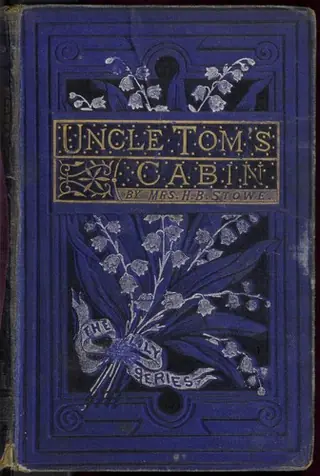
Uncle Tom's Cabin
by Harriet Beecher Stowe · first published 1850
9% recommend81% neutral9% critical
Why HN recommends it
Moral, emotionally driven novel about slavery that helped turn public opinion in the 19th century; worth reading to understand the ideology and outrage of that era, and it remains widely read around the world.
Common criticism: Some call it oversimplified propaganda that is boring and hard to read
Summarised by Claude from recommending comments
This unforgettable novel tells the story of Tom, a devoutly Christian slave who chooses not to escape bondage for fear of embarrassing his master. However, he is soon sold to a slave trader and sent down the Mississippi, where he must endure brutal treatment. This is a powerful tale of the extreme cruelties of slavery, as well as the price of loyalty and morality. When first published, it helped to solidify the anti-slavery sentiments of the North, and it remains today as the book that helped move a nation to civil war. "So this is the little lady who made this big war." Abraham Lincoln's l
Affiliate links. As an Amazon Associate I earn from qualifying purchases.
Mentions per year
What Hacker News says
Related books
 2020–2026
Bel-Ami
Guy de Maupassant
Recommended by 1 · mentioned by 41 recommend · 4 mention1 recommend · 41 recommend
 2018–2026
Reader, Come Home
Maryanne Wolf
Recommended by 7 · mentioned by 117 recommend · 11 mention7 recommend · 117 recommend
 2012–2025
My Ántonia
Willa Cather
Recommended by 11 · mentioned by 1411 recommend · 14 mention11 recommend · 1411 recommend
 2010–2025
The Satanic Verses
Salman Rushdie
Recommended by 12 · mentioned by 4612 recommend · 46 mention12 recommend · 4612 recommend
The Second Sex
Simone de Beauvoir
Recommended by 8 · mentioned by 218 recommend · 21 mention8 recommend · 218 recommend
 2008–2026
The Jungle
Upton Sinclair
Recommended by 32 · mentioned by 13632 recommend · 136 mention32 recommend · 13632 recommend
 2011–2026
Seven Pillars of Wisdom
T. E. Lawrence
Recommended by 7 · mentioned by 237 recommend · 23 mention7 recommend · 237 recommend
 2009–2025
Civilization and Its Discontents
Sigmund Freud, Coralie Bickford-Smith
Recommended by 8 · mentioned by 248 recommend · 24 mention8 recommend · 248 recommend
…usually a veiled condemnation of something the reader doesn't like. The former is just arguing for a different moral framing[0]. I don't see morals in literature being a bad thing. The example used here, Uncle Tom's Cabin, did what a lot of books only dream they could do - grabbing their readers by the throat and dragging them to the conclusion. I've never worked with a sensitivity reader and I have no intention of working…
on “The Life, Death–and Afterlife–Of Literary Fiction” ↗Uncle Tom´s cabin
on “Ask HN: What book have you given as a gift?” ↗Slaves did many skilled labor jobs back in the day. In Uncle Tom's Cabin (a book you really should read, but beware the purpose was to make you pick up your gun and march, so if you have those tendencies...) on of the important slaves held a good factory job. Of course most…
on “Why wasn't the steam engine invented earlier? Part II” ↗>And Uncle Tom's Cabin has virtually no appeal anymore. It might have no appeal for the trend following people in the current US climate (for political reasons), but it remains a popular book around the globe. You can find…
on “The Life, Death–and Afterlife–Of Literary Fiction” ↗…effects, but there was a strong moral outrage to slavery in the 19th century and it developed very rapidly, starting in Britain. I recommend reading about the British public's reaction to the publication of Uncle Tom's Cabin. > their empire, whose 19th century wealth was bootstrapped on the profits of of slave-trading and the manufacture of raw materials extracted via slave labor, was uniquely-well-positioned to come out…
on “What did British officers think of the American civil war as it was happening?” ↗Mein Kampf is just the most stark example of a book that is forbidden, but very significant to read if you want to understand WWII history. Uncle Tom's Cabin is another example of a book you wont see but is another piece of literature you should read if you want to understand the ideology of a given time period. You don't have to agree with a book to read…
on “Librarians are dangerous” ↗Ayn Rand's Atlas and Fountainhead are literature in the same sense that Harriet Beacher Stowe's "uncle Tom's Cabin" is literature. These three pulp novels address important topics, but in shamefully oversimplified ways that almost defame the topics they present. Their authors both caught lightening in a bottle by…
on “Ask HN: What literature do you read?” ↗It's from a book Uncle Tom's Cabin[1] by Harriet Beecher Stowe who was staunchly antislavery. In Europe it was very popular, and there was even an U-Bahn station in Berlin called "Onkel Tom's Hütte"[2]. Also, the story of the Chevy Nova…
on “Why our startup failed” ↗"So you're the little woman who wrote the book that started this great war." Supposedly Abraham Lincoln said this to Harriet Beecher Stowe in reference to her book, Uncle Tom's Cabin, which is often credited for changing the North's attitude towards slavery.
on “Ursula K. Le Guin at the National Book Awards” ↗…remembered now: 18th century (US): Susanna Rowson / "Charlotte: A Tale of Truth" - doesn't ring a bell for me, and has a very small Google Search result (60.000) 19th century (US): Harriet Beecher Stowe / "Uncle Tom's Cabin" - I think everyone has heard of it :) and it has 15 times as many results as Susanna Rowson (Dan Brown has 17 times as many as Beecher Stowe, fittingly) I personally at least recognize most of the bestsellers…
on “Blogger Finger” ↗Not sure if the N-word is a problem. I read uncensored versions of The Adventures of Huckleberry Finn and Uncle Tom's Cabin in high school. Actually, I think I read the former in elementary school. The problem with Django would be the ultraviolence and lack of historical accuracy.
on “Andy Weir’s Best Seller ‘The Martian’ Gets a Classroom-Friendly Makeover” ↗The book it’s from, Uncle Tom’s Cabin, is full of creative orthography designed to reproduce the English pronunciation of slaves in the pre-Civil War South.
on “An OCR cliche: Into his/her anus (2009)” ↗…serialized over a year and a half in 1842-43 in the Paris daily Le Journal des Débats Politiques et Littéraires, which translates literally as the Journal of Political and Literary Debates; the second is Uncle Tom's Cabin, by Harriet Beecher Stowe, which first appeared in the antisîavery weekly, the National Era, between 1851 and 1852. > My first point is that in the case of both works, apart from the fact that they aimed…
on “Video Gaming Will Take Over” ↗Of the books listed, I think I'd probably be most interested in reading Maupassant's Bel Ami, followed closely by Stowe's Uncle Tom's Cabin.
on “Van Gogh's Favorite Books” ↗One of the most famous works of literature in American history that had a huge impact was Uncle Tom’s Cabin by Harriet Beecher Stowe >It is reported that upon being introduced to Harriet Beecher Stowe in 1862, Abraham Lincoln fondly commented she was "the little woman who wrote the book that started this great…
on “Has Literature Ever Changed the Course of History?” ↗