The Temple of the Golden PavilionYuko / translated by Ivan Morris Mishima
The Temple of the Golden Pavilion
by Yuko / translated by Ivan Morris Mishima · first published 1971
8mentions
6recommended by
7HN commenters
2018–2022first – last mentioned
86% recommend14% neutral
Why HN recommends it
Dense, baroque prose explores sex, death and mysticism, based on a real 1950 temple arson. It is Mishima's most famous work and a top-ten pick for demanding literary fiction.
Summarised by Claude from recommending comments
Affiliate links. As an Amazon Associate I earn from qualifying purchases.
Mentions per year
What Hacker News says
Related books
 2018–2023
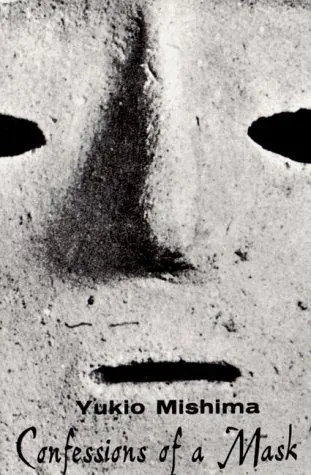
Confessions of a Mask
San Dao You Ji Fu, Meredith Weatherby
Recommended by 5 · mentioned by 85 recommend · 8 mention5 recommend · 85 recommend
 2008–2025
Norwegian Wood
Cun Shang Chun Shu
Recommended by 29 · mentioned by 4729 recommend · 47 mention29 recommend · 4729 recommend
 2008–2026
Mein Kampf
Adolf Hitler
Recommended by 15 · mentioned by 53515 recommend · 535 mention15 recommend · 53515 recommend
It's a shame that the blog doesn't mention Mishima's most famous work, The Temple of the Golden Pavilion (a fictionalized account of the real case of a deranged monk burning down Kyoto's most famous temple), or (IMHO) his magnum opus, the Sea of Fertility tetralogy, which he finished immediately before his…
on “In Which We Were Safe with Yukio Mishima (2017)” ↗Pfffff you really asked the impossible question here. Best I can do is scan through the books on the shelves next to me: * Beyond good and evil: Nietzsche * The Temple of the Golden Pavilion: Yukio Mishima * Steppenwolf: Hermann Hese * Library of babel: Borges * The Brain: David Eagleman * The Magical Mountain: Thomas Mann * The Dark Tower: Stephen King(actually tons of King books -…
on “Ask HN: What are some must read books?” ↗Mishima's late-life militarism and his death tend to overshadow his early work. Both "Confessions of a Mask" and "Temple of the Golden Pavilion" are masterpieces, and you can see the raw impulses that motivated him, before he sublimated them to a political agenda.
on “Mishima in the Twenty First Century” ↗I second Mishima, who has not let me down. I enjoyed "Confessions of a Mask", and plan to read "Temple of the Golden Pavilion" next and the last 2 books of his tetralogy. By means of microscopic observation and astronomical projection the lotus flower can become the foundation for an entire theory of the universe and an agent…
on “Japanese Writing After Murakami” ↗…incredibly dense to the point of being baroque (there are pages of footnotes even in the Japanese originals), but there's nobody else quite like him: heavy focus on themes of sex, death and mysticism. "Temple of the Golden Pavilion" is his most famous work but the "Sea of Fertility" tetralogy is also good. What I wanted was to die among strangers, untroubled, beneath a cloudless sky. And yet my desire differed from the sentiments…
on “Japanese Writing After Murakami” ↗I think I was 12 or 13 when I stumbled upon The Temple of the Golden Pavilion. Till this day is easily in my top 10 favourite books. And oddly enough almost 20 years later the same copy is sitting right besides me on the shelf. I am very interested in getting a copy in another…
on “Mishima in the Twenty First Century” ↗…Helter Skelter. Don't forget that one. (Generals do not face each other in battle... they send their troops to do their bidding.) Fictionwise, read Lolita, Convenience Store Woman, Post Office, and The Temple of the Golden Pavilion.
on “Ask HN: Which book/site you learned the most basics of your field?” ↗…one natural way all that could have played out. But to me the root themes of Mishima's work aren't intrinsically political. This may also be biased because I've only read Confessions of a Mask and The Temple of the Golden Pavilion, which Wikipedia tells me pre-date his political writings, in the former case by quite a while.
on “Mishima in the Twenty First Century” ↗