The new industrial state
by John Kenneth Galbraith · first published 1967
55% recommend45% neutral
Why HN recommends it
A clear, readable argument that large corporations and planning shape markets more than textbook competition suggests; valued for its lasting ideas on corporate behavior, suited to economics and business readers.
Summarised by Claude from recommending comments
Affiliate links. As an Amazon Associate I earn from qualifying purchases.
Mentions per year
What Hacker News says
Related books
 2012–2016
Concise Guide to Macroeconomics
David A. Moss
Recommended by 2 · mentioned by 22 recommend · 2 mention2 recommend · 22 recommend
 2010–2022
Applied Economics
Thomas Sowell
Recommended by 5 · mentioned by 65 recommend · 6 mention5 recommend · 65 recommend
 2010–2020
How an economy grows and why it crashes
Peter D. Schiff
Recommended by 8 · mentioned by 128 recommend · 12 mention8 recommend · 128 recommend
 2009–2024
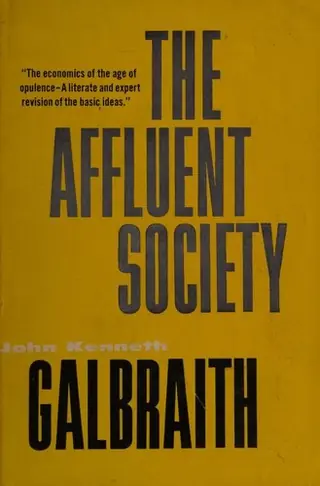
The affluent society
John Kenneth Galbraith
Recommended by 11 · mentioned by 2311 recommend · 23 mention11 recommend · 2311 recommend
 2010–2025
New ideas from dead economists
Todd G. Buchholz
Recommended by 7 · mentioned by 87 recommend · 8 mention7 recommend · 87 recommend
 2008–2024
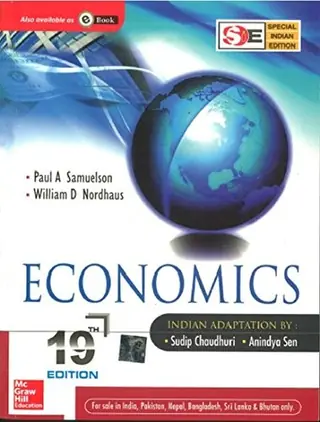
Economics
Samuelson
Recommended by 4 · mentioned by 174 recommend · 17 mention4 recommend · 174 recommend
 2008–2024
The worldly philosophers
Robert L. Heilbroner
Recommended by 17 · mentioned by 1817 recommend · 18 mention17 recommend · 1817 recommend
 2009–2023
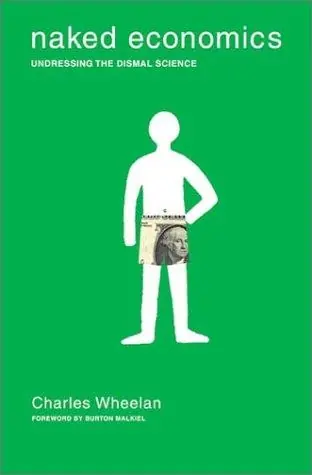
Naked Economics
Charles J. Wheelan
Recommended by 15 · mentioned by 1715 recommend · 17 mention15 recommend · 1715 recommend
I learned a heck of a lot from reading John Kenneth Galbraith's books. In particular, The Affluent Society, The New Industrial State, and Money: Whence it Came, Where it Went
on “Ask HN: Best book(s) to learn about the basics of economics?” ↗"Parkinson's Law" by C. Northcote Parkinson "The New Industrial State" by J.K. Galbraith
on “Ask HN: Best books you read in 2012” ↗…will resist the urge to tell you what NOT to read and merely recommend a few favorites: 1. I am a big fan of John Kenneth Galbraith, who writes very clearly about a few things. I recommend both "The New Industrial State" and especially "The Affluent Society", where he argues that economics is insufficient to deal with post-scarcity. 2. Deirdre McCloskey's "If You're So Smart" is a great skewering of the blinkered nature…
on “Ask HN: What are the must-read books about economics/finance?” ↗It's somewhat dated, but Galbraith's _The New Industrial State_ has a lot of interesting insight into the role of large corporations in economic planning. People sometimes criticize the book because the large corporations (GM, GE, etc.) the book talks about are less…
on “Amazon to Acquire Whole Foods for $13.7B” ↗An interesting read is Galbraith's "The New Industrial State" which lays out an argument that the US is also a planned economy, just with non-state planners. It came out before the 80s so things have changed from the era of corporate conglomerates in the US, but…
on “I changed my mind about advertising” ↗…of conditions might inspire corporations not to maximize profit, and how those kinds of decisions actually contribute to the perpetuation and success of said corporations. The main book to read is The New Industrial State. He wrote it in the '60s when conditions were very different, but the fundamental principles remain valid.
on “Tim Cook Rejects Politics of the NCPPR” ↗John Kenneth Galbraith most famous book was The Affluent Society. If you don't want to be a slave to fashion, read Robert Reich's all-time favorite book on economics, The New Industrial State.
on “Ask HN: What are the must-read books about economics/finance?” ↗…succumbed to whatever a combination of big government, big corporations, and big unions dictated to the public. Back in the day, writers such as John Kenneth Galbraith even used to celebrate the idea of a "new industrial state" in which the old private competition would yield to ever increasing concentrations of power among government, industry, and labor, who would in turn find ways to "cooperate" with one another in ushering…
on “Elon Musk: To the People of New Jersey” ↗…for people also being Good for Business. Civic-minded businessmen have been touting the positive effects of social progress on Business for decades. Galbraith addresses the phenomenon at length in _The New Industrial State_. Cook isn't trying to make a persuasive factual argument, he's making an endorsement, the power of which comes from his role at a major American firm. I have no doubt that he personally believes that…
on “Workplace Equality Is Good for Business” ↗It's called The New Industrial State and JK Galbraith wrote about in 1967. It's also why companies hoard cash, so their managers can stay in control. http://en.wikipedia.org/wiki/The_New_Industrial_State
on “Extreme concentration of wealth in US economy has led to central planning” ↗I don't think it'll work. Unions more or less kinda worked when you had largish enterprises with a lot of employees. This is more or less the world described by John Kenneth Galbraith's "The New Industrial State." This world doesn't really exist any more. It was undermined by lots of forces. I'd say the main force was people being dissatisfied with the working conditions. In order for collective bargaining…
on “Amazon sues employee for taking Google cloud job, in new test of non-competes” ↗w.r.t 2), I think of the peak of that as roughly the time in which John Kenneth Galbraith wrote "The New Industrial State". We didn't exactly conspire to kill it, either - it sorta just happened.
on “Can Capitalism Be Redeemed?” ↗In The New Industrial State, Galbraith identified advertising as the engine that kept the system running by persuading people they needed more things than they would have in the absence of advertising. I think the rest of the analysis…
on “The Obsolescence of Advertising in the Information Age (2018)” ↗…other til the mid-1960s. IIT Kharagpur was built by UIUC and IIT Kanpur by UC Berkeley, along with JK Galbraith's strong lobbying for Indians rule industrialization in "Economic Development" and "The New Industrial State". After JFK and Nehru died, the relationship tanked. Indira Gandhi leaned pro-Socialist economically with the 1969-71 nationalization drive that impacted American businesses, and LBJ and Nixon both detested…
on “US thwarted plot to kill Sikh separatist on American soil” ↗A very similar thesis was put forward by Galbraith in "The New Industrial State".
on “Advantages of incompetent management” ↗