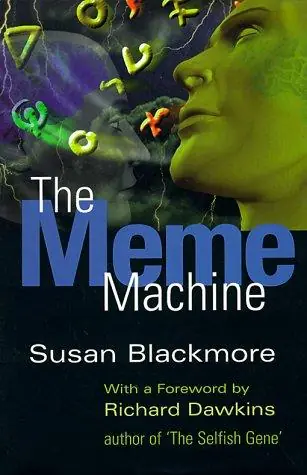
The meme machine
by Susan J. Blackmore · first published 1999
56% recommend44% neutral
Why HN recommends it
Extends Dawkins' idea of memes into a full account of how cultural replication shapes behavior and minds; recommended to readers who want to explore memetic theory and its implications beyond The Selfish Gene.
Summarised by Claude from recommending comments
After Richard Dawkins' The Selfish Gene, Susan Blackmore drive us deeply into the theory of the meme, social and cultural "replicators", trying to explain the human unique ability to imitate. Altruism, ideas, human behaviours, sex, poetry, music... seems to be simply the result of such as memetic selection... Even our inner conscious self and our sense of free will are illlusion created by the memes for the sake of their own replication.
Affiliate links. As an Amazon Associate I earn from qualifying purchases.
Mentions per year
What Hacker News says
Related books
 2011–2026
The ego tunnel
Thomas Metzinger
Recommended by 17 · mentioned by 2417 recommend · 24 mention17 recommend · 2417 recommend
 2007–2026
The Selfish Gene
Richard Dawkins
Recommended by 220 · mentioned by 431220 recommend · 431 mention220 recommend · 431220 recommend
 2011–2026
The Information
James Gleick
Recommended by 61 · mentioned by 8161 recommend · 81 mention61 recommend · 8161 recommend
 2008–2026
Consciousness explained
Daniel C. Dennett
Recommended by 35 · mentioned by 7235 recommend · 72 mention35 recommend · 7235 recommend
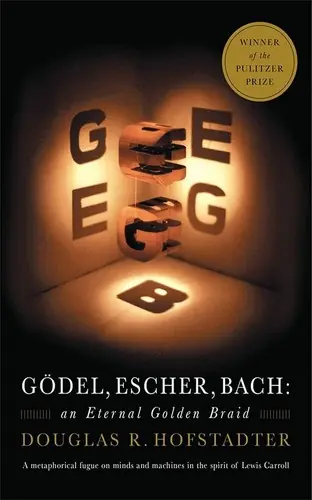 2007–2026
Gödel, Escher, Bach
Douglas R. Hofstadter
Recommended by 505 · mentioned by 1,055505 recommend · 1,055 mention505 recommend · 1,055505 recommend
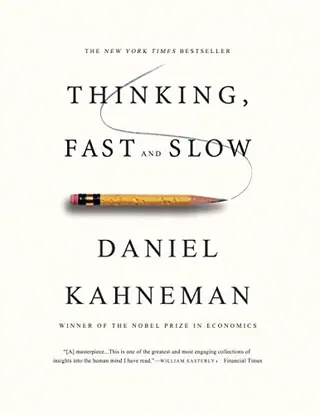 2011–2026
Thinking, fast and slow
Daniel Kahneman
Recommended by 373 · mentioned by 879373 recommend · 879 mention373 recommend · 879373 recommend
…Paws and Catapults: Mechanical Worlds of Nature and People" by Steven Vogel. If you were fascinated by the wings of birds or little waves behind the plants in water read this. Fascinating book! 2. "The meme machine" by Susan Blackmore. Starting off where Dawkin's book ended. 3. "Three steps to yes" by Gene Bedell, beside Getting to Yes already mentioned here.
on “Ask HN: Books with a high signal to noise ratio?” ↗Susan Blackmore's The Meme Machine is the book that brought the ideas home for me. https://www.goodreads.com/book/show/254502.The_Meme_Machine
on “Your Head as a Battleground, Dueling Memes” ↗Interesting, those looking for similar ideas may look into memetic theory. "The meme machine" by Blackmore and not exactly related but a great book that invented the word meme is "The selfish gene" by Dawkins
on “Our conscious experience of the world is a memory, says new theory” ↗See also The Meme Machine, which is a book from the 90s (I think) that attempts to take Dawkins' idea of memes to its logical conclusion (and the book has Dawkins' blessing as evidenced by the fact he provides a foreword or at…
on “What Is Life? (2019)” ↗…genes of the most people in one or two generations or our culture? I'm not saying genetics do not play a part at all, but the culture and knowledge can suppress it or express it. I recommend reading "The Meme Machine" which explains the concept in details.
on “Why the demographic transition is speeding up” ↗I wonder if the "upper brain" segment, so pronounced in mammals could be associated with the "meme machine" of Susan Blackmore, et al. In other words, I wonder if whereas genetic evolutionary pressures were responsible for the lower and mid sections of the brain, it would be interesting to explore if "memetic"…
on “Unsolved Brain Mysteries” ↗FWIW-W, Susan Blackmore in her 1999 book, the Meme Machine, notes there appears to be an equilibrium for brain size. Neanderthal had a bigger brain size than modern humans. The larger brain requires more calories, and increases mortality for the mother. Blackmore,…
on “Has humanity reached ‘peak intelligence’?” ↗> Was “meme” a word in use in English in 1997 already? I would assume so. Susan Blackmore's popular science book on memetics was published in 1999. https://en.wikipedia.org/wiki/The_Meme_Machine
on “The Long Boom (1997)” ↗…Award.[4] * Susan Blackmore has made contributions to the field of memetics.[19] The term meme was coined by Richard Dawkins in his 1976 book The Selfish Gene. In his foreword to Blackmore's book The Meme Machine (1999), Dawkins said, "Any theory deserves to be given its best shot, and that is what Susan Blackmore has given the theory of the meme."[20] Other treatments of memes, that cite Blackmore, can be found…
on “What Is a Mathematical Structure of Conscious Experience?” ↗…(Blackmore, 75.5) Seems this AST theory would offer Darwinian continuity and fill gaps in the qualitative theories of mind between other organisms and the exceptional human condition. Blackmore, Susan. The Meme Machine. Oxford, UK: Oxford University Press. (1999) Dawkins, Richard. The Selfish Gene. Oxford, UK: Oxford University Press. (1976)
on “How Did Consciousness Evolve? (2016)” ↗