The managerial revolution
by James Burnham · first published 1941
23mentions
4recommended by
17HN commenters
2013–2026first – last mentioned
24% recommend76% neutral
Affiliate links. As an Amazon Associate I earn from qualifying purchases.
Mentions per year
What Hacker News says
Related books
 2012–2026
That hideous strength
C. S. Lewis
Recommended by 10 · mentioned by 3310 recommend · 33 mention10 recommend · 3310 recommend
 2008–2026
Stand on Zanzibar
John Brunner
Recommended by 38 · mentioned by 7638 recommend · 76 mention38 recommend · 7638 recommend
 2007–2026
Nineteen Eighty-Four
George Orwell
Recommended by 53 · mentioned by 28353 recommend · 283 mention53 recommend · 28353 recommend
 2009–2026
Fahrenheit 451
Ray Bradbury
Recommended by 63 · mentioned by 26563 recommend · 265 mention63 recommend · 26563 recommend
 2007–2026
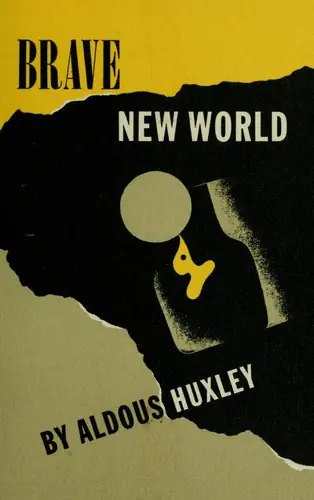
Brave New World
Aldous Huxley
Recommended by 202 · mentioned by 708202 recommend · 708 mention202 recommend · 708202 recommend
I'd recommend James Burnham's "The Managerial Revolution" https://archive.org/details/in.ernet.dli.2015.17923/page/n3 The gist being that the capitalist/socialist arguments--the ones we continue to wear into the ground--ceased to describe reality a very long…
on “Socialism is incompatible with human nature” ↗…modern world will necessitate an org chart which is both very broad and very deep. A better explanation of what we have—and will continue to have barring some cataclysm—is laid out in Burnham’s “The Managerial Revolution” and Michels’ “Iron Law of Oligarchy.”
One of the people who extensively documented the features of the managerial revolution was a communist completely familiar with the writings of Lenin, James Burnham. See the book by that name. > The fact that they let their managers take a cut doesn’t change the power dynamic. The managers…
on “How the U.S. Used Disinformation and the 'Jakarta Method' to Change the World” ↗See "The Managerial Revolution" by James Burnham.
on “Report: 90% of nurses considering leaving the profession in the next year” ↗…overwhelms the former. FDR, who right next to the above including Lenin's successor Stalin, who also completely changed the nature of his country's government and eventually the country's nature (read The Managerial Revolution). As the then most powerful country in the world, that was a very big thing.
on “Ask HN: Who are the 100 people who most changed the world?” ↗…of good points, especially about the Fascism of the period at least from post-crash Hoover through when Galbraith wrote that book. James Burnham wrote about it more contemporaneously, in his 1941 The Managerial Revolution.
on “Is America at risk of following the path of failing nation-states?” ↗…control and will be able to, for example, disable the device at will. This an aspect of the increasing separation between “owner[ship]” and control that was predicted by James Burnham in his 1941 book The Managerial Revolution. (https://www.oxfordreference.com/view/10.1093/oi/authority.20...)
on “The uninvited Internet of things” ↗…certain aspects of this in his "Prefatory note to the second edition" of Scientific Outlook, where he actually mentions the direct influence of this book upon both Brave new world and upon Burnham's "The Managerial Revolution", a book which contained projections of the future which, as Orwell scholars agree, both horrified and fascinated him and, in turn, turned out to be the inspiration for much of "1984".
on “Who Got It Right: Orwell or Huxley?” ↗…instance, my knowledge of progressive-era America depends on knowing a lot of facts and stories about different fields/metanarratives -- what Ann Douglas called the "feminization of American culture" --- the managerial revolution (burnham, Chandler), modern imperialism.
on “World War 3 and the Unknowability of Elon Musk’s Drug Habits” ↗Interesting to see this sort of reflection happening again 80 years after Burnham published The Managerial Revolution. (Something waking people up. What could it be?) Burnham outlined a lot of the same points about the new ruling class and their ideologies, which were extremely prescient but, it turns out, decades too…
on “Managerial Aesthetics, or Documenta Fifteen” ↗Orwell owes more to James Burnham's non-fiction book The Managerial Revolution: What is Happening in the World. Orwell's pamphlet-within-a-book in 1984 "The Theory and Practice of Oligarchical Collectivism" is more or less a condensed version of Burnham's thesis. Orwell even reviewed…
on “The most telling part of “1984″ is the appendix” ↗The world of 1984 was based on James Burnham's book The Managerial Revolution. Orwell even wrote a couple reviews of Burnham's work. Here's the first: http://orwell.ru/library/reviews/burnham/english/e_burnh
on “1984: The masterpiece that killed George Orwell” ↗…also note that those running companies are, by definition in the US, responsible for providing good returns to the owners, AKA stockholders. And it's been noted since 1941 or so, in James Burnham's The Managerial Revolution, that there's a divergence between the interests of managers and owners, so efforts like Section 162(m) are understandable.
on “The U.S. computer industry is dying” ↗…rationale for Eastasia, Eurasia, and Oceania: "YOU AND THE ATOMIC BOMB (1945)" http://gutenberg.net.au/ebooks03/0300011h.html#part33 It looks like he may have swiped the tripartition from Burnham, THE MANAGERIAL REVOLUTION, but it also corresponds nicely to who has the bomb. Eastasia - CN Eurasia - FR (sub/air only), RU Oceania - UK (sub only), US Edit: FWIW, after skimming a summary of Burnham (the precursor…
on “TSMC plans to halt chip supplies to Huawei in 2 months” ↗This separation of ownership and control is discussed at length in James Burnham's The Managerial Revolution (1941). The central idea, if I'm not butchering it too badly, is that, as our technological society becomes increasingly complex, the owners of things no longer have control over them, and, therefore,…
on “I want a computer that I own” ↗