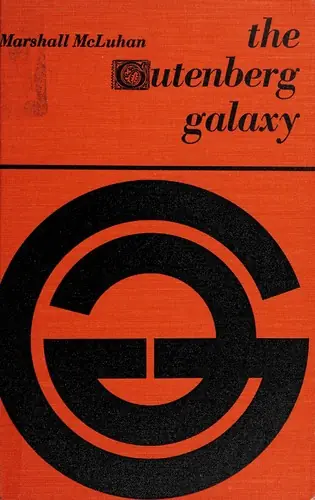
The Gutenberg Galaxy
by Marshall McLuhan · first published 1962
44% recommend56% neutral
Why HN recommends it
Analyzes how the printing press and the shift from oral to written culture shaped society, culture, and human consciousness; recommended for anyone interested in media history and theory.
Summarised by Claude from recommending comments
The Gutenberg Galaxy catapulted Marshall McLuhan to fame as a media theorist and, in time, a new media prognosticator. Fifty years after its initial publication, this landmark text is more significant than ever before. Readers will be amazed by McLuhan’s prescience, unmatched by anyone since, predicting as he did the dramatic technological innovations that have fundamentally changed how we communicate. The Gutenberg Galaxy foresaw the networked, compressed ‘global village’ that would emerge in the late-twentieth and twenty-first centuries — despite having been written when black-and-white t
Affiliate links. As an Amazon Associate I earn from qualifying purchases.
Mentions per year
What Hacker News says
Related books
 2010–2025
The printing press as an agent of change
Elizabeth L. Eisenstein
Recommended by 5 · mentioned by 75 recommend · 7 mention5 recommend · 75 recommend
 2009–2026
Propaganda
Edward L. Bernays
Recommended by 33 · mentioned by 6333 recommend · 63 mention33 recommend · 6333 recommend
 2011–2026
The Information
James Gleick
Recommended by 61 · mentioned by 8161 recommend · 81 mention61 recommend · 8161 recommend
 2009–2026
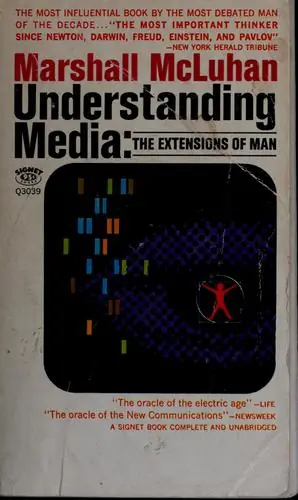
Understanding Media
Marshall McLuhan, Marshal McLuhan
Recommended by 35 · mentioned by 8335 recommend · 83 mention35 recommend · 8335 recommend
 2007–2026
The Open Society and Its Enemies
Karl Popper
Recommended by 31 · mentioned by 8531 recommend · 85 mention31 recommend · 8531 recommend
 2009–2026
IBM and the Holocaust
Edwin Black
Recommended by 37 · mentioned by 19137 recommend · 191 mention37 recommend · 19137 recommend
 2007–2026
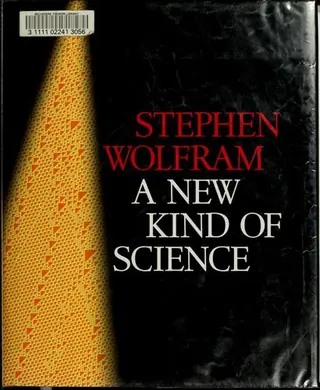
A new kind of science
Stephen Wolfram
Recommended by 44 · mentioned by 31644 recommend · 316 mention44 recommend · 31644 recommend
 2008–2026
Mein Kampf
Adolf Hitler
Recommended by 15 · mentioned by 53515 recommend · 535 mention15 recommend · 53515 recommend
Mcluhan's work would be right up your alley then. Medium is the Massage; Gutenberg Galaxy would be my top 2 recommendation given what you wrote.
on “Ask HN: 2018 Summer Reading List?” ↗…book before the internet you had to be in the central location of the working copy. For more detailed historical analysis of how the printing press created highly centralized societies, check out The Gutenberg Galaxy by Marshall McLuhan[1]. On the contrary, with the internet, many people are producing and consuming dynamic content simultaneously with many people who are doing the same. Many to many. Prosumer <->…
on “Congress Is Trying to Roll Back Internet Privacy Protections” ↗For an interesting historical analysis on the subconscious effects of evolving media check out the Gutenberg Galaxy by McLuhan. While your Cadigan quote suggests TV induces schizophrenia, McLuhan asks the same question in regards to literacy and the phonetic alphabet: https://books.google.com/books?id=7K7rKIWaXXIC&pg=PR59&lpg=P...
on “Apple unlock: Judge compares request to execution order” ↗…media and epistemic is older than history itself -- it was one of those changes (writing) which started history. Elisabeth Eisenstein, The Printing Press as an Agent of Change, and Marshall McLuhan, The Gutenberg Galaxy, particularly address this.
on “Social media bubbles may threaten democracy” ↗Marshall McLuhan's "Gutenberg Galaxy" and "Understanding Media". Buckminster Fuller's "Operating Manual for Spaceship Earth" (and other books and essays of his).
on “Ask HN: What books have made the biggest impact on your mental models?” ↗I've recently read The Gutenberg Galaxy by McLuhan and I can recommend it for everyone interested in the topic. He analyses how the invention of printing press influenced society, culture, and human consciousness. I liked his idea that the…
on “History of Information and Media” ↗Time to "train" on Marshall McLuhan: See The Gutenberg Galaxy (book) (1962) McLuhan's Wake (documentary movie, narrated by Laurie Anderson) (2002) Re Wake: Listen to the accompanying full interviews with McLuhan's colleagues from which the documentary is drawn.
on “Why is human downloading a file called pirating and AI scraping called training” ↗…body plans, and not merely single-celled organisms or masses or colonies of cells. For media, see especially Elizabeth Eisenstein's The Printing Press as an Agent of Change and Marshall McLuhan's The Gutenberg Galaxy. The link between mass media and totalitarian, fascist, authoritarion, and nationalist sentiments has long been observed (Hannah Arendt, Dwight MacDonald, the Frankfurt School, Edward Herman & Noam Chomsky,…
on “Verizon/Yahoo Blocking Attempts to Archive Yahoo Groups – Deletion: Dec. 14” ↗…pages of fairly dense media theory books."* 1. https://www.philosophizethis.org/podcast/episode-149-on-medi... * Of course, I enjoyed the podcast episode so much that I did end up going on to read The Gutenberg Galaxy and The Medium Is the Massage [sic], and wholeheartedly recommend both.
on “Decentralised content moderation” ↗This idea of Post Linguistic Emergent Concepts is an interesting one which Marshall McLuhan alluded to in his 1964 book The Gutenberg Galaxy: The Making of Typographic Man. He suggested that the sheer speed of electric processing made the alphabet obsolete and that in order to cope with this drastic speed up in communication we would have…
on “How should we talk to AIs?” ↗…of media address the technological impact of the latin letter, and how it was extended to other technology. http://www.amazon.com/Laws-Media-Science-Marshall-McLuhan/dp... Marshall McLuhan's book The Gutenberg Galaxy is a longer approach to specific conversation around how latin characters led to the printing press which transformed society into the industrial age: http://www.amazon.com/Gutenberg-Galaxy-Marshall-McLuhan/dp/1...
on “Harir – Reducing Noise in Arabic Script” ↗…of how nationalism, a concept formed as a result of the effects of the Gutenberg printing press[1], is now obsolete and counterproductive in a globalized, electrically interconnected society. [1] The Gutenberg Galaxy, Marshall McLuhan
on “Europe’s Top Digital-Privacy Watchdog Zeros in on U.S. Tech Giants” ↗Marshall McLuhan has an alternate but related theory for the difference between "close talkers" and those who like to be able to see the whole person when talking. In The Gutenberg Galaxy, McLuhan infers that "close talkers" are often tribal cultures who rely primarily on the spoken word for means of communication whereas highly literate cultures like to be able to see the whole person…
on “Personal Space Is a Fear Response” ↗>I have no speculation on the long-term prospects of the written word. Marshall McLuhan made such speculation in his book The Gutenberg Galaxy: The Making of Typographic Man >Now, in the electric age, the very instantaneous nature of co-existence among our technological instruments has created a crisis quite new in human history. Our extended…
on “The Unsuitability of English (2015)” ↗…Media Monopoly. There's also the wee slight problem that subversion of mass media by populist, demagogic, and/or fascist political movements is a distinct historical trend. See Marshall McLuhan, The Gutenberg Galaxy, Elizabeth Eisenstein, The Printing Press as an Agent of Change, or much of Hannah Arendt's work. This theme is also hit on by MacDonald, below. https://is.muni.cz/el/1421/jaro2008/ESB032/um/5136660/MacDon...…
on “Please stop asking me to use the app” ↗