
The Great Mental Models
by Farnam Street, Shane Parrish, Rhiannon Beaubien · first published 2020
45% recommend55% neutral
Why HN recommends it
An approachable, organized introduction to a broad set of general thinking models for beginners. It serves as a starting point for applying several models to everyday problems.
Summarised by Claude from recommending comments
Affiliate links. As an Amazon Associate I earn from qualifying purchases.
Mentions per year
What Hacker News says
Related books
 2016–2022
The decision book
Mikael Krogerus, Roman Tschäppeler
Recommended by 4 · mentioned by 54 recommend · 5 mention4 recommend · 54 recommend
 2019–2025
Super Thinking
Gabriel Weinberg, Lauren McCann
Recommended by 8 · mentioned by 208 recommend · 20 mention8 recommend · 208 recommend
 2019–2026
The Model Thinker
Scott E. Page
Recommended by 9 · mentioned by 159 recommend · 15 mention9 recommend · 159 recommend
 2013–2025
Intuition pumps and other tools for thinking
Daniel C. Dennett
Recommended by 8 · mentioned by 148 recommend · 14 mention8 recommend · 148 recommend
 2016–2025
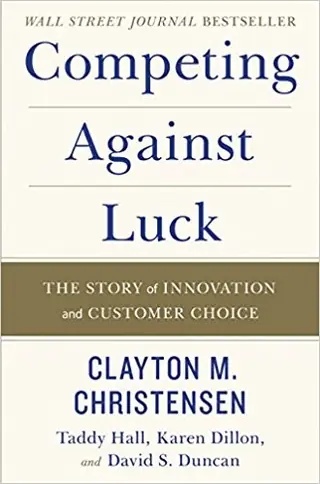
Competing Against Luck
Clayton M. Christensen
Recommended by 15 · mentioned by 2115 recommend · 21 mention15 recommend · 2115 recommend
 2010–2026
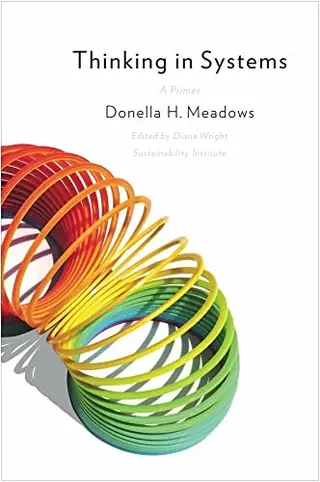
Thinking in systems
Donella H. Meadows, Diana Wright
Recommended by 124 · mentioned by 163124 recommend · 163 mention124 recommend · 163124 recommend
 2007–2026
How to solve it
George Pólya
Recommended by 161 · mentioned by 206161 recommend · 206 mention161 recommend · 206161 recommend
 2008–2026
Meditations by Marcus Aurelius
Marcus Aurelius, Meric Casaubon
Recommended by 184 · mentioned by 251184 recommend · 251 mention184 recommend · 251184 recommend
* Poor Charlie's Almanack: The Wit and Wisdom of Charles T. Munger * Seeking Wisdom: From Darwin to Munger * The Model Thinker: What You Need to Know to Make Data Work for You * The Great Mental Models
on “Ask HN: Which books teach mental models?” ↗…Charlie Munger and these following two books: The Model Thinker: What You Need to Know to Make Data Work for You by Scott Page https://www.amazon.com/Model-Thinker-What-Need-Know/dp/04650... and The Great Mental Models: General Thinking Concepts by Shane Parrish https://www.amazon.com/Great-Mental-Models-Thinking-Concepts...
on “Ask HN: Which books teach mental models?” ↗+ I suggest books from Shane Parrish – The Great Mental Models, which are exactly about solving all or at least many problems by using several (80-90) mental models.
on “Ask HN: What bits of fundamental knowledge are productivity multipliers?” ↗Are you looking for something like HWPh[0] (Historical dictionary of philosophy), a 30+ years effort to explain the conceptual history of every philosophical term? There's also a smaller series, like Great Mental Models[1], specifically targeting "abstract concepts" in an approachable manner. Otherwise, mathematics is still the dominant language for expressing abstract concepts. > But there are many words that don't,…
on “Ask HN: Something like Unicode but for abstract concepts?” ↗…success in writing(My articles gained some attention and ended up publishing a book with packt). I am still a beginner, long way to become a good model thinker. Here are a few books, I recommend. 1.The Great Mental Models : General Thinking Concepts (Beginner Level) 2.Super Thinking (Intermediate) 3.The Model Thinker (Intermediate-Advanced, you can also take the coursera MOOC "Model Thinking" by the same author) I am…
on “Mental models” ↗I’m currently reading The Great Mental Models. The part I’m reading now is called The Map Is Not The Territory, and it is about formulating abstractions. In this chapter, the author reminds us that we run into problems when our knowledge is that…
on “Small, sharp tools (2014)” ↗Many people mentioned the Farnam Street newsletter, but Shane Parrish has also published a book in 3 volumes: The Great Mental Models, see https://fs.blog/books/
on “Tools for Better Thinking” ↗The Great Mental Models - Shane Parrish
on “Ask HN: What are you reading these days?” ↗…Writer's Notebook by W. Somerset Maugham * The Bullet Journal Method by Ryder Carroll * The Medieval Scriptorium by Sara J. Charles * Chance Particulars by Sara Mansfield Taber, Maud Taber-Thomas * The Great Mental Models Volume 1- General Thinking Concepts by Parrish, Shane; Beaubien, Rhiannon * The Product is Docs by Christopher Gales * Antinet Zettelkasten by Scott P. Scheper Articulating design decisions by Tom…
on “Ask HN: What did you find out or explore today?” ↗…Luck - Domain Driven Design - Patterns of Enterprise Application Architecture - Data-Driven Marketing - Designing Data-Intensive Applications - Monetizing Innovation - Super Thinking - The Great Mental Models - Nonviolent Communication - High Growth Handbook - Powerful - Trillion Dollar Coach
on “What is expected of a engineering manager?” ↗…using mental models to think. Farnam Street has lots of good, free materials that you can start with and try to start using in your daily life. The site also recently put out a series of books called “The Great Mental Models”. But mental models can be found everywhere. For example, I frequently use Nassim N. Taleb’s mental models of “robustness,” “antifragility,” and “skin in the game.” Likewise, I use the concept of expected…
on “Ask HN: How to Learn 'To Think'?” ↗