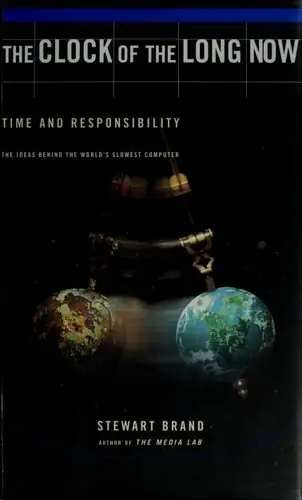
The Clock of the Long Now
time and responsibility
by Stewart Brand · first published 1999
75% recommend25% neutral
Using the designing and building of the Clock of the Long Now as a framework, this is a book about the practical use of long time perspective: how to get it, how to use it, how to keep it in and out of sight. Here are the central questions it inspires: How do we make long-term thinking automatic and common instead of difficult and rare? Discipline in thought allows freedom. One needs the space and reliability to predict continuity to have the confidence not to be afraid of revolutions Taking the time to think of the future is more essential now than ever, as culture accelerates beyond its abil
Affiliate links. As an Amazon Associate I earn from qualifying purchases.

Mindstorms, by Seymour Papert - for understanding the relationship of learning and technology; a smart, humanist, empathetic approach to education [See also: The Children's Machine; Deschooling Society] Clock of the Long Now, by Stewart Brand - for the concepts of deep time and the long now; appreciating a sense of how we experience time and our place in history [See also: Time and the Art of Living] Flatland, by Edwin A.…
on “Ask HN: What books have made the biggest impact on your mental models?” ↗because they haven’t been mentioned: stewart brand’s book, the clock of the long now[0] and the long now foundation[1] tackle the same problem. excellent exposition that doesn’t necessarily transmit despair amidst the shortening attention span. i think the thrust of the message is towards…
on “The scarcity of the long term” ↗The Clock of the Long Now by Stewart Brand
on “Ask HN: What books changed the way you think about almost everything?” ↗Reminds me of Stewart Brand and the Clock of the Long Now (and other longer time horizon projects they are working on). Reminds me of a statement he made during a Tim Ferris interview that I think is quite profound for our mental health. ".... being proud is…
on “Slow” ↗