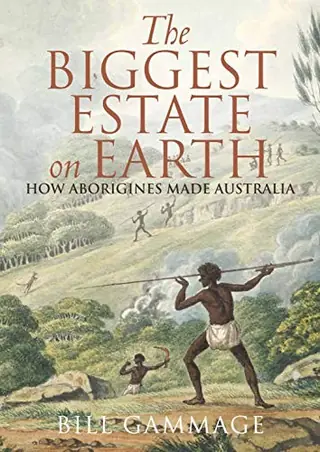
The biggest estate on earth
by Bill Gammage · first published 2011
4mentions
2recommended by
2HN commenters
2017–2020first – last mentioned
100% recommend
"Across Australia, early Europeans commented again and again that the land looked like a park. With extensive grassy patches and pathways, open woodlands and abundant wildlife, it evoked a country estate in England. Bill Gammage has discovered this was because Aboriginal people managed the land in a far more systematic and scientific fashion than we have ever realised. For over a decade he has examined written and visual records of the Australian landscape. He has uncovered an extraordinarily complex system of land management using fire, the life cycles of native plants, and the natural flow o
Affiliate links. As an Amazon Associate I earn from qualifying purchases.
…living' (as if pre-modern 'tribes' in different parts of the world have much in common!). Human cultures can be so vastly different as to be truly incommensurable. Have a read of Bill Gammage's 'The Biggest Estate on Earth', about the Australian indigenous nations. They managed the entirely of Australia a single 'estate', providing ample, easily-obtained subsistence from a massive variety of sources, using a variety of…
I'll second the Pascoe recommendation. Also Bill Gammage's The Biggest Estate on Earth: How Aborigines Made Australia is eye opening
on “Is an Aboriginal tale of an ancient volcano the oldest story ever told?” ↗…for kangaroo meat you can't get these in the supermarket here either, there's no industry growing them on a large scale due to cultural and sometimes religious reasons. Pascoe's Dark Emu or Gammage's Biggest Estate on Earth (less fought about) are good reads in that area.
on “An Archaeobotanist Searching Art for Lost Fruit” ↗…and fauna of their choice readily available in their country (and to keep them available throughout good & bad seasons). Popular accounts of the contemporary research can be found in Bill Gammage's The Biggest Estate on Earth and Bruce Pascoe's Dark Emu. It's a fast-changing research landscape, though, with much left to be discovered.
on “The Case Against Civilization” ↗