
Plutarch's Lives
by Plutarch · first published 1916
54% recommend46% neutral
Why HN recommends it
Paired biographies of Greek and Roman figures that give a firsthand feel for how people long ago lived and thought, and let readers see the rise and fall of empires; suits readers interested in history and human nature.
Summarised by Claude from recommending comments
Affiliate links. As an Amazon Associate I earn from qualifying purchases.
Mentions per year
What Hacker News says
Related books
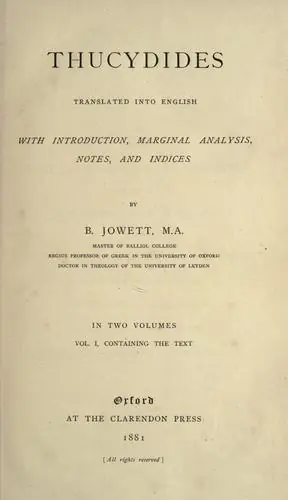 2009–2026
History of the Peloponnesian War
Thucydides
Recommended by 11 · mentioned by 3411 recommend · 34 mention11 recommend · 3411 recommend
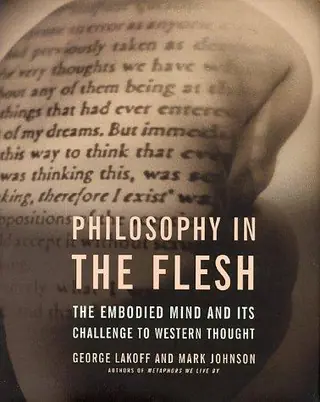 2009–2024
Philosophy in the flesh
George Lakoff
Recommended by 14 · mentioned by 2014 recommend · 20 mention14 recommend · 2014 recommend
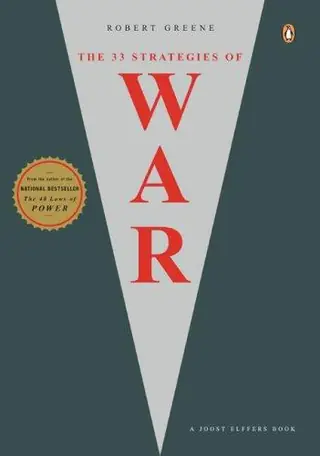 2008–2024
The 33 Strategies of War
Robert Greene, Don Leslie
Recommended by 11 · mentioned by 1311 recommend · 13 mention11 recommend · 1311 recommend
 2015–2026
Public opinion
Walter Lippmann
Recommended by 10 · mentioned by 1910 recommend · 19 mention10 recommend · 1910 recommend
 2010–2025
How to Stop Worrying and Start Living
Dale Carnegie, Kaneiji Dale
Recommended by 28 · mentioned by 3428 recommend · 34 mention28 recommend · 3428 recommend
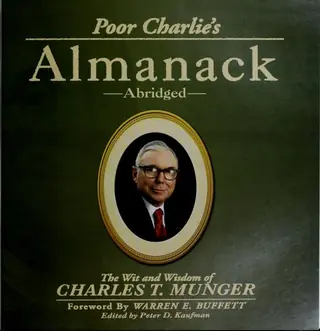 2007–2026
Poor Charlie's Almanack
Charles T. Munger
Recommended by 34 · mentioned by 5434 recommend · 54 mention34 recommend · 5434 recommend
 2012–2026
Quiet
Susan Cain
Recommended by 43 · mentioned by 5743 recommend · 57 mention43 recommend · 5743 recommend
 2008–2026
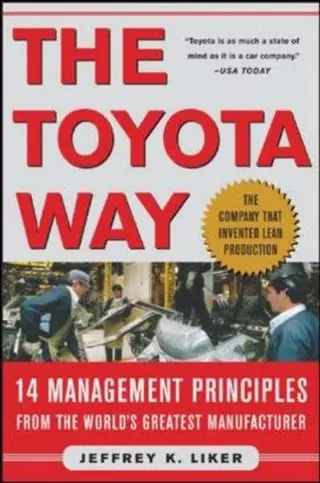
The Toyota Way
Jeffrey K. Liker
Recommended by 27 · mentioned by 6627 recommend · 66 mention27 recommend · 6627 recommend
…Lakoff/Johnson Philosophy in the Flesh - L/J Rationalism in Politics - Oakeshott Erving Goffman – Presentation of Self in Everyday Life Walter Lippmann – Public Opinion Art as Experience - John Dewey Plutarch's Lives G.K. Chesterton – Heretics (essay) William James - On A Certain Blindness in Human Beings (and its sequel) (essay) R.L. Stevenson - The Lantern-Bearers
on “Ask HN: Books on specific topics that have applied to many areas of your life?” ↗…Philosophy In The Flesh is about the conceptual metaphors that philosophy is built from. Jonathan Glover, Humanity: A Moral History of the Twentieth Century - WWI, WWII and other wars, nazism, communism etc Plutarch's Lives - biographies and stories from famous ancient Greeks and Romans. Amazing how little's changed. Lin Yutang, The Importance of Understanding - introduced me to ancient Chinese philosophers. The Importance…
on “Ask HN: What are your favorite non-fiction books of all time?” ↗…someone use WEB to program in unless they were already Knuth-like, but the concepts and examples of "how it is done" is worth reading. Just like if I were to write a book, it wouldn't be in the style of Plutarch's Lives, I'm still glad I read them.
on “Ask HN: Where do I find good code to read?” ↗…but not bad. Ernest Hemingway's "A Farewell to Arms": While reading it I found it extremely boring, though there was this feel to it that still made it pleasant to read. I can't really describe it. Plutarch's "Lives" from the main figures from the end of the Republic (Penguin Classics collection): By far the best books on Roman history I've ever read. Livy's books on the Second Punic War (Penguin Classics collection):…
on “Ask HN: Books you read in 2015?” ↗…cut out the middle men. Avoid glossy-covered and over-marketed summaries of other men's work. Grab a copy of Epictetus' discourses and his Enchiridion. Read Aurelius' meditations. Get familiar with Plutarch's Lives. This will get one started cheaply: http://www.ebay.com/itm/LUCRETIUS-EPICTETUS-12-Britannica-Gr... Be aware, this volume includes Lucretius who is not a stoic, rather, a typical reductionist Epicurian.…
on “A Simplified Modern Approach to Stoicism” ↗…be immediately found out and screwed if I tried to use one of the translations to get a sense of the story...you get the plot in translation but can only dimly see the social order. I also recommend Plutarch's Lives, although (or perhaps because) he attempted to bend the Greeks' actions to what we might consider a more modern frame, that of Rome. In particular though read Solon, Pericles (!!) and Alcibiades for…
on “Aztec Political Thought (2013)” ↗…and engaging. You get a firsthand account of how people long ago lived and thought. Caesar, as referenced upthread with The Gallic Wars, wrote a lot about his campaigns. My personal favorites have been Plutarch's Lives of Noble Greeks and Romans, which is nominally about comparing the characters of selected pairs of Greeks and Romans, but gives you windows into the historical times they lived in as well, and though…
on “Julius Caesar battlefield unearthed in southern Netherlands” ↗A book published in 1946 is "very old"?! hehe. Maybe try Plutarch's Lives (about 100AD), or Xenophon's Memorabilia of Socrates (about 370BC), both of which are extremely readable, gossipy even, and touch on that subject. Marvel at how little's changed. If I had to name one…
on “Ask HN: What was the one book that you read and it actually changed your life?” ↗I recommend Plutarch's Lives, I own the Oxford World's Classics translations of 'Roman Lives' and 'Greek lives' and the stories told between the two alone allow to you build a mental model of the nature of mankind, the rise and fall…
on “Ask HN: Mind bending books to read and never be the same as before?” ↗Yes! Reading e.g. Plutarch's Lives (~100AD) about leading ancient Greeks and Romans, it's amazing how nothing's changed, in a lot of ways. And Democracy in America (1835-40) seems to me the book that reveals more clearly than any other…
on “Avoiding the Global Lobotomy” ↗Plutarch wrote 'Lives of the Noble Greeks and Romans' (also called Parallel Lives or Plutarch's Lives) somewhere around the second century AD and Shakespeare wrote 'Antony and Cleopatra' in 1606. Shakespeare took 'some' inspiration from Plutarch. Plutarch wrote in Greek, Shakespeare in Elizabethian English.…
on “Shakespeare's language not as original as dictionaries think” ↗Chronologically, The History of the Peloponnesian War by Thucydides makes most sense. It's a shift from the Greek-Persian conflict to Athens vs. Sparta. You can read Plutarch's Lives in parallel (no pun intended), it's pure entertainment.
on “Loeb at First Sight: The Classics Come in Red and Green (2013)” ↗I recently read the Lycurgus chapter of Plutarch's "Lives" and I guess I missed the baby killing part? Very little emphasis compared to there being no such thing as adultery in Sparta, or effectively getting rid of Money.
on “Ancient Spartans didn’t kill ‘weak’ babies, new study argues” ↗…professionals. So many young people say, “I don’t ‘play politics.’” The more savvy folks around them think, that’s good, because this isn’t a ‘game’ you can ‘play.’ " --- 4) The biographical stories in Plutarch's Lives of "Noble Grecians and Romans" were preserved for several centuries by people who believed those lives were memorable, back when books were non-trivial to produce. These lessons cross platforms, time…
on “People's happiness at work usually dips mid career” ↗…ancient tombs." This sounds like standard pseudoscience nonsense to me. But I can be wrong. Where is the evidence? How do we know that "Cleopatra ... had dowsers with her at all times"? I just searched Plutarch's "Lives of the noble Grecians and Romans" at https://www.gutenberg.org/ebooks/674 and found no mention of that. Concerning the Tassili caves, the site you pointed to in turn cites https://dowsers.org/dowsing-history/…
on “Ask HN: Is water dowsing/water witching a science, art or a con?” ↗