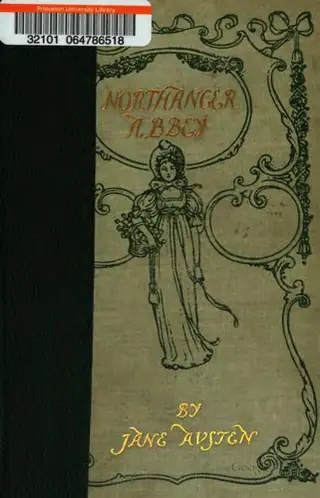
Northanger Abbey
by Jane Austen · first published 1818
5mentions
1recommended by
4HN commenters
2017–2025first – last mentioned
25% recommend75% neutral
Northanger Abbey is both a perfectly aimed literary parody and a withering satire of the commercial aspects of marriage among the English gentry at the turn of the nineteenth century. But most of all, it is the story of the initiation into life of its naïve but sweetly appealing heroine, Catherine Morland, a willing victim of the contemporary craze for Gothic literature who is determined to see herself as the heroine of a dark and thrilling romance. When Catherine is invited to Northanger Abbey, the grand though forbidding ancestral seat of her suitor, Henry Tilney, she finds herself embroi
Affiliate links. As an Amazon Associate I earn from qualifying purchases.
…is the murderer? (as seen in the Name of the Rose.) And Jane Austen masters the seemingly impossible quite impressively. It's quite remarkable how postmodern Jane Austen's novels already are. See also Northanger Abbey, where she regularly breaks the 4th wall for a meta-discourse on literature and genres, just to involve the reader again and again, as if she had never ripped the veil – which isn't necessarily black,…
on “Jane Austen's Boldest Novel Is Also Her Least Understood” ↗> Since the first published citation to Emma in 1978, Jane Austen’s works have been invoked 27 times in American legal decisions, including references to Mansfield Park, Northanger Abbey, and, of course, Pride and Prejudice. Please add (<=27 judges) to the title. The article was neat, but the headline is clickbait.
on “Why Do So Many Judges Cite Jane Austen in Legal Decisions?” ↗…Walpole having published the classic The Castle of Otranto in 1764. Ann Radclife (the mother of the Gothic) had published The Mysteries of Udolpho in 1794 and it was already parodied by Jane Austen's Northanger Abbey in 1817, long before Poe even started writing any of his Gothic fiction. Science fiction has a very long history, and depending on how you define it could go back at least to the 2nd Century AD, with…
on “Is Poe the most influential American writer? A new book offers evidence” ↗I don't think Northanger Abbey is a good recommendation for getting into Jane Austen. Not because it's bad, but because about halfway through it takes a David Lodge-style detour into gothic pastiche. Indeed the entire novel is a love…
on “Jane Austen, on the money” ↗In Northanger Abbey we get an explicit reference to one of those books, The Mysteries of Udolpho by Ann Radcliffe, which started the entire Gothic novel craze. Comparing the two is quite informative: Where Radcliffe describes…
on “Jane Austen's Boldest Novel Is Also Her Least Understood” ↗