Mirror worlds
by David Gelernter · first published 1991
23% recommend77% neutral
Why HN recommends it
Speculative 1991 vision of software that models the world as live, navigable simulations; often cited by readers as a thoughtful, idiosyncratic CS book with real insight into information systems.
Summarised by Claude from recommending comments
"Technology doesn't flow smoothly; it's the big surprises that matter, and Yale computer expert David Gelernter sees one such giant leap right on the horizon. Today's small scale software programs are about to be joined by vast public software works that will revolutionize computing and transform society as a whole. One such vast program is the "Mirror World." Imagine looking at your computer screen and seeing reality--an image of your city, for instance, complete with moving traffic patterns, or a picture that sketches the state of an entire far-flung corporation at this second. These represe
Affiliate links. As an Amazon Associate I earn from qualifying purchases.
Mentions per year
What Hacker News says
Related books
 2010–2020
Drawing life
David Gelernter
0 recommend · 3 mentioned0 recommend · 3 mention0 recommend · 30 recommend
 2010–2025
Machine Beauty
David Gelernter
Recommended by 1 · mentioned by 41 recommend · 4 mention1 recommend · 41 recommend
 2008–2026
The making of the atomic bomb
Richard Rhodes
Recommended by 117 · mentioned by 161117 recommend · 161 mention117 recommend · 161117 recommend
 2007–2026
The Selfish Gene
Richard Dawkins
Recommended by 220 · mentioned by 431220 recommend · 431 mention220 recommend · 431220 recommend
 2007–2026
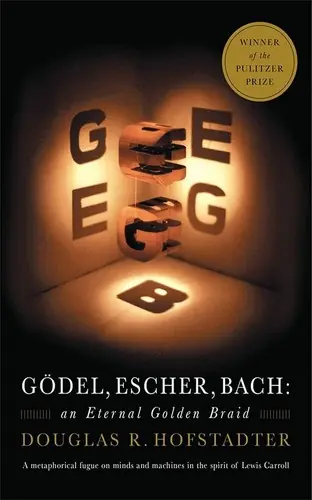
Gödel, Escher, Bach
Douglas R. Hofstadter
Recommended by 505 · mentioned by 1,055505 recommend · 1,055 mention505 recommend · 1,055505 recommend
Single Page link: http://spectrum.ieee.org/print/6354 The Pencil: A History of Design and Circumstance - Henry Petroski (Knopf, 1989) Mirror Worlds; or, The Day Software Puts the Universe in a Shoebox…How It Will Happen and What It Will Mean - David Gelernter (Oxford University Press, 1991) A New Kind of Science - Stephen Wolfram (Wolfram Media,…
on “10 Great Tech Books” ↗If you are interested in tuple spaces then I recommend reading David Gelernter’s “Mirror Worlds: or the Day Software Puts the Universe in a Shoebox...How It Will Happen and What It Will Mean” and any Jini documentation you can get.
on “Tuple Spaces – Good Ideas Don't Always Win (2011)” ↗I've always been inspired by David Gelernter's Mirror Worlds and LifeStreams projects. You can see parts of his vision/ philosophy in Apple's Time Machine backup UI and even Twitter: http://www.cs.yale.edu/homes/freeman/lifestreams.html "Life is a series of events…
on “The “desktop” metaphor for computers is outdated. What can take its place?” ↗“Mirror Worlds” by David Gelernter if you want a weird CS book that contains genuine insight.
on “The Strangest Book on the Theory of Computation (2009)” ↗…pretty good book. I guess we went a really different direction after the Visual Basic component years. I keep coming back to Superdistribution, Visual Basic components (VBX/OCX), and the concepts from Mirror Worlds[1] (tuples spaces) and wonder if there is still some paths to look at down those roads. 1) Mirror Worlds: or the Day Software Puts the Universe in a Shoebox...How It Will Happen and What It Will Mean
on “Brad Cox: when OOP was about “Software-ICs” and micro-transactions” ↗Mirror Worlds (the book) is a great read. I have it on my shelf next to his other book, Machine Beauty. I didn't know he was a victim of the Unabomber, that's unfortunate.
on “Tuple Space” ↗…audiences but not others. ---- I also enjoy reading what people though the computing future would be like. I have "Superdistribution" by Brad Cox: https://news.ycombinator.com/item?id=21833331 And "Mirror Worlds" by Gelertner: https://www.amazon.com/Mirror-Worlds-Software-Universe-Shoeb... I'm pretty sure Gelertner claims that the Facebook feed is identical to his "life streams". I guess taken literally it's…
on “Ask HN: What are the best unknown books you have read?” ↗a couple of links that came to mind with this: http://en.wikipedia.org/wiki/Tuple_space http://en.wikipedia.org/wiki/Linda_(coordination_language) http://www.amazon.com/Mirror-Worlds-Software-Universe-Shoebo...
on “Key/value is dead. Long live tuples: Pangool for Hadoop” ↗I love seeing stuff like this. But what really excites me is when these types of 3D models start to represent real cities. Like the ViziCities project[0]. Maybe the idea of Mirror Worlds [1] will eventually become reality. [0] https://github.com/robhawkes/vizicities [1] http://www.amazon.com/Mirror-Worlds-Software-Universe-Shoebo...
on “Chrome Experiments: “3d city”” ↗For those who don't recognize the name, the author, David Gelernter, was one of biggest AI theorists during the PC era. He published a 1991 book Mirror Worlds which basically suggested the now uncontroversial idea that "software is eating the world". At that time software was just for accounting and video games so no one paid attention. However a math PhD…
on “Machines That Will Think and Feel” ↗…phones and their negative effect on society has done. Very interesting. The book certainly sounds like something I ought to read. In fact, perhaps while simultaneously reading David Gelernter's 1992 book, Mirror Worlds: or the Day Software Puts the Universe in a Shoebox...How It Will Happen and What It Will Mean, whose optimistic vision of an immersive virtual reality out of networked computers would make for a rather…
on “Ted Nelson struggles with uncomprehending radio interviewer (1979) [audio]” ↗…Gelernter himself is not a troll. If all this is based On Linda (I havent dug deep enough), it would be based on work he did at least as far back as 1983. Google "Gelernter Linda", He published a book "Mirror Worlds". which I read decades ago. He tried to commercialize it, but had only modest, if any, success. OTOH he sold his patents to a patent troll.
on “Apple faces $600m damages claim” ↗…it apart in realtime, and yes, the ending of Revolutions is a Metasystem transition. Lots of synchronicity in my life, a few examples, when I first heard about tuple spaces and Linda, and pulling out Mirror Worlds by Gelernter from my bookshelf as I had bought it a couple of years before and not read it yet, then again that has happened a few times since, the last time was when I was getting interested in classification…
on “What's the most mind-blowing fact you heard/read in your life?” ↗…Unabomber. He recovered from his injuries, but his right hand and eye were permanently damaged.[8] He chronicled the ordeal in his 1997 book Drawing Life: Surviving the Unabomber. He helped found the company Mirror Worlds Technologies, which in 2001 released Scopeware software using ideas from his 1992 book Mirror Worlds. Gelernter believed that computers can free users from being filing clerks by organizing their data.…
on “David Gelernter, anti-intellectual computer scientist, Trump’s science adviser” ↗…agenda. For example, in his letter to his victim David Gelernter, a prominent computer scientist, he complained about "the way techno-nerds like you are changing the world" and cited Gelernter's ideas from Mirror Worlds (a book about technologies that might currently be called VR, AR, and simulation). http://www.punkcommunity.com/unapack/press/outside/gvmm68e/l...
on “The 'creepy Facebook AI' story that captivated the media” ↗