Imaginary Magnitude
by Stanisław Lem, Marc E. Heine · first published 1985
46% recommend54% neutral
Why HN recommends it
Lem's fictitious book reviews and essays offer playful, philosophical ideas about AI, prediction and humanity; the Golem XIV piece sharply takes on superintelligence. For readers who prefer ideas to plot.
Summarised by Claude from recommending comments
Affiliate links. As an Amazon Associate I earn from qualifying purchases.
Mentions per year
What Hacker News says
Related books
 2013–2026
Summa technologiae
Stanisław Lem, Joanna Zylinska, Hanna Rudak, Giovanni Balletta
Recommended by 14 · mentioned by 2614 recommend · 26 mention14 recommend · 2614 recommend
 2008–2026
His Master's Voice
Stanisław Lem
Recommended by 49 · mentioned by 6649 recommend · 66 mention49 recommend · 6649 recommend
 2014–2026
Two Faces of Tomorrow
James P. Hogan
Recommended by 7 · mentioned by 97 recommend · 9 mention7 recommend · 97 recommend
 2009–2026
Memoirs Found in a Bathtub
Stanisław Lem
Recommended by 15 · mentioned by 2815 recommend · 28 mention15 recommend · 2815 recommend
 2008–2026
Labyrinths
Jorge Luis Borges
Recommended by 24 · mentioned by 2624 recommend · 26 mention24 recommend · 2624 recommend
 2011–2026
Theory of self-reproducing automata
John Von Neumann
Recommended by 4 · mentioned by 124 recommend · 12 mention4 recommend · 124 recommend
 2007–2026
Contact
Carl Sagan
Recommended by 30 · mentioned by 9130 recommend · 91 mention30 recommend · 9130 recommend
 2008–2026
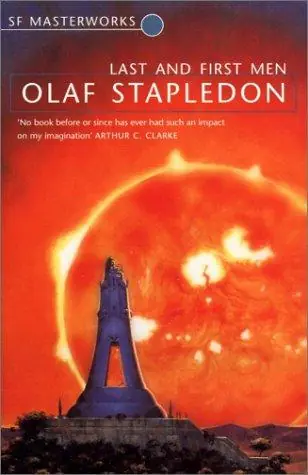
Last and First Men
Olaf Stapledon
Recommended by 24 · mentioned by 3924 recommend · 39 mention24 recommend · 3924 recommend
Stanislav Lem's Golem XIV published in his book Imaginary Magnitude https://www.amazon.com/Imaginary-Magnitude-Stanislaw-Lem/dp/... It might be more philosophy of AI than science fiction. It takes form of series of lectures that superintelligent (singularity level AI)…
on “Ask HN: Best hard scifi AI novels?” ↗…Melville - Blood Meridian, by Cormac McCarthy - Cuentos Completos, by Jorge Luis Borges (or at least the "Labyrinths" compilation) - A Perfect Vacuum, by Stanislaw Lem (Forewords to Non-Existent Books) - Imaginary Magnitude, by Stanislaw Lem - His Master's Voice, by Stanislaw Lem (Along the same lines as Sagan's Contact, but better, way better.) - Buddha's Little Finger, by Victor Pelevin Some my favorite "non-fiction"…
on “Ask HN: What are some must read books?” ↗Stanislaw Lem, Imaginary Magnitude. The introduction to "Bitistics" seems eerily prescient of what LLMs might do. The Golem XIV chapter gives one outcome of AGI.
on “Ask HN: Best sci-fi books and/or movies on AI?” ↗I'd pitch the short story (really, a fictitious book review) "Eruntics" by Stanislaw Lem. I believe it's published within the "Imaginary Magnitude" Anthology. Published in 1985.
on “1-Bit Pixels Encoded in E. Coli for the Display of Interactive Digital Media” ↗I have a couple I would highly recommend: The first is Stanislaw Lem's "Imaginary Magnitude." Most stories there are written as sort of prefaces to non-existent technical/scientific books, papers, articles, etc. The last one, Golem XIV, goes a bit beyond and includes an entire lecture. The…
on “Ask HN: What fiction books would you recommend for programmers?” ↗In addition to this, I recommend A Perfect Vacuum and Imaginary Magnitude, which both fall into the category of "books of reviews of books that don't exist". I've never been able to get into his novels, though. Mind you I'm not really a fan of science fiction per se.
on “Philip K. Dick: A Visionary Among the Charlatans” ↗…nothing above that - IIRC we're likened to insects, swatted away and, when they persist, crushed. - With the AIs gone humans go on as if nothing happened, seemingly learning nothing from it at all All of Imaginary Magnitude and A Perfect Vacuum are awesome in my opinion (I have read them only in translation)
on “Things Stanislaw Lem Predicted” ↗…affirming absolutely nothing existentially, confining itself to what did not occur, during the whole fictional book. The fictional book begins with the phrase "The train did not arrive. He did not come." - Imaginary Magnitude: This one blew my mind. An exploration of fictional science models and books, including the idea of building an "AI" model out of bacteria, creating AI models to check how good or bad are novels and papers…
on “Solaris by Stanislaw Lem on BBC 4 Radio Full-Cast Drama (2007)” ↗It's included in this collection: http://www.amazon.com/Imaginary-Magnitude-Stanislaw-Lem/dp/0...
on “Why Stanislaw Lem’s futurism deserves attention” ↗I was a little disappointed in this. In his strange little book "Imaginary Magnitude", Stanislaw Lem imagined an entire branch of literature, "bitistics". This is the literature produced by AIs, essentially. The first such work is "The Girl", Dostoevsky's final work that was never actually…
on “Computer Paints Next Rembrandt [video]” ↗Wow, another thing Stanislaw Lem beat the scientists to. In "Imaginary Magnitude", the "Golem XIV" chapter, Lem has his superintelligences disappear up their own metaphorical navels, for their own incomprehensible-to-humans reasons. Of course, you can read between the lines about…
on “Non-Evolutionary Superintelligences Do Nothing, Eventually” ↗>Wow, another thing Stanislaw Lem beat the scientists to. >In "Imaginary Magnitude", the "Golem XIV" chapter, Lem has his superintelligences disappear up their own metaphorical navels, for their own incomprehensible-to-humans reasons. Of course, you can read between the lines about…
on “Non-Evolutionary Superintelligences Do Nothing, Eventually” ↗…reviews of fictional books: A Perfect Vacuum (Doskonała próżnia, 1971), Provocation (Prowokacja, 1984), and Library of 21st Century (Biblioteka XXI wieku, 1986) translated as One Human Minute, and in Imaginary Magnitude (Wielkość Urojona, 1973), a collection of introductions to nonexistent books. >While reviewing nonexistent books, a modern form of pseudepigraphy, Stanisław Lem attempted to create different fictional…
on “Von Neumann Universal Constructor” ↗…the future of evolution: "The Cyberiad" etc. The problem of the "silent universe" (explored mostly deeply in "Fiasco") is also one that comes up repeatedly, including a long and interesting essay in "Imaginary Magnitude".
on “The Future According to Stanisław Lem” ↗…Perfect Vacuum is I think the pinnacle of Lem's achievement. Why write a book and leave others to criticise what you did, when you can imagine the finished book and write a critique of _that_ yourself? Imaginary Magnitude is a similar idea, and I like that too, but I think Vacuum ends up the cleverer of the two even though Golem XIV (from Magnitude) is better than most Singularitarian fiction you'll see today.
on “Why Stanislaw Lem’s futurism deserves attention (2015)” ↗