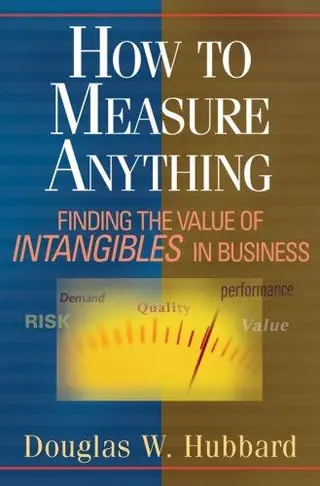
How to Measure Anything
by Douglas W. Hubbard · first published 2007
79% recommend21% neutral
Why HN recommends it
Shows how to put numbers on seemingly unmeasurable things, such as IT security or project estimates, using calibrated estimates, confidence intervals and simple probability. Suits managers and engineers.
Summarised by Claude from recommending comments
Affiliate links. As an Amazon Associate I earn from qualifying purchases.
Mentions per year
What Hacker News says
Related books
 2020–2022
White
Kenya Hara
Recommended by 2 · mentioned by 22 recommend · 2 mention2 recommend · 22 recommend
 2022
Existential psychotherapy
Irvin D. Yalom
Recommended by 2 · mentioned by 22 recommend · 2 mention2 recommend · 22 recommend
 2017–2023
The science of selling
Hoffeld, David (Economist)
Recommended by 1 · mentioned by 21 recommend · 2 mention1 recommend · 21 recommend
 2009–2025
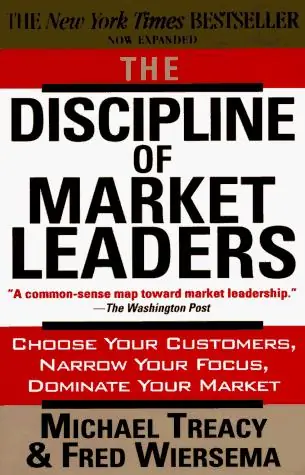
The discipline of market leaders
Michael Treacy
Recommended by 4 · mentioned by 64 recommend · 6 mention4 recommend · 64 recommend
 2014–2023
Shipping greatness
Chris Vander Mey
Recommended by 3 · mentioned by 33 recommend · 3 mention3 recommend · 33 recommend
 2013–2018
Jony Ive
Leander Kahney
Recommended by 2 · mentioned by 32 recommend · 3 mention2 recommend · 32 recommend
 2017–2023
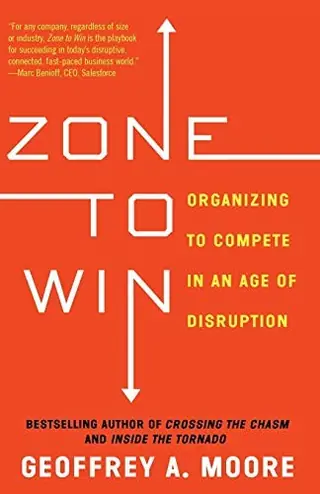
Zone to Win
Geoffrey A. Moore
Recommended by 2 · mentioned by 32 recommend · 3 mention2 recommend · 32 recommend
 2010–2024
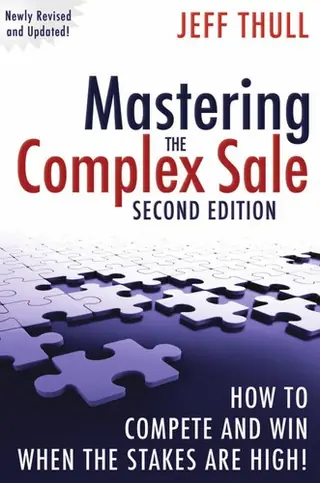
Mastering the complex sale
Jeff Thull
Recommended by 4 · mentioned by 54 recommend · 5 mention4 recommend · 54 recommend
How To Measure Anything[1] by Douglas Hubbard. The basic gist of the book goes something like this: in the real world (especially in a business setting) there are many things which are hard to measure directly, but which we…
on “Ask HN: What are the best unknown books you have read?” ↗…back to it and re-reading portions of it every time I have to deal with tricky code. It's just that good at explaining clever ways to get things under test, so they can be worked on with confidence. = How to Measure Anything by Douglas Hubbard. What I really take away from this is how powerful it is to be able to estimate ranges that are true 90 % of the time. It's hard to convince others of what a superpower this is, but…
on “Ask HN: Name 3-5 books that had the most impact on your career and knowledge?” ↗My highlights from this year: 1. "How to Measure Anything" (Douglas Hubbard) Presents a few simple techniques (confidence intervals, Monte Carlo simulations, regression analysis, Bayes, etc) to help with decision-making. E.g., should we build this feature or…
on “Ask HN: Books you read in 2018?” ↗…http://www.amazon.com/Pragmatic-Programmer-Journeyman-Master... - The Pragmatic Programmer, Andrew Hunt and David Thomas (1999) Things I've liked in the last 6 months: http://www.amazon.com/How-Measure-Anything-Intangibles-Busin... - How to Measure Anything, Douglas Hubbard (2007) http://www.amazon.com/Mythical-Man-Month-Software-Engineerin... - Mythical Man Month: Essays in Software Engineering, Frederick Brooks Jr. (1975, but get the 1995 version) http://www.amazon.com/Good-Great-Some-Companies-Others/dp/00...…
on “Ask HN: Which book are you reading these days?” ↗…selling approach. The Innovator's Dilemma: When New Technologies Cause Great Firms to Fail - Clayton Christensen Zero to One: Notes on Startups, or How to Build the Future - Peter Thiel, Blake Masters How To Measure Anything - Douglas Hubbard. - Maybe one of the most important books I've ever read. The ideas in this book can apply in many domains, related to startups or otherwise. I can't recommend this one highly enough.…
on “Ask HN: As a technical founder what is the best business book you've read?” ↗How to Measure Anything - Douglas Hubbard This book is a treatise against the notion that some important things can’t be measured. Full of information about how to figure what should be measured and then how to measure it.…
on “Ask HN: Favorite nonfiction books of 2018?” ↗If you like the idea of this library you'll probably like the book "How to Measure Anything" by Douglas Hubbard (https://www.goodreads.com/book/show/20933591-how-to-measure-...). It's all about how to get sensible confidence intervals for things that are often considered unmeasurable such…
on “Open-sourcing Riskquant, a library for quantifying risk” ↗Depending on the context, I'm a fan of the work of Douglas Hubbard, in his book How to Measure Anything[1]. His approach involves working out answers to things that might sometimes be done as a "back of the napkin" kind of thing, but in a slightly more rigorous way. Note that there are criticisms of his…
on “What are the most important statistical ideas of the past 50 years? [pdf]” ↗We need ways to translate these into numbers that we can compare with profit margins, etc. There is a way. I'll refer you to How To Measure Anything by Douglas Hubbard. His model is based on a combination of things: 1. Calibrated Probability Assessments 2. nth order effects 3. building a mathematical model 4. Monte Carlo simulation apply his…
on “The OWASP Top 10 is killing me” ↗…error-prone. There is, however, a mechanism you can use to teach yourself (or others) to do a better job of estimation. The technique I'm thinking of is "calibrated probability assessment"[2]. The book How To Measure Anything[3] by Douglas Hubbard does a really nice job of laying out how to use calibrated probability assessments, mathematical models, and monte carlo simulation, to build a probability distribution for things…
on “Ask HN: What course/topic/textbook to evaluate if product idea should be pursued?” ↗…justice trying to explain it here, but if this all sounds interesting, I really recommend reading at least Mastering The Complex Sale to get the idea straight from the source. I also recommend reading How To Measure Anything by Douglas Hubbard. It has nothing to do with sales, at least on the surface. But in terms of understanding customer problems, I think the approach Hubbard espouses can be tremendously useful at a certain…
on “Ask HN: What is your advice for a technical founder learning sales?” ↗…Abbas. Also, not sure if this is related to the Hubbard you refer to or not, but there's a gentleman named Douglas Hubbard who has written some really excellent material in this area. I consider his book How To Measure Anything to be one of the best / most important books I've read, and it's one I recommend to pretty much everybody.
on “Ask HN: What are the best unknown books you have read?” ↗…impossible to measure developer productivity It's not impossible, but it's not something we as a society or an industry have a common fine grasp on. On this topic, I like best the books by Doug Hubbard: "How to measure anything" and "The failure of risk management: what is it and how to fix it". It just requires yet another unusual mindset: probabilistic thinking, in addition to the above-established value-based thinking. You…
on “Engineering productivity can be measured, just not how you'd expect” ↗…Product Development Flow. Ward, Lean Product and Process Development. Womack, Machine That Changed the World. 8. How to innovate cheaply: Westrum, Sidewinder. 9. How to estimate things properly: Hubbard, How to Measure Anything. Tetlock, Superforecasting. Savage, The Flaw of Averages. 10. How to train people to be experts at things: Hoffman, Accelerated Learning. 11. How people fail at decisions: Kahneman, Thinking, Fast and…
on “How I operated as a Staff engineer at Heroku (2020)” ↗A good reference is Douglas Hubbard's How to Measure Anything. The idea is that most people can calibrate their sense of probability to be fairly accurate, by intentionally adjusting for some common biases. (In particular, if you prevent anchoring and availability…
on “How to drive away your best engineers” ↗