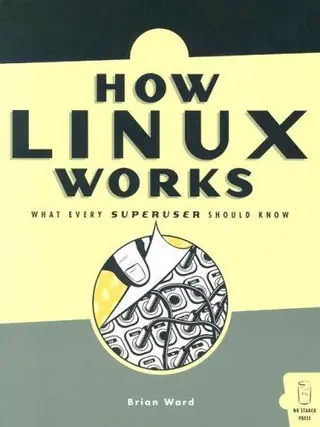
How Linux Works
What Every Superuser Should Know
by Brian Ward · first published 2004
71% recommend29% neutral
Why HN recommends it
Explains how the parts of a Linux system fit together, covering architecture, internals and containers/VMs in the latest edition. Suits hands-on users and beginners wanting more than commands.
Summarised by Claude from recommending comments
Unlike some operating systems, Linux doesn’t try to hide the important bits from you—it gives you full control of your computer. But to truly master Linux, you need to understand its internals, like how the system boots, how networking works, and what the kernel actually does. In this completely revised second edition of the perennial best seller How Linux Works, author Brian Ward makes the concepts behind Linux internals accessible to anyone curious about the inner workings of the operating system. Inside, you’ll find the kind of knowledge that normally comes from years of experience doing
Affiliate links. As an Amazon Associate I earn from qualifying purchases.
Mentions per year
What Hacker News says
Related books
 2010–2026
UNIX and Linux system administration handbook
Evi Nemeth, Garth Snyder, Trent R. Hein, Ben Whaley
Recommended by 35 · mentioned by 4135 recommend · 41 mention35 recommend · 4135 recommend
 2014–2026
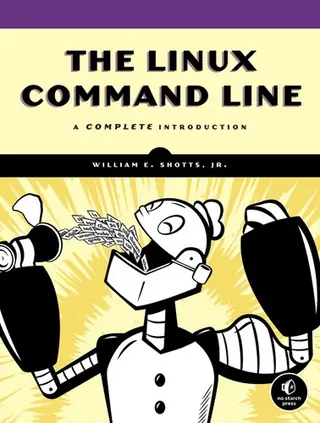
The Linux Command Line
William E. Shotts
Recommended by 15 · mentioned by 1515 recommend · 15 mention15 recommend · 1515 recommend
 2014–2026
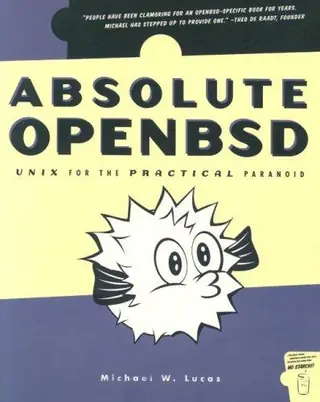
Absolute OpenBSD
Michael W. Lucas
Recommended by 11 · mentioned by 1811 recommend · 18 mention11 recommend · 1811 recommend
 2010–2026
Linux Kernel Development
Robert Love
Recommended by 44 · mentioned by 5944 recommend · 59 mention44 recommend · 5944 recommend
Linux Programming Interface
Michael Kerrisk
Recommended by 98 · mentioned by 12698 recommend · 126 mention98 recommend · 12698 recommend
 2008–2025
Advanced programming in the Unix environment
W. Richard Stevens, Stephen A. Rago
Recommended by 100 · mentioned by 136100 recommend · 136 mention100 recommend · 136100 recommend
 2008–2026
Modern Operating Systems
Andrew S. Tanenbaum, Herbert Bos
Recommended by 52 · mentioned by 8552 recommend · 85 mention52 recommend · 8552 recommend
 2015–2026
Automate the Boring Stuff with Python
Al Sweigart
Recommended by 75 · mentioned by 8175 recommend · 81 mention75 recommend · 8175 recommend
…side: https://www.amazon.com/Modern-Linux-Administration-Cutting-E... https://www.amazon.com/Practice-Cloud-System-Administration-... https://landing.google.com/sre/book.html https://www.amazon.com/How-Linux-Works-Superuser-Should/dp/1... https://www.amazon.com/Effective-Monitoring-Alerting-Web-Ope... https://www.amazon.com/Ansible-DevOps-Server-configuration-m... https://www.amazon.com/Terraform-Running-Writing-Infrastruct...…
on “Ask HN: DevOps learning resources” ↗…Environment [3] The Linux Programming Interface: A Linux and UNIX System Programming Handbook [4] Linux Kernel Development 3rd Edition To get a nice general overview and get up and going quickly: [5] How Linux works: What every superuser should know [6] The Linux Command Line [7] Python Crash Course [8] Automate the boring stuff with Python. This is a great book to help you think about how to automate most of…
on “Ask HN: Best Resources to Learn to Manage Linux Boxes via SSH” ↗Brian Ward's - How Linux Works is also very good https://www.nostarch.com/howlinuxworks2
on “Ask HN: Must have (Linux) sysadmin skills?” ↗I can second the recommendation of Robert Love's books on Linux (https://rlove.org/) as well as "How Linux Works" by Brian Ward. I personally enjoyed "Linux Kernel Development" by Robert Love more than the former as it teaches you more about Kernel internals (IMHO). The drawback is that it's a bit outdated already…
on “Ask HN: Best textbooks for learning operating systems” ↗Database Internals - Alex Petrov How Linux Works - Brian Ward High Performance Browser Networking - Ilya Grigorik
on “Ask HN: What are some other books as fundamental as DDIA?” ↗A better way is to get a book about linux administration (if you want an in-depth manual) or "How Linux Works" by Brian Ward. Then learn bash. Windows is pretty much all GUI (I've left before getting used to Powershell) and that works great until you want to do rules-based changes or do profiles (without using…
on “Entering text in the terminal is complicated” ↗…reading his The Lost City of Z, which was also a great read if you like modern adventure stories. A Brief History of Time by Stephen Hawking - I love to reread this every so often. Maybe it's nostalgia? How Linux Works by Brian Ward - I know Linux well enough, but certain things I never really understood and never bothered to look into. This book helped clarify some of the ways Linux works under-the-hood, and why, among…
on “Ask HN: Books you read in 2018?” ↗I've had a wonderful experience with all of the No Starch Press[0] books I've bought over the last few years. I recently got Absolute OpenBSD and Serious Cryptography. How Linux Works is also really good if you would like to brush up on your knowledge of the architecture of the average Linux system. I'm not affiliated with them, I just haven't gotten a bad (or even mediocre) book…
on “Ask HN: Books you plan to read in 2019?” ↗…doesn't cut it, or it is pretty suboptimal. If you're writing a trading bot, is speed of execution not important? Operating System knowledge can be helpful at times. I bought one of the No Starch books "How Linux Works" and it is very helpful. The command line and by that I guess you should know the common Linux commands (cat, grep, sort, uniq, head, tail, ls, top) if you use Linux and how to chain them together via…
on “Ask HN: What overlooked class of tools should a self-taught programmer look into” ↗…without Backlit keys. I can also use split ergonomic keyboards with ease. keybr.com for learning. Also, look up vimcasts for vim. Two books I recommend is No Starch Press's The Linux Command Line and How Linux Works. Both are always appearing on Humble Bundle and they're worth the entire bundle. Another thing I recommend is if you use VSCode, learn how to use the command bar. You get thst with control alt p or F1.…
on “Notepad++ 7.9.1 – pour Samuel Paty” ↗…and Conrad. No Starch press always impresses me with their general geekiness and awesomeness. I've never actually read a bad book from them. If someone is interested in Linux I heartily recommend their 'How Linux Works' title for an internals tutorial.
on “Lisp Web Server From Scratch using Hunchentoot and Nginx” ↗…in writing good C, and I had little interest in reimplementing features in some higher level language. When I say little interest, I mean I came to understand my priorities were more about learning how Linux works. I REALLY wanted to understand is how Linux does its thing in whatever language(s) it was written in. At the time, I pivoted to deeply reading about Linux concepts in How Linux Works, and I really enjoyed…
on “Should you learn C to “learn how the computer works”?” ↗…thought it was interesting, and managed to use it to do what I needed to overcome a problem I was having with `ip netns`. A similar 'aha' was with inodes a while ago. So, any recommendations for a book on 'how Linux works'? I think it's a gap in my understanding (academically EE/CS - hardware, up to OS but not Linux-specific, theoretical CS; professionally software, 'using' Linux). Best candidate I've found is Brian Ward's…
on “Decoded: GNU Coreutils” ↗How Linux Works book is another great Linux reference. The latest edition has virtualization content that includes VMs and containers. [1]https://nostarch.com/howlinuxworks3
on “Learn Linux without internet and stack overflow: Linux HOWTOs” ↗I’ve read some chapters from the linked book to complement “How Linux Works” from No Starch Press and while the information was useful and seemed correct, in the end I decided to stick with HLW, since it was both broader and deeper at ~460 vs 250 pages.
on “Learning modern Linux: A handbook for the cloud native practitioner” ↗