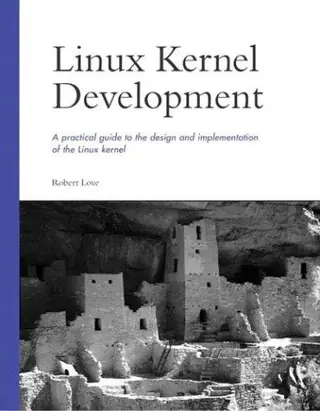
Linux Kernel Development
by Robert Love · first published 2004
75% recommend24% neutral2% critical
Why HN recommends it
Readable, practical introduction to how Linux works internally, blending concepts with code. Suits programmers new to kernel work who want a starting point before reading source or writing drivers and modules.
Summarised by Claude from recommending comments
Linux Kernel Development details the design and implementation of the Linux kernel, presenting the content in a manner that is beneficial to those writing and developing kernel code. While the book discusses topics that are theoretical, it does so with the goal of assisting programmers so they better understand the topics and become more efficient and productive in their coding.The book discusses the major subsystems and features of the Linux kernel, including design and implementation, their purpose and goals, and their interfaces. Important computer science and operating system design detail
Affiliate links. As an Amazon Associate I earn from qualifying purchases.
Mentions per year
What Hacker News says
Related books
 2018–2019
Essential Linux Device Drivers
Sreekrishnan Venkateswaran
Recommended by 2 · mentioned by 22 recommend · 2 mention2 recommend · 22 recommend
 2018–2023
FreeBSD device drivers
Joseph Kong
Recommended by 4 · mentioned by 54 recommend · 5 mention4 recommend · 54 recommend
 2018–2025
Linux Kernel Programming
Kaiwan N Billimoria
Recommended by 4 · mentioned by 54 recommend · 5 mention4 recommend · 54 recommend
Linux Programming Interface
Michael Kerrisk
Recommended by 98 · mentioned by 12698 recommend · 126 mention98 recommend · 12698 recommend
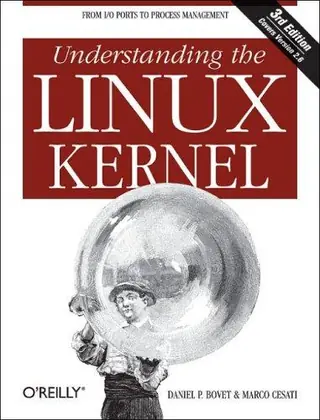 2007–2026
Understanding The Linux Kernel
Daniel P. Bovet
Recommended by 24 · mentioned by 3624 recommend · 36 mention24 recommend · 3624 recommend
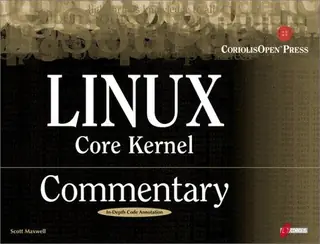 2013–2024
Linux Core Kernel Commentary
Scott Maxwell
Recommended by 5 · mentioned by 95 recommend · 9 mention5 recommend · 95 recommend
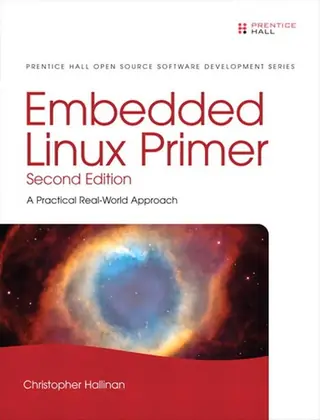 2017–2023
Embedded Linux primer
Christopher Hallinan
Recommended by 3 · mentioned by 33 recommend · 3 mention3 recommend · 33 recommend
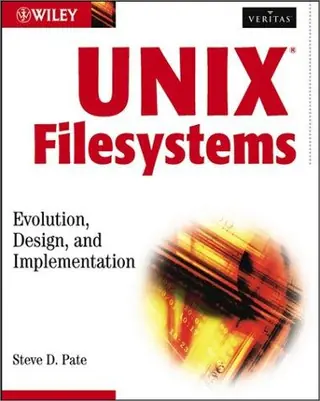 2012–2017
UNIX filesystems
Steve D. Pate
Recommended by 3 · mentioned by 33 recommend · 3 mention3 recommend · 33 recommend
…http://www.amazon.com/SATA-Storage-Technology-Serial-ATA/dp/... 26- http://www.amazon.com/Beyond-BIOS-Developing-Extensible-Inte... 27- http://www.amazon.com/Professional-Assembly-Language-Program... 28- http://www.amazon.com/Linux-Kernel-Development-3rd-Edition/d... 29- http://www.amazon.com/Version-Control-Git-collaborative-deve... 30- http://www.amazon.com/Embedded-Software-Primer-David-Simon/d... 31- http://www.amazon.com/Programming-Embedded-Systems-C/dp/1565...…
on “I’m writing my own OS” ↗…specifically interested in Windows. Mac OS X is more detailed since the source code itself can be published, but it's not as easy to read (gets pretty dry at times). I also enjoyed reading Robert Love's "Linux Kernel Development". One of the things that really helped me learn more was reading both of those books - understanding two very different kernels (NT vs. Linux) really helps you grok the problems an OS has to solve, and…
on “How to Write an Operating System” ↗I found Robert Love's Linux Kernel Development to be quite useful. http://www.amazon.com/Linux-Kernel-Development-Robert-Love/d...
on “Linux 3.6 released” ↗…thorough treatment is Bovet & Cesati (944 pages): http://www.amazon.com/Understanding-Linux-Kernel-Third-Editi... A good "gentle introduction" book is the Love book (440 pages): http://www.amazon.com/Linux-Kernel-Development-Robert-Love/d...
on “Linux 3.6 released” ↗I'd also add Love's Linux Kernel Development[2], published in 2010. Great resource overall for someone wanting to go developing the internals of the kernel. [2] http://www.amazon.com/dp/0672329468
on “Basic Data Structures and Algorithms in the Linux Kernel” ↗…resulting thing is much more maintainable than the code with switch-cases instead of virtual methods, and so on. By the way, similar approach is used across the Linux Kernel: check, for example, the book "Linux Kernel Development" by Robert Love, especially the discussion on the virtual filesystem.
on “Object-oriented techniques in C” ↗https://www.amazon.com/Linux-Kernel-Development-Robert-Love/... is very good, as is https://www.amazon.com/Mac-OS-iOS-Internals-Apples/dp/111805...
on “Windows Internals, 7th Edition” ↗…become an expert, the following books should help get you started: [2] Advanced Programming in the UNIX Environment [3] The Linux Programming Interface: A Linux and UNIX System Programming Handbook [4] Linux Kernel Development 3rd Edition To get a nice general overview and get up and going quickly: [5] How Linux works: What every superuser should know [6] The Linux Command Line [7] Python Crash Course [8] Automate the…
on “Ask HN: Best Resources to Learn to Manage Linux Boxes via SSH” ↗If the kernel parts are confusing you, I highly recommend "Linux Kernel Development" by Robert Love as a high-level introduction to the kernel architecture. If you like that, proceed to "Linux Kernel Architecture" by Wolfgang Mauerer. The first chapter contains information similar to…
on “The real power of Linux executables” ↗…part of question. Assuming your question is about Linux kernel - 1. You must have good systems understanding, and I assume you already know basic computer organization/architecture. Read Robert Love's Linux Kernel Development to begin with. 2. Start dabbling with small device drivers. Use Linux Driver Development, or other such books. 3. Pick a small subsystem within Linux (say, a specific driver, or filesystem, or PCI,…
on “Ask HN: What are the roadmaps to becoming a kernel dev or Security analyst?” ↗I would propose Linux Kernel Development by Robert Love. It is not for beginners though. That could help you in applying your new C skills in writing a simple device driver/kernel module you can play with. If are really into low level stuff…
on “Learning operating system development using Linux kernel and Raspberry Pi” ↗…wanting to dive a little deeper than this guide touches check out: - https://man7.org/tlpi/ - Really good for understanding how to build applications within a Linux ecosystem. - https://www.amazon.com/Linux-Kernel-Development-Robert-Love/... - Really good for understanding why Linux is the way it is. The Kernel this book was written on is awful old, but the principles shine through.
on “Linux Sysops Handbook” ↗Linux Kernel Development by Robert Love is something I would encourage going through if you are unsure about what you don't know. Although it's based on 3.x kernel, it still is pretty relevant. Good Luck!
on “Ask HN: Looking for a resource on Linux kernel module development” ↗…which have updated code for latest kernels. * Essential Linux Device Drivers by S Venkateswaran: It complements LDD3 book quite nicely. Has some real device examples and very exhaustive. Must have. * Linux kernel development by Robert Love: Very good for short/quick intro. Best for preparing before interviews ;) * Professional Linux kernel architecture by Wolfgang Mauerer: As other book, its dated but some of the explanations…
on “A book list for OS kernel developers and device driver writers (2006)” ↗It depends. For technical books, yes. For fiction books, I always read it cover-to-cover (skipping the forewords). But there's one exception: I've read both books by Robert Love (Linux Kernel Development and Linux System Programming) from cover to cover.
on “Ask HN: Do hackers (you) read books cover to cover?” ↗