Frankenstein
by Mary Shelley, Bernie Wrightson, Stephen King · first published 2020
25% recommend73% neutral2% critical
Why HN recommends it
Widely cited as the first science fiction novel; readers find it very unlike the film adaptations, with a pointed look at technology, industry and creator responsibility, in long, clear, readable sentences.
Summarised by Claude from recommending comments
A graphic adaptation of the Mary Wollstonecraft Shelley's classic.
Affiliate links. As an Amazon Associate I earn from qualifying purchases.
Mentions per year
What Hacker News says
Related books
 2021–2024
The Castle of Otranto
Horace Walpole
Recommended by 1 · mentioned by 51 recommend · 5 mention1 recommend · 51 recommend
 2014–2023
The Last Man
Mary Shelley
Recommended by 2 · mentioned by 32 recommend · 3 mention2 recommend · 32 recommend
 2009–2020
Creating the Twentieth Century
Vaclav Smil
Recommended by 3 · mentioned by 33 recommend · 3 mention3 recommend · 33 recommend
 2010–2018
L'Etranger. Albert Camus
Michel Mougenot
Recommended by 5 · mentioned by 55 recommend · 5 mention5 recommend · 55 recommend
 2009–2025
Dracula
Bram Stoker
Recommended by 12 · mentioned by 3612 recommend · 36 mention12 recommend · 3612 recommend
 2008–2025
Post Captain
Patrick O'Brian
Recommended by 3 · mentioned by 53 recommend · 5 mention3 recommend · 53 recommend
 2014–2024
After Dark
Jayne Ann Krentz
Recommended by 3 · mentioned by 33 recommend · 3 mention3 recommend · 33 recommend
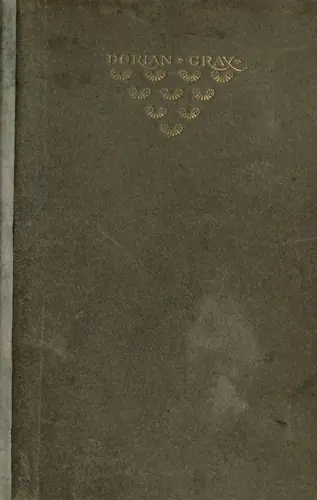 2008–2026
The Picture of Dorian Gray
Oscar Wilde
Recommended by 17 · mentioned by 4117 recommend · 41 mention17 recommend · 4117 recommend
Thanks for the recommendations. I’m feeling old, so I’ll add: Edith Grossman’s translation of Don Quixote (1609! The more things change, the more they stay the same) Frankenstein, by Mary Shelley (I thought I knew the story until I actually read the book—whoah, that opened my eyes to our relationship with technology and industry and how we use energy) Dracula, by Bram Stoker…
on “Ask HN: What are some must read books?” ↗The First and Last Freedom by Jiddu Krishnamurti. Frankenstein (1818 Edition) by Mary Shelley.
on “Ask HN: Which books have made you introspect?” ↗> Frankenstein, by Mary Shelley (I thought I knew the story until I actually read the book—whoah, that opened my eyes to our relationship with technology and industry and how we use energy) Can confirm, the novel is…
on “Ask HN: What are some must read books?” ↗…article on the importance of fiction from a scientifically validated point of view: http://www.bostonglobe.com/ideas/2012/04/28/why-fiction-good... Fahrenheit 451 - Ray Bradbury L'Etranger - Albert Camus Frankenstein - Mary Shelley Metamorphosis - Ovid Oryx and Crake - Margaret Atwood The Picadilly Papers - Charles Dickens Permutation City - Greg Egan Fiction allows us to experience the most intimate thoughts of…
on “How You Know” ↗This article provides a great context for why Mary Shelley's Frankenstein is typically sighted as the first Science Fiction novel. There are other SF-style stories that can be cited prior to Frankenstein, but I am not sure any of them truly qualify has Hard Science Fiction.…
on “The Science of Life and Death in Mary Shelley’s Frankenstein” ↗Wow, no classics that so far stand the test of time. Mary Shelley's Frankenstein (unbelievable at 18 in 1818!) and as others have mentioned Verne, HG Wells(his insight inspired physicist Szilárd's neutron chain reaction). Still an interesting list that shows what the mob is looking…
on “The Best Science Fiction Books (According to Reddit)” ↗Permutation City by Greg Egan takes the cake this year in fiction. Although a very close second would be the Hardcover Penguin Classic's edition of Frankenstein by Mary Shelley mainly for it's deftly abridged version and preface which gave a new dimension to the story for me. Non-fiction would either be Mortality by the late Christopher Hitchens or "On Numbers…
on “Ask HN: What book changed your life in 2014?” ↗…language features of C99 and C11, and a few in-depth projects to pull it all together. Great book. On Numbers And Games: A fabulous book by one of my mathematical heroes. Well worth getting through it. Frankenstein: Mary Shelley's classic. I started collecting the new Penguin Classics line and the introductions are really insightful. These are well-researched and produced editions. The Nature of Things: The epic…
on “Ask HN: Books you read in 2015?” ↗I considered Frankenstein to be a good read. Compared to the stuff I read before, Shelley's frequent use of the semicolon did startle me. And taught me its proper usage.
on “The melancholy decline of the semicolon” ↗…stories: The Paper Menagerie and Other Stories (Ken Liu); Stories of Your Life and Others and Exhalation (Ted Chiang); The Martian Chronicles (Ray Bradbury) Novels: The Monk (Matthew Gregory Lewis); Frankenstein (Mary Shelley)
on “Ask HN: What's the "best" book you've ever read?” ↗…(Heinlein) Rita Hayworth and Shawshank Redemption (one story in the book "Different Seasons" by Stephen King) Of Mice and Men (Steinbeck) The Martian Chronicles (Bradbury) Roadside Picnic (Strugatsky) Frankenstein (Shelley) Brave New World (Huxley) Farenheit 451 (Heinlein) Never Cry Wolf (Mowatt) A Whale for the Killing (Mowatt) The Machine Stops (Forster) Heart of Darkness (Conrad) Starship Troopers (Heinlein)…
on “Ask HN: What book had a big impact on you as a child or teenager?” ↗I agree wholeheartedly. It's become one of my goto resources for learning about the history of various topics from science to literature. The episode on Mary Shelley's Frankenstein is fantastic.
on “Whose Weil? Simone, Patron Saint of Everyone” ↗…now is to use less words to convey an idea. This is what I'm encouraged by Grammarly as well. To some extent, perhaps the book "Elements of style" encourages this too. However, I read Mary Shelley's Frankenstein. She writes long (wordy?) sentences that are clear, and even feels beautiful to read. I really enjoyed her writing. But I'm not a native speaker. A question for the native speakers: what's your take…
on “10 years of writing a blog nobody reads” ↗…superiority, emerging as the strongest and most adaptable ideas & stories that couldn’t be stopped even by the churn of centuries of change in language, culture, ideologies, wars and more. Eg Mary Shelley’s Frankenstein will eat alive nearly anything written today, it accurately critiques a future it never saw like a laser beam cutting across time. Few if any works today possess such original and enduring foresight.…
on “$30B for laptops yielded a generation less cognitively capable than parents” ↗I would settle for everybody in tech reading Mary Shelley and realizing that Victor Frankenstein was the real monster. It won't even cost you money; the OG of science fiction has been in the public domain for decades. https://standardebooks.org/ebooks/mary-shelley/frankenstein Or just grab a bootleg…
on “AI Researchers, Ask Yourself These 6 Questions to Strengthen Your Moral Muscles” ↗