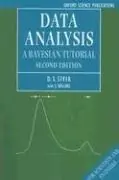
Data analysis
by D. S. Sivia, John Skilling · first published 2006
86% recommend14% neutral
Why HN recommends it
Concise, well-laid-out introduction to Bayesian data analysis for scientists and engineers; gives a quantitative approach to experimental design and evaluating results, with worked examples and math kept accessible.
Summarised by Claude from recommending comments
Focusing on Bayesian methods and maximum entropy, this book shows how a few fundamental rules can be used to tackle a variety of problems in data analysis. Topics covered include reliability analysis, multivariate optimisation, least-squares and maximum likelihood, and more.
Affiliate links. As an Amazon Associate I earn from qualifying purchases.
Mentions per year
What Hacker News says
Related books
 2014–2026
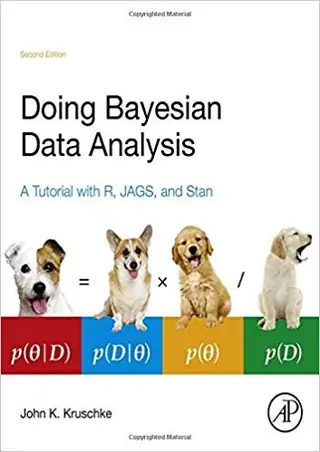
Doing Bayesian Data Analysis
John K. Kruschke
Recommended by 22 · mentioned by 2522 recommend · 25 mention22 recommend · 2522 recommend
 2013–2026
Bayesian methods for hackers
Cameron Davidson-Pilon
Recommended by 24 · mentioned by 3524 recommend · 35 mention24 recommend · 3524 recommend
 2012–2026
Think Bayes
Allen B. Downey
Recommended by 37 · mentioned by 4537 recommend · 45 mention37 recommend · 4537 recommend
 2008–2026
Probability Theory
E. T. Jaynes
Recommended by 77 · mentioned by 13877 recommend · 138 mention77 recommend · 13877 recommend
 2007–2026
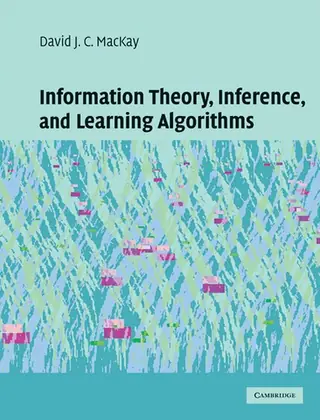
Information Theory, Inference & Learning Algorithms
David J.C. MacKay
Recommended by 77 · mentioned by 9377 recommend · 93 mention77 recommend · 9377 recommend
I've recently started going through http://www.amazon.com/Data-Analysis-Bayesian-Devinderjit-Siv... and can highly recommend it. The benefits of Bayesian reasoning can be grasped somewhat easily without a detailed knowledge of the math, but at the end of the day scientists…
on “A History of Bayes' Theorem” ↗http://www.amazon.com/Data-Analysis-Bayesian-Tutorial-Public... is short and reputable on Bayesian statistics. On MCMC specifically, I don't know, but MCMC is really a kind of algorithm that lets you find the answer to a mathematical question…
on “Free Python ebook: Bayesian Methods for Hackers” ↗While we're here - I've gained a lot from "Data Analysis: A Bayesian Tutorial" by DS Sivia and J Skilling. It's a graduate level text, and I found the chapters very concise and the subject well-laid out. It was one of those books that gave me continuous insight…
on “Bayesian Data Analysis, Third edition (2013) [pdf]” ↗Read "Data Analysis: A Bayesian Tutorial," by D.S. Sivia for an excellent introduction to experimental design for scientists. This gives you a quantitative approach to the design of experiments, with tools to properly evaluate…
on “Ask HN: What's a promising area to work on?” ↗…start with a probability distribution assuming a degree of fairness you can do that and it won't be so prone to fluctuation of the start. I don't know anything online about this offhand but check out "Data Analysis A Bayesian Tutorial" by D. S. Sivia section 2.1.1 for a worked out example. Once you're doing that, then you need to calculate the optimum amount to bet. If the betting will continue indefinitely then…
on “Flipping 10 heads in a row - a small probability demonstration” ↗…surprised to find some of my more eclectic favorites included: - Naked Ape, Desmond Morris - Feynman Lectures on Computation - Feynman - Guide to Feynman Diagrams - Mattuck - Visual Complexity - Lima - Data Analysis - Sivia - Emergence - Jonhson
on “Bret Victor's Bookshelf (2015)” ↗Data Analysis A Bayesian Tutorial Devinderjit Sivia and John Skilling I prefer the (shorter) 1st edition
on “May Bayes Theorem Be with You” ↗