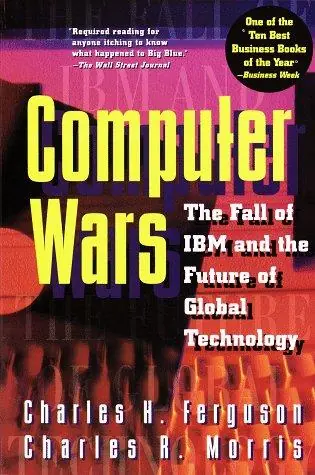
Computer wars
by Charles H. Ferguson · first published 1993
50% recommend50% neutral
Affiliate links. As an Amazon Associate I earn from qualifying purchases.
Mentions per year
What Hacker News says
Related books
 2009–2025
Computing in the Middle Ages
Severo M. Ornstein
Recommended by 8 · mentioned by 108 recommend · 10 mention8 recommend · 108 recommend
 2007–2026
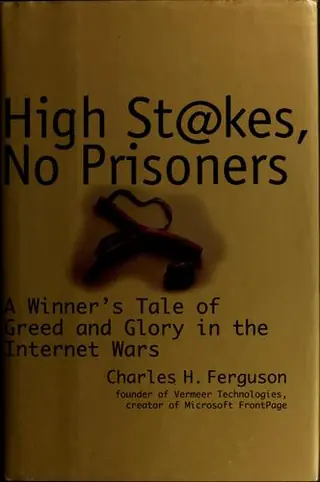
High stakes, no prisoners
Charles H. Ferguson
Recommended by 18 · mentioned by 2118 recommend · 21 mention18 recommend · 2118 recommend
 2010–2025
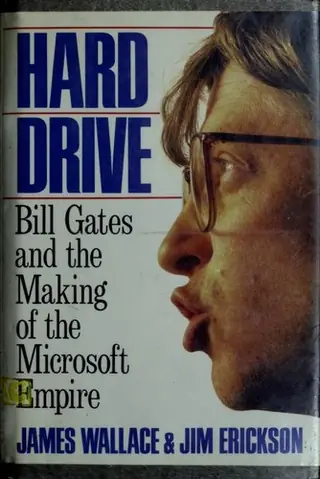
Hard drive
James Wallace
Recommended by 11 · mentioned by 1611 recommend · 16 mention11 recommend · 1611 recommend
 2008–2025
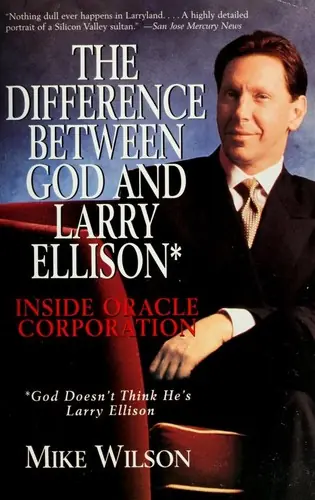
The Difference Between God and Larry Ellison
Mike Wilson
Recommended by 9 · mentioned by 199 recommend · 19 mention9 recommend · 199 recommend
 2010–2026
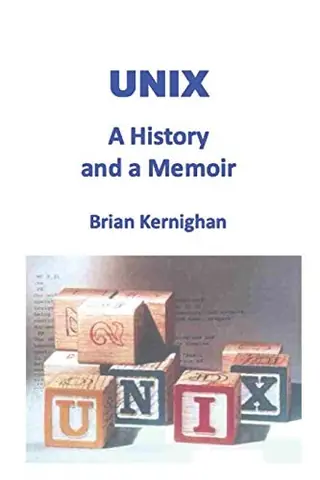
UNIX
Brian W. Kernighan
Recommended by 14 · mentioned by 2314 recommend · 23 mention14 recommend · 2314 recommend
 2008–2026
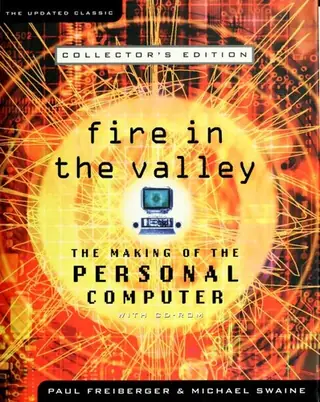
Fire in the valley
Paul Freiberger, Michael Swaine
Recommended by 39 · mentioned by 5239 recommend · 52 mention39 recommend · 5239 recommend
 2012–2026
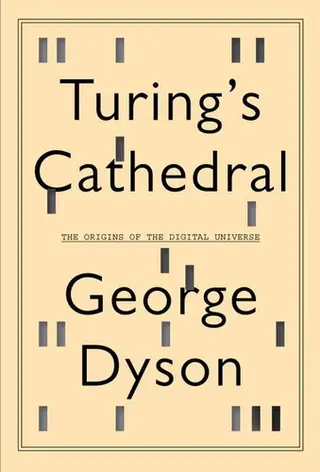
Turing's cathedral
George Dyson
Recommended by 42 · mentioned by 5842 recommend · 58 mention42 recommend · 5842 recommend
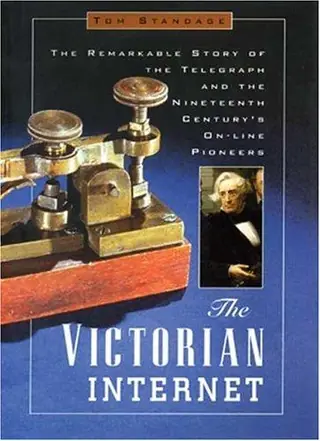 2008–2026
The Victorian Internet
Tom Standage
Recommended by 41 · mentioned by 4941 recommend · 49 mention41 recommend · 4941 recommend
…The Making of the Personal Computer High Stakes, No Prisoners - history of the birth of the Internet written by the founder of FrontPage, with a keen critique of Netscape's history - Charles Ferguson Computer Wars - a look at the decline of IBM by the early 90s - Charles Ferguson Valley of Genius: The Uncensored History of Silicon Valley - An oral history of the Valley in the 80s and 90s.
on “Ask HN: Computer Science/History Books?” ↗The book is pretty great. I'll put it with "The soul of a new machine", Ferguson's "Computer Wars" and Lapsley's "Exploding the phone" as top narrative tech books.
on “Second-guessing the modern web (2020)” ↗I highly recommend Charles Ferguson's "Computer Wars" on this topic, as well as his other book (about startups and the early Web), "High Stakes, No Prisoners."
on “How the IBM PC Won, Then Lost, the Personal Computer Market” ↗Check out Computer Wars by Ferguson for probably a better version of that. The Ferguson book sent me down a lot of historical rabbit holes that didn't have wikipedia pages yet and I had to pull up things on like newspapers.com…
on “Ask HN: Good Books on the History of Technology?” ↗try Computer Wars: How the West Can Win in a Post-IBM World. By Charles H. Ferguson from 1993. The author is https://en.wikipedia.org/wiki/Charles_Ferguson_(filmmaker) this one
on “Microsoft employees recall their early years” ↗I agree. Those emails/PDFs released in the DOJ case very enlightening and proved a lot of what Charles Ferguson was talking about in his books, "Computer Wars", "High Stakes, No Prisoners". MSFT was even afraid of AOL, Oracle, and others teaming up to offer a home appliance (eg. a net PC) at low prices and undercutting the PC industry. Of course, those partnerships…
on “Why did Microsoft create C#? Wasn't Java good enough in the 1990s?” ↗…https://people.cs.clemson.edu/~mark/fs.html That has an interesting quote: > Note the coverage of FS and what they describe as its "toxic aftereffects" on the corporation in Chapter 3 of Charles Ferguson and Charles Morris, Computer Wars: The Post-IBM World, Times Books, 1993. An excerpt: >> Most corrosive of all, the old IBM candor died with F/S. Top management, particularly Opel, reacted defensively as F/S headed toward a debacle.…
on “IBM's future system of the past” ↗