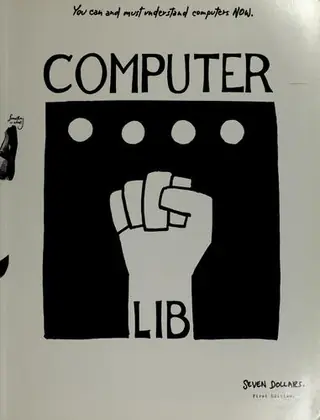
Computer lib
by Ted Nelson · first published 1974
29% recommend68% neutral3% critical
Why HN recommends it
Idiosyncratic book on personal computing and hypertext, an early influence on interface and media thinking. Readers value its broad, provocative view of what computers could be, and its intro to APL.
Summarised by Claude from recommending comments
Affiliate links. As an Amazon Associate I earn from qualifying purchases.
Mentions per year
What Hacker News says
Related books
Literary Machines
Ted Nelson
Recommended by 11 · mentioned by 2011 recommend · 20 mention11 recommend · 2011 recommend
Dream machines
Ted Nelson
Recommended by 9 · mentioned by 119 recommend · 11 mention9 recommend · 119 recommend
 2009–2026
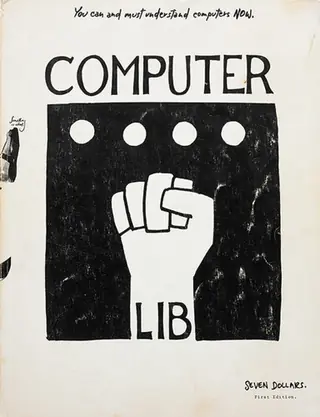
Computer Lib/Dream Machines
Ted Nelson
Recommended by 37 · mentioned by 6637 recommend · 66 mention37 recommend · 6637 recommend
 2009–2021
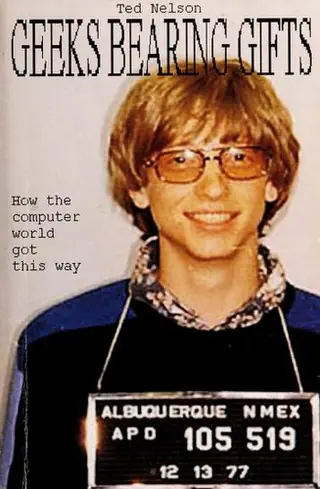
Geeks bearing gifts
Ted Nelson
Recommended by 4 · mentioned by 84 recommend · 8 mention4 recommend · 84 recommend
As We May Think
Vannevar Bush
Recommended by 23 · mentioned by 8523 recommend · 85 mention23 recommend · 8523 recommend
 2009–2026
Literate programming
Donald Knuth
Recommended by 18 · mentioned by 9418 recommend · 94 mention18 recommend · 9418 recommend
 2009–2026
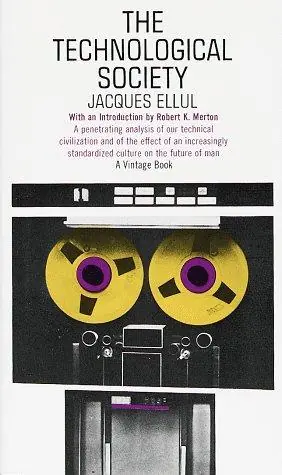
The Technological Society
Jacques Ellul
Recommended by 36 · mentioned by 5236 recommend · 52 mention36 recommend · 5236 recommend
 2009–2026
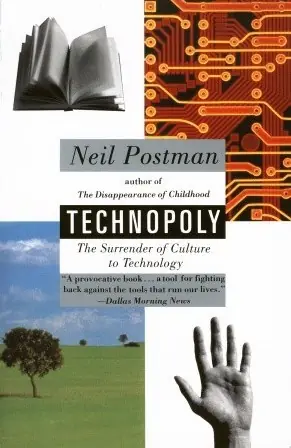
Technopoly
Neil Postman
Recommended by 35 · mentioned by 5235 recommend · 52 mention35 recommend · 5235 recommend
…self-correct. There are relatively few academically competent, "computer people" in the world after the dissolution of science and technology programs in the post-war economic period. Watch Alan Kay talks. Read Computer Lib by Ted Nelson. There's a theory that through the 80's and 90's that, "many of the elves left Middle Earth" (ie. the first competent generation of PC-literate computer people have left the industry) Bill…
on “Ask HN: Online community for self-taught CS hobbyists?” ↗…curious as to how Smalltalk was implemented (http://www.amazon.com/gp/offer-listing/0201113716/ref=dp_olp...). I'm surprised at how cheap they are, as the book is considered a collector's item. 2. "Computer Lib" by Ted Nelson (http://www.digibarn.com/collections/books/computer-lib/) And, as a bonus, the TRS-80 Model I Users Manual. I still remember the first "program" the book taught me: 10 PRINT "HEY MA,…
on “Which is your favorite 70-80s computer book?” ↗This is neat. I studied APL recently (through Ted Nelson's fantastic intro in Computer Lib), and ever since I've been intrigued by some of the neat ideas/conciseness that array languages offer. (I have too many side projects/side project ideas already, but would love to write a toy "modern"…
on “Single assignment C” ↗As a friend of the author, I know that people at Apple and Microsoft used Ted Nelson's Computer Lib as a bible on personal computing. Sadly, you can't buy it cheap (I have a signed reprint), but it's an astounding book. It's likely that Jobs saw this early on.
…known for denotational semantics), seems to have had a greater influence in Computer Science. Trac(tm), on the other hand, had an important booster, it was promoted in Ted Nelson's 1974 cult classic Computer Lib, one of my treasured historical CS books that I bought in grad school the first time around. Nelson (famous for inventing hypertext, the notion of embedded active links decades before HTML) wrote that…
on “Show HN: Hasp – A minimal CSS preprocessor using the M4 macro language” ↗https://www.goodreads.com/book/show/722414.Computer_Lib_Drea... by Ted Nelson :)
on “Ask HN: What are the most fundamental books on computer science?” ↗A few more that young developers need to read: Computer Lib by Ted Nelson. This used to be the, "Bible" before Nelson fell into relative obscurity. Ted Nelson was the first to coin the term, "Hypertext" in the 1960s after reading a famous article by Vannevar Bush…
on “Free Programing Books” ↗To the confused HNers: Xanadu is a project by Ted Nelson. Ted Nelson is a fundamental figure of early computing (despite not being a computer scientist himself). His work (recommended: Dream Machines/Computer Lib, 1974; Literary Machines, 1981; Geeks Bearing Gifts, 2008) is about how computers touch us as humans, and how they affect our future, especially when it comes to communicating and using them to spread+build…
on “Xanadu: we have a working deliverable” ↗thanks for posting this. I read his double-book "Dream Machines / Computer Lib" when it came out: it changed my perspective on the future of computing from numbers and mathematics to narrative and media. I heard him speak perhaps 15 years ago now at a Computer Literacy bookstore…
on “In Venting, a Computer Visionary Educates” ↗A worthy collection. Theodor "Ted" Nelson's ideas have played a significant role in shaping the course of computing and thought. His self-published books (Computer Lib and Literary Machines) are still goldmines of information and understanding. His papers, some of which appear in this collection, show a deep understanding of computation that, even today, seems revolutionary.…
on “Ted Nelson' Published Papers on Computers and Interaction, 1965 to 1977” ↗…collection of papers, which did not get upvoted] A worthy collection. Theodor "Ted" Nelson's ideas have played a significant role in shaping the course of computing and thought. His self-published books (Computer Lib and Literary Machines) are still goldmines of information and understanding. His papers, some of which appear in this collection, show a deep understanding of computation that, even today, seems revolutionary.…
on “Ted Nelson’s published papers on computers and interaction, 1965 to 1977” ↗Ted Nelson recently did a series of videos on the important ideas in Xanadu. Start here: https://www.youtube.com/watch?v=hMKy52Intac Also you can buy his classic 'Computer Lib' book here: https://computerlibbook.com/
on “Project Xanadu” ↗…Clojure, Query By Example, Programming By Demonstration, Logo Hardware: Canon Cat, Xerox Alto/Star, Sketchpad, PDP-11, PERQ Workstation, SGI workstations, OLPC Books: Computers As Theatre Second Edition, Computer Lib, "As We May Think" by Bush, Engelbart's 62' paper, Mindstorms by Seymour Papert. Links: https://worrydream.com/refs/Papert_1980_-_Mindstorms,_1st_ed... https://archive.org/details/humaneinterfacen00rask…
on “What is “good taste” in software engineering?” ↗…latter. I can't tell from the link what the other harmony book is about. What's good about it? As far as computer books, I've read a lot of recommendations here over the years like "thinking forth", "Computer Lib" by Ted Nelson, etc. They are well known to some audiences but not others. ---- I also enjoy reading what people though the computing future would be like. I have "Superdistribution" by Brad Cox:…
on “Ask HN: What are the best unknown books you have read?” ↗…textual research purposes. They cannot model what occurs when I use pencil, paper, and write in the margins. The experience of Kimbro (the man in the article) reminded me a bit of Ted Nelson with his book Computer Lib. Ted couldn't write the book using a computer because it wasn't possible for computers at that time to layout such a complex book. I think this article raises similar issues. Second, thinking deeply…
on “The Man Who Wrote Down Every Thought He Had” ↗