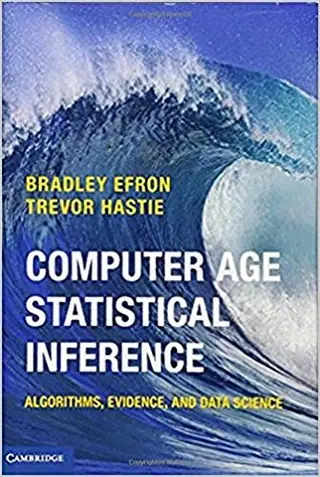
Computer Age Statistical Inference
by Bradley Efron, Trevor Hastie · first published 2016
82% recommend18% neutral
Why HN recommends it
Accessible, well-motivated survey of modern statistical inference and its history, covering frequentist, Bayesian and machine learning ideas
Summarised by Claude from recommending comments
The twenty-first century has seen a breathtaking expansion of statistical methodology, both in scope and in influence. 'Big data', 'data science', and 'machine learning' have become familiar terms in the news, as statistical methods are brought to bear upon the enormous data sets of modern science and commerce. How did we get here? And where are we going? This book takes us on an exhilarating journey through the revolution in data analysis following the introduction of electronic computation in the 1950s. Beginning with classical inferential theories - Bayesian, frequentist, Fisherian - indivi
Affiliate links. As an Amazon Associate I earn from qualifying purchases.
Mentions per year
What Hacker News says
Related books
 2015–2024
Theory of Probability
Bruno de Finetti
Recommended by 4 · mentioned by 44 recommend · 4 mention4 recommend · 44 recommend
 2010–2023
Statistical inference
George Casella
Recommended by 16 · mentioned by 2116 recommend · 21 mention16 recommend · 2116 recommend
 2014–2026
Introduction to Statistical Learning
Gareth James, Daniela Witten, Trevor Hastie, Robert Tibshirani
Recommended by 85 · mentioned by 10885 recommend · 108 mention85 recommend · 10885 recommend
 2007–2026
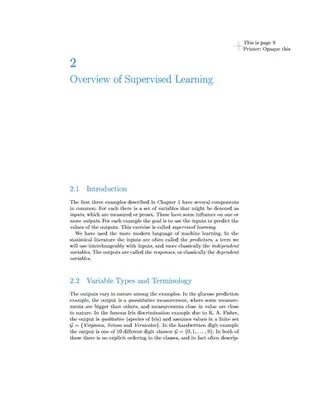
The Elements of Statistical Learning
Trevor Hastie, Robert Tibshirani, Jerome Friedman
Recommended by 144 · mentioned by 227144 recommend · 227 mention144 recommend · 227144 recommend
 2016–2023
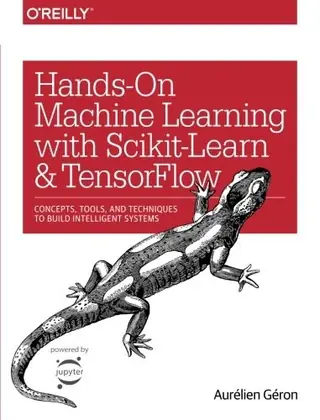
Hands-On Machine Learning with Scikit-Learn and TensorFlow
Aurélien Géron
Recommended by 16 · mentioned by 1816 recommend · 18 mention16 recommend · 1816 recommend
 2008–2026
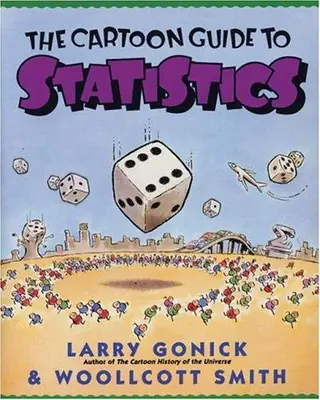
The cartoon guide to statistics
Larry Gonick
Recommended by 17 · mentioned by 1717 recommend · 17 mention17 recommend · 1717 recommend
 2008–2026
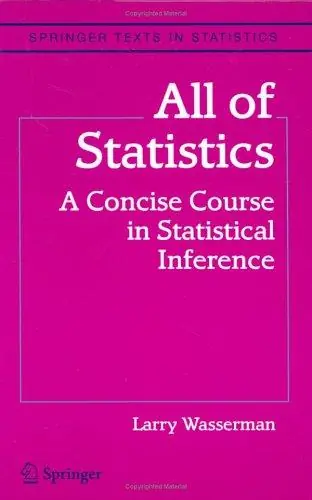
All of Statistics
Larry Wasserman
Recommended by 40 · mentioned by 6040 recommend · 60 mention40 recommend · 6040 recommend
 2018–2026
The Book of Why
Judea Pearl, Dana Mackenzie, Dana Mackenzie Judea Pearl, Mel Foster
Recommended by 59 · mentioned by 10359 recommend · 103 mention59 recommend · 10359 recommend
I think you will enjoy Efron & Hastie's Computer Age Statistical Inference: Algorithms, Evidence and Data Science. https://web.stanford.edu/~hastie/CASI/ MIT 6.008 Introduction to Inference also goes over many of the classic problems such as Cookie Jar, Monte Hall, Fair Dice,…
on “Ask HN: What are your favorite statistics and probability textbooks?” ↗…for this? Because most of the papers on this topic seem to come from Computer Science. Take a look at the epilogue of [1] for a thorough discussion on where statistical theory needs to catch up. [1] Computer Age Statistical Inference - Efron, Hastie.
on “Time Series Prediction Using LSTM Deep Neural Networks” ↗A more balanced, current treatment is in Bradley Efron and Trevor Hastie's Computer Age Statistical Inference (2016) [1] [1] https://web.stanford.edu/~hastie/CASI/
on “In Defense of Probability (1985) [pdf]” ↗Efron and Hastie's CASI is an instant classic. Deep history for any ML researcher or enthusiast. And remarkably accessible ;) Computer Age Statistical Inference: Algorithms, Evidence and Data Science https://web.stanford.edu/~hastie/CASI/
on “Ask HN: CS and programming books of 2017” ↗…the inference you wish to make. And understanding, from a historical context, precisely what that inferences means at a philosophical level. That is where this text will assist on your path to mastery. Computer Age Statistical Inference https://web.stanford.edu/~hastie/CASI/
on “Ask HN: What's the best textbook you've read?” ↗…dated, but still loads of fun: Game of Life John Conway's Winning Ways For Your Mathematical Plays https://annarchive.com/files/Winning%20Ways%20for%20Your%20M... I'd add probability theory to the mix. Computer Age Statistical Inference is a modern classic https://web.stanford.edu/~hastie/CASI/
on “How to get rich without getting lucky” ↗Also, if you read the fantastic computer age statistical inference from Efron & Hastie (it's available online!), you notice they are both fans of data-science! The whole book reads like a big argument why we need data-science and why traditional statistics is not always…
on “What Data Scientists Really Do, According to Data Scientists” ↗Try "Computer Age Statistical Inference" by Efron and Hastie. https://web.stanford.edu/~hastie/CASI_files/PDF/casi.pdf
on “The Elements of Statistical Learning [pdf]” ↗There's also a newer book by Hastie (and Efron!), which I very much prefer to The Elements of Statistical Learning: Computer Age Statistical Inference. https://web.stanford.edu/~hastie/CASI_files/PDF/casi.pdf It's really well motivated and, unlike ESL, discusses many different schools---including classical inference, empirical and Bayes deep learning.…
on “The Elements of Statistical Learning [pdf]” ↗…lot better. Some examples of books that have been useful include, - Understanding Uncertainty (Lindley 2009), - Theory of Probability (de Finetti 1975), - Foundations of Statistics (Savage 1953), - Computer Age Statistical Inference (Efron), - Causality (Pearl 2011), - Trustworthy Online Controlled Experiments (Kohavi et al.) However, most of this is about one "person" dealing with "the world", which in turn is neutral. I want…
on “Ask HN: Good books on game theory fundamentals?” ↗…the Laplace approximation don't work on models with high numbers of parameters (since you need to compute the diagonal of the Hessian). A good overview of the situation is covered in Efron & Hastie's "Computer Age Statistical Inference".
on “Statistical vs. Deep Learning forecasting methods” ↗Get a book on applied statistics, such as Think Stats: Probability and Statistics for Programmers (https://allendowney.github.io/ThinkStats/) Computer Age Statistical Inference (https://hastie.su.domains/CASI/) Statistical Rethinking (https://xcelab.net/rm/) An Introduction to Statistical Learning (https://www.statlearning.com/) Obviously maths is going to be involved to…
on “Poor Deming never stood a chance” ↗Good review article. I always enjoy browsing the references, and found "Computer Age Statistical Inference" among them. Looks like a good read, with a pdf available online.
on “What are the most important statistical ideas of the past 50 years?” ↗Something that helped me understand where frequentist logic sat was Computer Age Statistical Inference. A lot of the tools of frequentism were developed for a time that is quite different to our own. Just personally, I don't think frequentism is incompatible...it seems to have just been built up to frame…
on “Understanding Statistical Power and Significance Testing” ↗Elements of Statistical learning is from the same authors (mostly) as ISLR but it's longer and goes a bit deeper on the theory. Also, Computer Age Statistical Inference which is newer and covers more material. Other big titles - Pattern Recognition and Machine Learning (Bishop), Machine Learning: A Probabilistic Perspective (Murphy) - these last two weren't for me but…
on “Ask HN: What is your favorite book for learning statistics?” ↗