
Capitalism, Socialism and Democracy
by Joseph Alois Schumpeter · first published 1942
48% recommend48% neutral4% critical
Why HN recommends it
Influential political-economy work on how innovation drives capitalism through creative destruction, and on democracy as competition among elites; valued for its big-picture view of business cycles, for economists.
Summarised by Claude from recommending comments
Capitalism, Socialism, and Democracy is a book on economics, sociology, and history by Joseph Schumpeter, arguably one of—if not his most—famous, controversial, and important works. It’s also one of the most famous, controversial, and important books on social theory, social sciences, and economics—in which Schumpeter deals with capitalism, socialism, and creative destruction. It is the third most cited book in the social sciences published before 1950, behind Marx’s Capital and The Wealth of Nations by Adam Smith.
Affiliate links. As an Amazon Associate I earn from qualifying purchases.
Mentions per year
What Hacker News says
Related books
 2013–2023
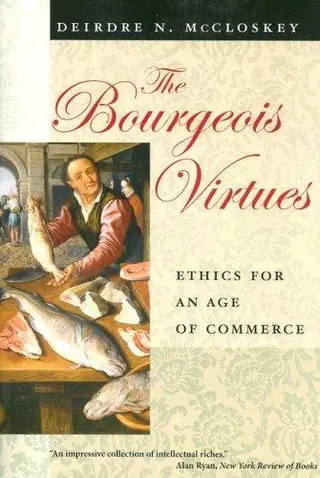
The bourgeois virtues
Deirdre N. McCloskey
Recommended by 2 · mentioned by 42 recommend · 4 mention2 recommend · 42 recommend
 2008–2026
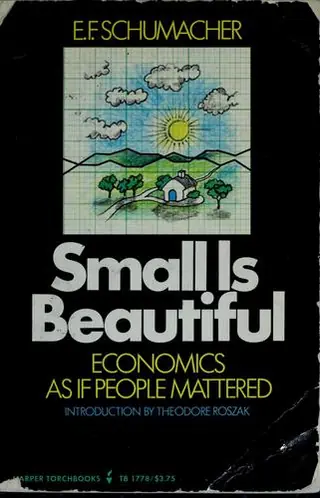
Small Is Beautiful
E. F. Schumacher
Recommended by 19 · mentioned by 3519 recommend · 35 mention19 recommend · 3519 recommend
 2007–2026
Economics in One Lesson
Henry Hazlitt
Recommended by 107 · mentioned by 147107 recommend · 147 mention107 recommend · 147107 recommend
 2011–2026
The origins of political order
Francis Fukuyama
Recommended by 22 · mentioned by 3222 recommend · 32 mention22 recommend · 3222 recommend
Hermann Hesse
Siddhartha
Recommended by 42 · mentioned by 5442 recommend · 54 mention42 recommend · 5442 recommend
 2012–2026
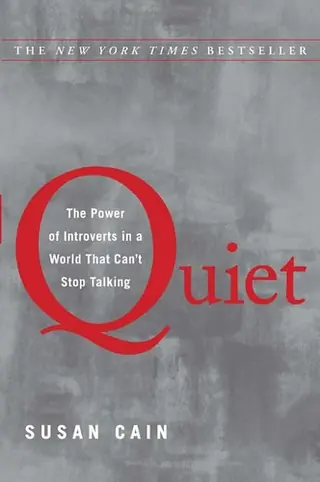
Quiet
Susan Cain
Recommended by 43 · mentioned by 5743 recommend · 57 mention43 recommend · 5743 recommend
 2011–2026
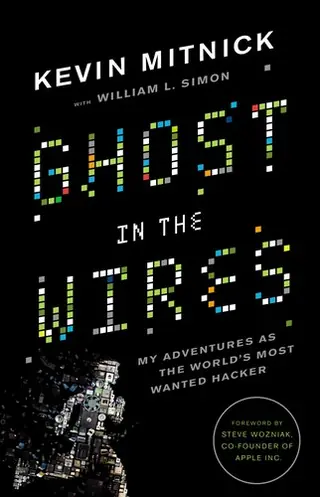
Ghost in the wires
Kevin D. Mitnick
Recommended by 63 · mentioned by 8663 recommend · 86 mention63 recommend · 8663 recommend
 2009–2026
Metaphors We Live By
George Lakoff, Mark Johnson, Lakoff
Recommended by 56 · mentioned by 8156 recommend · 81 mention56 recommend · 8156 recommend
…- capitalism depends on a constant flow of new innovations and entrerpeneurship, we have a constant state of churn where value is being "creatively destroyed". I started reading Josesph Schumpeter's Capitalism, Socialism and Democracy[2] a while back but got distracted and never finished it - but based on what I know so far, I recommend it. What I'm not yet clear on, from my limited reading of the original source material, and a few…
on “Brain work may be going the way of manual work” ↗…Tocqueville, "On Liberty" by John Stuart Mill, "A Treatise on Political Economy" by Jean-Baptiste Say, "The Man Versus the State" by Herbert Spencer, "The Revolt of the Masses" by José Ortega y Gasset, "Capitalism, Socialism and Democracy" by Joseph Alois Schumpeter, "The Logic of Scientific Discovery" by Karl Popper, "The Machinery of Freedom" by David Friedman, "On Power" Bertrand de Jouvenel, "1984" by George Orwell, "The State" by…
on “Ask HN: What's one book that changed your life?” ↗…philosophical backing for capitalism is limited and reads more like an Econ 101 description of perfectly competitive markets than anything else. If you would like to learn more you could read Joseph Schumpeter’s Capitalism, Socialism and Democracy[1] or Deirdre McCloskey’s Bourgeois Virtues[2] [1] http://libgen.is/book/index.phpmd5=21EE8F203D5C3F9530D55985B... [2] https://press.uchicago.edu/ucp/books/book/chicago/B/bo375063...
on “My solopreneur story: zero to $45K/mo in 2 years” ↗Capitalism, Socialism, and Democracy by Joseph Schumpeteer and Small is Beautiful by Schumacher are two classic, heterodox economic works. People outside the field rarely read them, which is a shame. Both have very high S/N ratios, and will…
on “Ask HN: Books with a high signal to noise ratio?” ↗…more as a means of the public endorsing competent and honest representatives to govern on their behalf. The classic book-length exposition of this model (which is basically modern elite orthodoxy) is 'Capitalism, Socialism and Democracy', by Joseph Schumpeter. David Held's 'Models of Democracy' is a good comparative text, though there are lots of those to chose from.
on “Two Decades of War Have Eroded the Morale of America’s Troops” ↗…are willing to for a nicer car to drive around the neighborhood! The Visible Hand by Alfred D. Chandler, Jr. is a great read corroborating the growth of agglomerated industry, and Joseph Schumpeter's Capitalism, Socialism, and Democracy also has some good passages relating to this phenomenon of the homestead getting saturated. But I'm an eternal optimist and see this as the price of progress :)
on “How We Institutionalized Incompetence” ↗Somewhat surprised there's nothing from Schumpeter. Many more popular thinkers drew inspiration from these two classics: 1. Capitalism, Socialism and Democracy 2. Theory of Economic Development
on “Economics of Innovation: Detailed Reading List (2019)” ↗He addresses it in IIRC chapter 7 & 8 of Capitalism, Socialism and Democracy. But another more recent book I'd recommend that takes this kind of framework is The Entrepreneurial State by Mariana Mazzucato.
on “Anna’s Archive: The world’s largest open-source open-data library” ↗I highly recommend reading Schumpeter, both "Business Cycles" and "Capitalism, Socialism and Democracy". He discusses how motivations fundamentally change after profit margins peak and argues that profit after this point necessarily produces less economically efficient processes (in terms of the flow…
on “Apple App Store guidelines remove ban on encouraging external payments in US” ↗…applied through Europe in general. Read this as a companion to Max Weber's "The Protestant Ethic and the Spirit of Capitalism", originally written in German and concerned with the Netherlands and Germany. "Capitalism, Socialism, and Democracy" by Joseph A. Schumpeter. Schumpeter was an Austrian economist, a contemporary of John Maynard Keynes, and (briefly) Austria's Finance Minister in the 1920's. Like Keynes, he considered himself influenced…
on “Ask HN: What are your favorite non-fiction books of all time?” ↗Capitalism, Socialism, and Democracy reads like a play by play of what is happening. Read it, then look at what people like Graham, Thiel, and Andreesen say.
on “Jaron Lanier: The Internet destroyed the middle class” ↗…part of the "social contract", if you will. If you look at economic indicators, you will find the numbers do not support your assertions. The best compiled data on this can be found in Schumpeter's "Capitalism, Socialism, and Democracy" - income inequality in the US was relatively static if not improving over this time period, and this is in spite of also receiving many many economic refugees from abroad in several waves of immigration.
on “What do economists say about inequality?” ↗It comes from two places: 1) Experience; and, 2) Joseph Schumpeter's Capitalism, Socialism, and Democracy, in which he lays out the theory of creative destruction and entrepreneurs.
on “Entrepreneurs: The New Celebrities” ↗…not typically consist in providing more silk stockings for queens but in bringing them within the reach of factory girls in return for steadily decreasing amounts of effort." Joseph Schumpeter, from "Capitalism, Socialism and Democracy" (1942)
on “Inequality is real, personal, expensive, and it was created” ↗…method is that institutional arrangement for arriving at political decisions in which individuals acquire the power to decide by means of a competitive struggle for the people’s vote.” Joseph Schumpeter —Capitalism, Socialism, and Democracy (1947)
on “The Cambridge Analytica scandal isn’t a scandal: this is how Facebook works” ↗