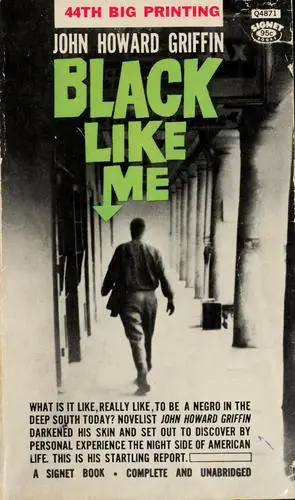
Black like me
by John Howard Griffin · first published 1960
58% recommend37% neutral5% critical
Why HN recommends it
First-person account of a white journalist who darkens his skin and travels the Deep South in the Civil Rights era. Readers say it shows how racial classification shapes treatment
Summarised by Claude from recommending comments
Publisher's description: Studs Terkel tells us in his Foreword to the definitive Griffin Estate Edition of Black Like Me: "This is a contemporary book, you bet." Indeed, Black Like Me remains required reading in thousands of high schools and colleges for this very reason. Regardless of how much progress has been made in eliminating outright racism from American life, Black Like Me endures as a great human and humanitarian document. In our era, when "international" terrorism is most often defined in terms of a single ethnic designation and a single religion, we need to be reminded that America
Affiliate links. As an Amazon Associate I earn from qualifying purchases.
Mentions per year
What Hacker News says
Related books
 2008–2026
The Color Purple
Alice Walker
Recommended by 5 · mentioned by 155 recommend · 15 mention5 recommend · 155 recommend
 2007–2026
The Illuminatus! Trilogy
Robert Shea, Robert Anton Wilson
Recommended by 32 · mentioned by 5232 recommend · 52 mention32 recommend · 5232 recommend
 2008–2025
The bell curve
Richard J. Herrnstein, Charles A. Murray
Recommended by 6 · mentioned by 796 recommend · 79 mention6 recommend · 796 recommend
 2009–2026
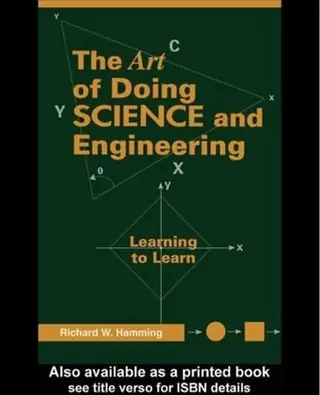
The art of doing science and engineering
Richard Hamming, Bret Victor
Recommended by 56 · mentioned by 8056 recommend · 80 mention56 recommend · 8056 recommend
 2013–2026
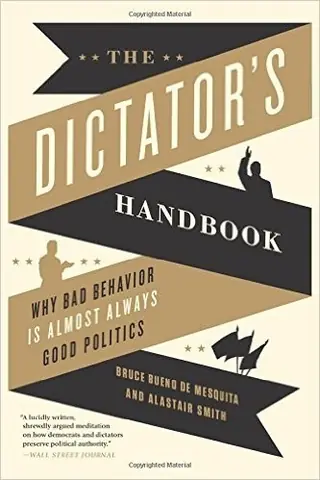
The dictator's handbook
Bruce Bueno de Mesquita, Alastair Smith
Recommended by 63 · mentioned by 9463 recommend · 94 mention63 recommend · 9463 recommend
Gulag Archipelago
Aleksandr Solzhenitsyn
Recommended by 77 · mentioned by 16977 recommend · 169 mention77 recommend · 16977 recommend
 2008–2026
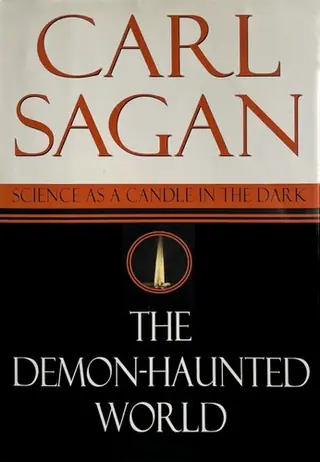
The Demon-Haunted World
Carl Sagan
Recommended by 93 · mentioned by 16293 recommend · 162 mention93 recommend · 16293 recommend
 2008–2026
Tao Te Ching
Stephen Mitchell
Recommended by 103 · mentioned by 204103 recommend · 204 mention103 recommend · 204103 recommend
…convention. The subject's classifying himself as "black" is arbitrary, a remnant of the racist "one drop" attitude that helped support slavery and, later, segregation. The book referred to in the article, Black Like Me, is great reading, by the way. EDIT: Some replies suggest that I may have been unclear. The social grouping into race is obviously not random, but based on perception of visible morphological attributes.…
on “Passing as Black” ↗…same restrooms and water fountains. Can you imagine that? If you think that that kind of institutionalized racism has completely evaporated, you are wrong. I think it would benefit you to read the book "Black Like Me" by John Howard Griffin. It will probably change your apparent opinion that black people are a bunch of whiners demanding charity.
on “Arrington, Race, and Silicon Valley” ↗A good long-form story (and a true story that is quite gripping) about how changing the classification can change the perception of the person is the book Black Like Me by John Howard Griffin,[1] which I read once in childhood and reread a few years ago. Powerful stuff. It's stark to understand that events like the events described in the book happened during the lifetime…
on “How Turbans Helped Some Blacks Go Incognito in the Jim Crow Era” ↗>What white person has achieved this goal? I know at least one person who has. https://www.theguardian.com/books/2011/oct/27/black-like-me-... I know it's not possible for everyone to do what John Howard Griffin did, but reading that book and living that experience vicariously can be a start.
on “For black CEOs in Silicon Valley, humiliation is a part of doing business” ↗Absolutely second this. Also, if race and race issues are important to you, consider Black Like Me[1] by John Howard Griffin. It's a fascinating story of a white man who spent some time roaming around the Deep South, during the Civil Rights Era, masquerading as a black man. [1]:https://en.wikipedia.org/wiki/Black_Like_Me
on “Ask HN: 2018 Summer Reading List?” ↗A few recommedations: 1. Black Like Me - John Howard Griffin - https://en.wikipedia.org/wiki/Black_Like_Me 2. More Matrix and Philosophy - William Irwin (ed) - https://www.amazon.com/More-Matrix-Philosophy-Revolutions-Re... 3. Godel, Escher,…
on “Ask HN: 2018 Summer Reading List?” ↗"Black Like Me" by John Howard Griffin [1] - From Wikipedia [2]: "Griffin was a native of Mansfield, Texas, who had his skin temporarily darkened to pass as a black man. He traveled for six weeks throughout the racially…
on “Ask HN: What are some deep, mentality changing books?” ↗Black Like Me by John Howard Griffin The premise was simple: In 1959 a white reporter used makeup to make himself have black skin. He then traveled around the southern USA. Even as a child it was easy to see how…
on “Ask HN: What was a book that changed your life?” ↗…societies, "race" is a salient enough category that an individual's personal experience can be profoundly influenced by race categorization. If you haven't read the book before, you could read the book Black Like Me by John Howard Griffin to learn more about that.
on “New forms of 'racism' arise in science research” ↗I wish "Black Like Me" were mandatory reading in public schools: Black Like Me, first published in 1961, is a nonfiction book by white journalist John Howard Griffin recounting his journey in the Deep South of the United…
on “American Nazis at Madison Square Garden, 1939” ↗You might also appreciate Black Like Me (1961)[1]. I think I read this in middle school or high school. A white man poses as a black man for several weeks in the racially segregated South. [1]: http://en.wikipedia.org/wiki/Black_Like_Me
on “I went to the mall, and a little girl called me a terrorist.” ↗I read Thinking, Fast and Slow this year too, and it is definitely up there on my best books of all time list. I also read Black Like Me, which seems to be required reading in the US, but I only recently became aware of it. Definitely worth a look.
on “Ask HN: Best books you read in 2012” ↗…camera. He appears to be at a critical age developmentally. He may grow to resent this experience rather than learning anything from it." Sending them back to high school-level English to read Roots and Black Like Me, and then write a paper might work. Framing it that way as a court-mandated punishment does not sound great on its face. I suspect that some keyboard nazis just need to be exposed to more moderate discourse.…
on “Montrealer found guilty of hate against Jews after Daily Stormer post” ↗…it was purely a didactic exercise. And I do plan to read more of Goines' books. I have two or three on my shelf waiting now. Another interesting book that I've started, but not yet finished, is titled Black Like Me[3]. It's non-fiction, but radically interesting. It's about how a white man from Texas had his skin artificially darkened back in the late 1950's and spent a lot of time during the era of racial segregation,…
on “Ask HN: Books that transport you into a different time, place, or skin” ↗I think this article is a lot more nuanced than you give it credit for. In talking about blackface alone, the author talks about Al Jolson but also John Howard Griffin and his book "Black Like Me". Very, very different! It feels like you're talking about the views of cultural appropriation you bring to the table, but you aren't addressing "American Dirt" and the money that went into that book…
on “The Lives of Others: When does imagination become appropriation?” ↗