
Bernard Williams
by Alan Thomas · first published 2007
5mentions
3recommended by
4HN commenters
2010–2023first – last mentioned
75% recommend25% neutral
Affiliate links. As an Amazon Associate I earn from qualifying purchases.
Mentions per year
What Hacker News says
Related books
 2010–2022
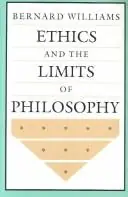
Ethics and the limits of philosophy
Bernard Arthur Owen Williams
Recommended by 3 · mentioned by 33 recommend · 3 mention3 recommend · 33 recommend
 2010–2019
Moral luck
Williams, Bernard.
Recommended by 1 · mentioned by 31 recommend · 3 mention1 recommend · 31 recommend
 2007–2026
Reasons and Persons
Derek Parfit
Recommended by 24 · mentioned by 3724 recommend · 37 mention24 recommend · 3724 recommend
 2009–2026
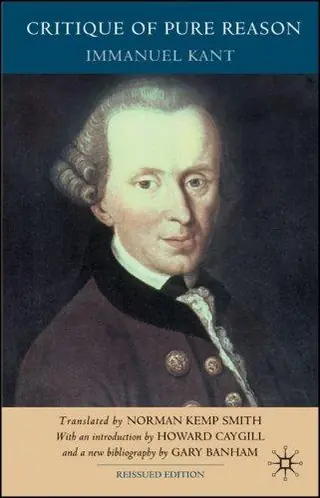
Critique of Pure Reason
Immanuel Kant
Recommended by 28 · mentioned by 13228 recommend · 132 mention28 recommend · 13228 recommend
…The Concept of Mind Willard Van Orman Quine: From a Logical Point of View J. L. Mackie: Ethics: Inventing Right and Wrong Thomas Nagel: Mortal Questions (short essays, well-written, very accessible) Bernard Williams: Ethics and the Limits of Philosophy Michael Smith: The Moral Problem Specialist, technical, odd: The Frege Reader by Michael Beaney (for modern logic and the beginnings of contemporary philosophy…
on “Ask HN: Best Philosophical Books?” ↗Time to read some Bernard Williams: http://books.google.com/books?id=J0w3ER2fWv4C&pg=PA93 http://pegasus.cc.ucf.edu/~cjreg/ethicsModule4.htm
on “Palantir and Prism: A Possible Link” ↗…believe in this formulation of the problem but among all formulations of determinism throughout history this one is in my opinion the only one worth arguing about. I learned about it by reading two texts by Bernard Williams and I would say that he should be named the author of this formulation even though he never used such name. The first text is his book "Ethics and the limits of philosophy" and the second is the essay…
on “What You (Want to)* Want” ↗Hume wrote morality is better felt than reasoned. There is a large tradition in virtue ethics following Hume (eg Bernard Williams) who defend our moral intuitions, our prioritization of family, etc.
on “Nothing Personal: How Ideas Made Derek Parfit” ↗…Singularity relative to ancient Grecians, inasmuch as they couldn't understand our world at all... and I think it's true in the opposite direction, too. This reminded me immediately of a line of thought from Bernard Williams[1]. He's discussing relativism, and he argues that there is some truth to it (roughly: relativism, understood in a very specific way makes sense for ethics, but not for science). In order to make this…
on “Faux Friendship” ↗