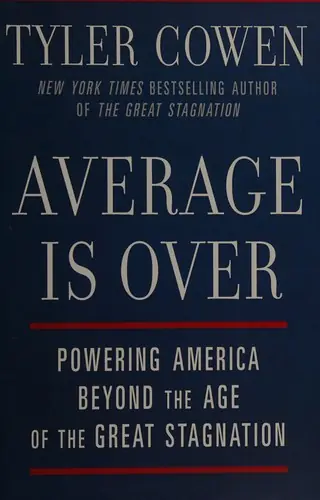
Average is Over
by Tyler Cowen · first published 2013
43% recommend57% neutral
Why HN recommends it
Economist's argument on automation, labor market bifurcation and rising inequality, with man-machine pairing as the key to good jobs; suits readers wanting a reasoned look at where work and the middle class are heading.
Summarised by Claude from recommending comments
There are more rich people and more poor people in our country than ever before. That widening gap means dealing with one big, uncomfortable truth: the middle is growing thinner and thinner. Globally renowned economist Tyler Cowen explains how this happened: high earners are taking ever more advantage of computers and achieving ever-better results. Meanwhile, low earners who haven't committed to learning the new technologies have poor prospects. Nearly every business sector relies less and less on manual labor for high-value jobs, and this fact is forever changing the world of work and wages.
Affiliate links. As an Amazon Associate I earn from qualifying purchases.
Mentions per year
What Hacker News says
Related books
 2011–2026
The Great Stagnation
Tyler Cowen
Recommended by 5 · mentioned by 345 recommend · 34 mention5 recommend · 345 recommend
 2014–2025
The Second Machine Age
Erik Brynjolfsson, Andrew McAfee
Recommended by 9 · mentioned by 209 recommend · 20 mention9 recommend · 209 recommend
Rent Is Too Damn High
Matthew Yglesias
Recommended by 8 · mentioned by 118 recommend · 11 mention8 recommend · 118 recommend
 2007–2026
Blood Meridian
Cormac McCarthy
Recommended by 105 · mentioned by 192105 recommend · 192 mention105 recommend · 192105 recommend
Thinking Fast and Slow by Daniel Kahneman
Gloria J. Russell
Recommended by 99 · mentioned by 14799 recommend · 147 mention99 recommend · 14799 recommend
 2008–2026
Gravity's Rainbow
Thomas Pynchon
Recommended by 58 · mentioned by 17958 recommend · 179 mention58 recommend · 17958 recommend
 2010–2026
Harry Potter and the Methods of Rationality
Eliezer Yudkowsky
Recommended by 170 · mentioned by 301170 recommend · 301 mention170 recommend · 301170 recommend
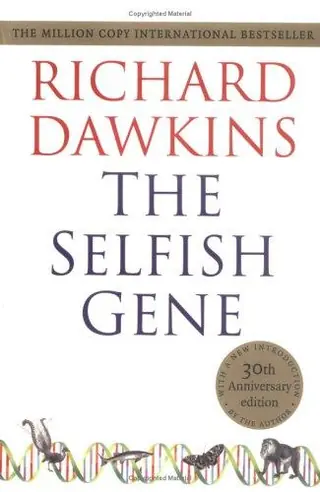 2007–2026
The Selfish Gene
Richard Dawkins
Recommended by 220 · mentioned by 431220 recommend · 431 mention220 recommend · 431220 recommend
…evidence and I think less rationality) that Tyler Cowen (an economist) has been making for several years. Cowen's views are more nuanced (and in my opinion more reasonable) than Thiel's. Cowen's book "Average Is Over" is an excellent distillation of his thesis.
on “Peter Thiel's Zero to One Might Be the Best Business Book I've Read” ↗…2018. They want badass, unicorn, ninja rockstars! There's nothing "wrong" with you. It's just that the minimum bar is higher than you imagined. Keep hustling and you can clear it. Suggested reading: Average is over, by Tyler Cowen
on “Ask HN: Why aren't I getting responses to my Who Is Hiring applications?” ↗…housing is extremely expensive. If you move from Seattle to, say, Houston or Dallas, you'll probably see your effective rent shrink by 35 – 50%. Secondly: see Tyler Cowen's books The Great Stagnation and Average is Over. Those books are too sophisticated and deep (though they're quite readable) to summarize here, but the shortish version is that Western economies are undergoing a lot of profound shifts driven by a combination…
on “Ask HN: What is really wrong with the US economy, really?” ↗…designer or social media marketing specialist. Few people today work as farrier or milliners. I have no idea what the book situation is like in China, but if you can, get a copy of Tyler Cowen's recent book Average Is Over. 5. Richer people will get richer. Poor people will get poorer. The entire world has been getting richer for centuries, and in the last couple decades the world has seen unprecedented wealth creation…
on “The consumer driven economy is for people who don't naturally automate things” ↗That's the essence of complementarity. Cowen's "Average is Over" talks about it a lot, and uses many chess examples specifically to back it up. Recommended.
on “A New Breed of Trader on Wall Street: Coders with a Ph.D” ↗1. Race Against the Machine by Brynjolfsson and McAfee 2. The Second Machine Age by Brynjolfsson and McAfee 3. The Lights in the Tunnel by Martin Ford 4. Rise of the Robots by Martin Ford 5. Average is Over by Tyler Cowen -specifically, the parts about labor market bifurcation and man-machine pairs Brynjolfsson and McAfee are MIT economists. Top notch. Cowen is also an excellent economist at George…
on “Ask HN: Any good books on the economic impact of automation?” ↗…driven automation has made enormous sections of the economy more productive and there's plenty more to do. But yes, as comfortable middle class jobs are largely automated away, inequality increases. "Average is over" by Tyler Cowen is largely about this shift. It's not a particularly comfortable read, but I struggle to fault his analysis.
on “Report: 110 people own 35% of Russia's wealth” ↗I guess soon enough Chef's and restaurant's will be rating customers as well. Tyler Cowen extensively discusses the potential future of symmetrical ratings in Average is Over. The book is too complex to summarize here but it is worth reading.
on “How to find your Uber passenger rating” ↗Thiel is more or less reiterating the points that the economist Tyler Cowen has been making for several years. I just read Zero to One and found it good, but not great. Cowen's book, Average is Over [1], covers much of the same ideas and is better reasoned. (Cowen's earlier book, The Great Stagnation, is also quite good). [1]: http://www.amazon.com/gp/product/B00C1N5WOI?btkr=1
on “Why Is Peter Thiel Pessimistic About Technological Innovation?” ↗Those that can 'defer to the machine' are going to do better in many jobs (that will remain) in the future. This is a big part of Cowen's "Average is Over." Here's a good review of it which goes into that aspect of it: http://ieet.org/index.php/IEET/more/searle20150109 Excerpt: 'The moral Cowen draws from freestyle chess is that the winners of these…
on “The More Fungible Worker” ↗Can someone explain this to me? [...] the cost of these things skyrocketing: education, housing, and health care Yes: See Tyler Cowen's books The Great Stagnation and Average is Over. Interestingly, someone else asked this question about a year ago, and I'll give the same answer I did then: https://news.ycombinator.com/item?id=7315908: Take a look at Matt Yglesias's The Rent Is…
on “Deflation” ↗The best-case scenario here is articulated well by Tyler Cowen in "Average is Over"[1] - new, future blue-collar equivalent jobs are going to be created to interact with and train the Cambrian explosion of narrow AI applications and robotics, assuming an ongoing paradigm of mostly supervised…
on “Amazon Can Now Test Its Delivery Drones in the U.S” ↗…think the polls do contradict you: http://www.pollingreport.com/right.htm Edit: here's one from the AEI, a right-learning source you linked to (Tyler Cowen, a popular right-libertarian blogger's book "Average is Over" deals with this as well. Definitely worth a read if you haven't): https://www.aei.org/publication/more-evidence-average-is-ove...
on “Declining Student Resilience: A Serious Problem for Colleges” ↗Average is Over by Tyler Cowen. About educated middle class workers working with collaborative automated systems vs non-educated and a changing society. Who Moved My Cheese by Spencer Johnson. An allegory about how…
on “Ask HN: What books fundamentally changed the way you think about the world?” ↗…rather than a reflection of 'the future'. Although, I do agree that with the thread that jobs of the future have little promise of widespread prosperity, which Tyler Cowen details very, very well in 'Average is Over'
on “The jobs of the future are already here, and some are weird” ↗