AquinasEdward Feser
Aquinas
by Edward Feser · first published 2009
11mentions
4recommended by
7HN commenters
2015–2025first – last mentioned
57% recommend43% neutral
Affiliate links. As an Amazon Associate I earn from qualifying purchases.
Mentions per year
What Hacker News says
Related books
 2016–2025
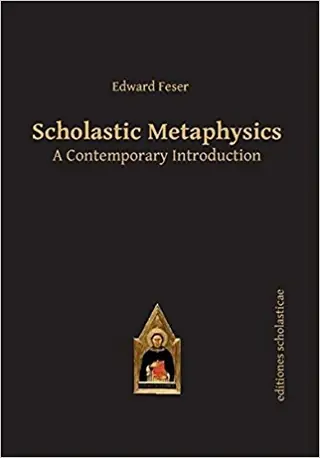
Scholastic Metaphysics
Edward Feser
Recommended by 3 · mentioned by 33 recommend · 3 mention3 recommend · 33 recommend
 2009–2026
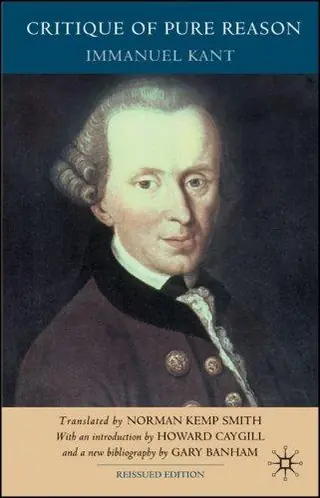
Critique of Pure Reason
Immanuel Kant
Recommended by 28 · mentioned by 13228 recommend · 132 mention28 recommend · 13228 recommend
 2008–2026
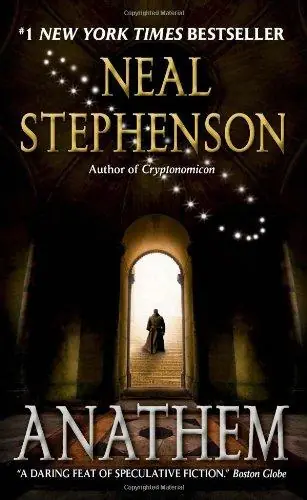
Anathem
Neal Stephenson
Recommended by 207 · mentioned by 393207 recommend · 393 mention207 recommend · 393207 recommend
…justice, fortitude, prudence, and temperance are examples of things that do. I recommend the following for arguments for natural law theory, by philosphers of an Aristotelian/Thomistic bent: [Book] Aquinas, by Edward Feser. Chapter 5 is on Ethics. [Article] The Metaphysical Foundations of Natural Law, by David Oderberg: https://docs.google.com/file/d/0B7SKlRTfkUiebnUxMUEtc1B4VTQ/...
on “DATAcide: The Total Annihilation of Life as We Know It” ↗…posts delve into related subjects that clarify these points. I also recommend Feser's books on related subjects which are known for their lucid prose and clear explanations. Good places to start are "Aquinas: A Beginner's Guide" and then "Scholastic Metaphysics: A Contemporary Introduction". Aquinas was decidedly Aristotelian and the scholastic philosophers broadly speaking were heavily influenced by Aristotle.
on “A Mathematical Theory of Communication (1948) [pdf]” ↗Aristotle and Aquinas are indispensible (though you might want to begin with commentaries or approachable introductions, like Feser's). Contrary to the liberal tradition, "freedom" is understood as self-mastery not uninhibited…
on “A researcher on how to live a happy life” ↗…objections can be answered, and if I were either rich or childless I would do so myself. But I'm neither, so all I can do is provide you with a book recommendation: check out Edward Feser's work, especially Aquinas and Five Proofs. If you want to see Dawkins refuted in his own tone, see The Last Superstition. What research have you done up to this point to answer your questions?
on “What if I’m wrong? (2023)” ↗Vitalism is utterly foreign to anything found in Aquinas or Aristotle. Check out Edward Feser's Aquinas for a beginner-friendly discussion of what they say.
on “Address of Pope Leo XIV to the College of Cardinals” ↗The word 'soul' is used by Aquinas and Aristotle in a very different way from how modern people (from Descartes onward) use it, and this is the cause of an enormous amount of confusion. Edward Feser's book Aquinas is a good starting point…
on “Address of Pope Leo XIV to the College of Cardinals” ↗…recommend some of Edward Feser's books. He's well known for writing in a lucid style that dispenses with some of the the needless jargon that some philosophers are known for. On the introductory side, "Aquinas" [0] is probably a good starting point. A follow up, or if you can handle something a bit more substantive to begin with, would be his "Scholastic Metaphysics" [1]. I emphasize metaphysics first because…
on “Ask HN: Learning about philosophy” ↗…infinity. > C. There must be a first cause, which causes other things to come into existence but did not itself come into existence. (follows from 3,4) * https://www3.nd.edu/~jspeaks/courses/mcgill/201/aquinas-cosm... Note that Aquinas has not (just|necessarily) talking about 'horizontal' causes (going back in time), but 'vertical' causes. Up until the Big Bang Theory was formulated (by a Belgian priest no…
on “Gödel's Ontological Proof” ↗Aquinas' cosmological argument, or the ontological argument have been attempts to do so. Some such as Edward Feser still uphold that the cosmological argument is valid (I'm not well versed enough to say either…
on “Your yearly dose of is-the-universe-a-simulation” ↗It's also worth noting that Feser defends Aquinas' cosmological argument on the same Aristotelian principles in which it is grounded - someone going to his blog for just plain old Aristotle rather than Catholic apologia is going to be disappointed. He…
on “Neo-Aristotelian Perspectives on Contemporary Science” ↗…https://tofspot.blogspot.com/2014/08/first-way-moving-tale.h... * https://tofspot.blogspot.com/2014/09/first-way-part-ii-two-l... * https://tofspot.blogspot.com/2014/10/first-way-part-iii-big-... See also Plotinus, Augustine, Aquinas, and Leibniz, not of whom make reference to the any kind of Sacred Scripture * https://www.amazon.com/Five-Proofs-Existence-Edward-Feser/dp...