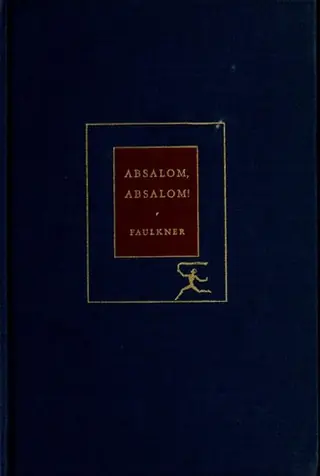
Absalom, Absalom!
by William Faulkner · first published 1936
25% recommend50% neutral25% critical
The story of Thomas Sutpen, an enigmatic stranger who came to Jefferson in the early 1830s to wrest his mansion out of the muddy bottoms of the north Mississippi wilderness. He was a man, Faulkner said, "who wanted sons and the sons destroyed him."
Affiliate links. As an Amazon Associate I earn from qualifying purchases.
Mentions per year
What Hacker News says
Related books
 2012–2020
Caine's law
Matthew Woodring Stover
Recommended by 1 · mentioned by 21 recommend · 2 mention1 recommend · 21 recommend
 2018–2020
USA
John Dos Passos
Recommended by 2 · mentioned by 32 recommend · 3 mention2 recommend · 32 recommend
 2010–2026
Disgrace
J. M. Coetzee
Recommended by 6 · mentioned by 96 recommend · 9 mention6 recommend · 96 recommend
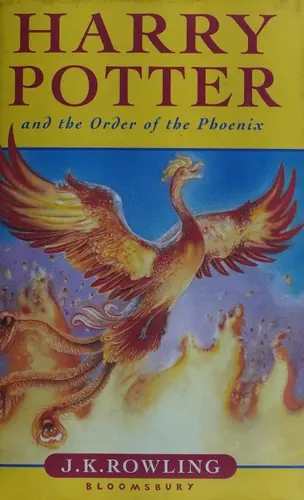 2010–2025
Harry Potter and the Order of the Phoenix
J. K. Rowling
Recommended by 2 · mentioned by 82 recommend · 8 mention2 recommend · 82 recommend
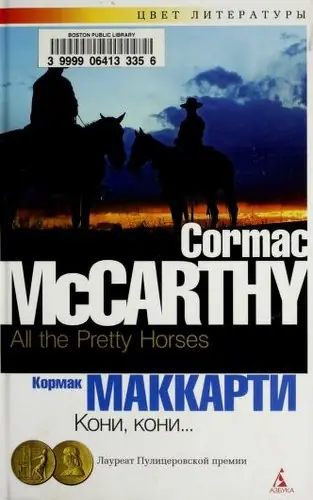 2009–2026
All the Pretty Horses
Cormac McCarthy
Recommended by 24 · mentioned by 3424 recommend · 34 mention24 recommend · 3424 recommend
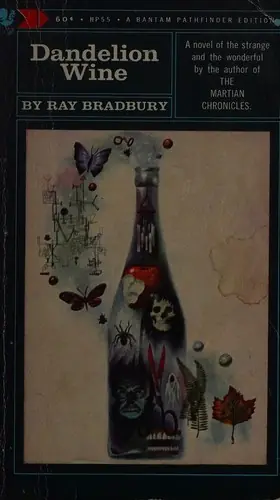 2012–2026
Dandelion Wine
Ray Bradbury
Recommended by 9 · mentioned by 159 recommend · 15 mention9 recommend · 159 recommend
…became latticed with yellow slashes full of dust motes which Quentin thought of as being flecks of the dead old dried paint itself blown inward from the scaling blinds as wind might have blown them.” — Absalom, Absalom by Faulkner Read Faulkner or Dos Passos to experience heat as people did a century ago.
on “Ask HN: How did free people in USA thrive in high heat before air-conditioning?” ↗…events. The world is more like Naples than Singapore. If by 'time' we mean nothing more than happening, then everything is time. There is only that which exists in time." Very influential in my teens: Absalom, Absalom by Faulkner USA by John Dos Passos Cache Lake Country by Rowlands
on “Ask HN: What's one book that changed your life?” ↗Very influential in my teens: Absalom, Absalom by Faulkner USA by John Dos Passos Cache Lake Country by Rowlands First adult book I read all the way through (I was fascinated! Re-read it recently and enjoyed it.): The Mysterious Island by Verne
on “Ask HN: Great fiction books that have had a positive impact on your life?” ↗…construction I prefer). "Parenthetical phrases have been used extensively in informal writing and stream of consciousness literature. Of particular note is the southern American author William Faulkner (see Absalom, Absalom! and the Quentin section of The Sound and the Fury) as well as poet E. E. Cummings. In most writing, overuse of parentheses is usually a sign of a badly structured text. A milder effect may be obtained…
on “Three Grammar Rules You Can (And Should) Break” ↗…became latticed with yellow slashes full of dust motes which Quentin thought of as being flecks of the dead old dried paint itself blown inward from the scaling blinds as wind might have blown them.” — Absalom, Absalom by Faulkner
on “Read first pages of novels, and reveal the author and title if you're hooked” ↗…became latticed with yellow slashes full of dust motes which Quentin thought of as being flecks of the dead old dried paint itself blown inward from the scaling blinds as wind might have blown them.” — Absalom, Absalom by Faulkner As The Edge builds a wall of sound, Faulkner builds a wall of words.
on “In Praise of the Long and Complicated Sentence” ↗…long-dead object of her impotent yet indomitable frustration would appear, as though by outraged recapitulation evoked, quiet inattentive and harmless, out of the biding and dreamy and victorious dust. — Absalom, Absalom - Faulkner - first two sentences
on “Cormac McCarthy, Novelist of a Darker America, Is Dead at 89” ↗I'm a professional writer and editor. This is extremely cool to me. The comparison between Blood Meridian and Absalom, Absalom! really says all you need to know about this tool. Personally I find it to be a really fascinating and original way of looking at prose. Link to the actual tool the author made for creating your own…
on “Learning about writing by seeing only the punctuation” ↗…set of books they disliked in school and they therefore think no one should have to read. I loved reading Julius Caeasar in high school and hated The Catcher in the Rye. I loved Dandelion Wine and hated Absalom, Absalom. Them's the breaks. 2) Part of the point of reading literature is to see things from a different perspective. i.e. to read things that are not necessarily "relatable", and thereby possibly expand your…
on “Book people think they know why 9-year-olds stop reading for fun” ↗