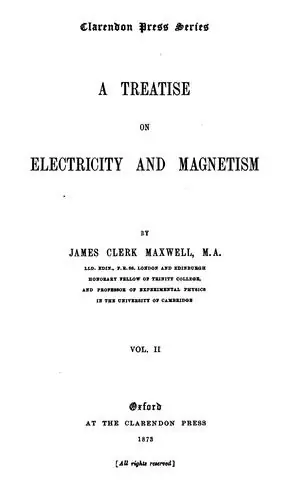
A treatise on electricity and magnetism
by James Clerk Maxwell · first published 1873
11mentions
1recommended by
11HN commenters
2008–2026first – last mentioned
9% recommend82% neutral9% critical
Affiliate links. As an Amazon Associate I earn from qualifying purchases.
Mentions per year
What Hacker News says
Related books
 2008–2026
QED
Richard Phillips Feynman, A. Zee
Recommended by 60 · mentioned by 7760 recommend · 77 mention60 recommend · 7760 recommend
 2007–2026
Crime and punishment
Recommended by 113 · mentioned by 276113 recommend · 276 mention113 recommend · 276113 recommend
 2008–2026
Elements
Euclid
Recommended by 60 · mentioned by 22560 recommend · 225 mention60 recommend · 22560 recommend
 2008–2026
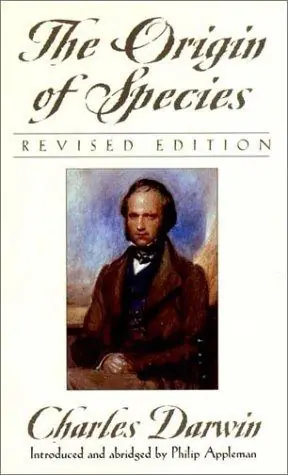
The Origin of Species
Charles Darwin
Recommended by 30 · mentioned by 22730 recommend · 227 mention30 recommend · 22730 recommend
 2008–2026
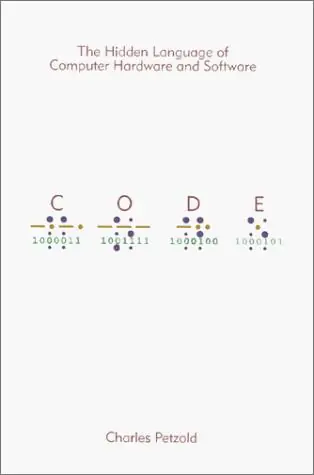
Code
Charles Petzold
Recommended by 243 · mentioned by 287243 recommend · 287 mention243 recommend · 287243 recommend
…of physical quantities. However, when teaching physics frequently this is taught either badly or not at all, instead of following classical examples, like that of James Clerk Maxwell, who started his Treatise on Electricity and Magnetism with an exposition of the theory of the measurement of physical quantities that was complete and up-to-date for that time. The plane angle a.k.a. phase angle not only is not a dimensionless quantity,…
on “The becquerel as an SI unit for request rate” ↗I will second his recommendation to read original works. Be aware, though, that this recommendation does have a flip side. I haven't tried to read Maxwell's original Treatise on Electricity and Magnetism, but I've heard it said that it's really, really difficult to get through. The fact that Maxwell's equations, the marvel of their era, are now a subject for second-year undergraduates is due to Oliver…
on “About the origins of the equals sign” ↗> Maxwell was also not really taking advantage of them much and always split them up into scalar and vector part. Did Maxwell actually use quaternions? If I recall correctly, at least in A Treatise on Electricity and Magnetism, quaternions were not actually used. Instead, he did most things in Cartesian coordinates, and all equations were applied to a vector's x, y, z components tediously. But many sources claimed Maxwell used…
on “An intuitive guide to Maxwell's equations (2020)” ↗…automatically discount anybody on HN (until i have looked at their profile/comment history/any personal bio websites etc.) who claim they have read/studied a) Euclid's Elements b) Newton's Principia c) Maxwell's Treatise on Electricity and Magnetism d) Einstein's 1905 Annus Mirabilis papers. e) Principia Mathematica by Russell/WhiteHead f) Godel's Theorem g) Bourbaki's mathematics books etc. etc. They might have browsed it out of curiosity but that…
on “Principia Mathematica is modern and insightful” ↗…Counterexamples: one of the early prime number researchers was proud that his work had no use at all, and now it’s the foundation of a major class of encryption. That was a century or two. Or, Maxwell published “A Treatise on Electricity and Magnetism” in 1873, and it took another 30 years to become voice radio. Of course, as the LHC only discovered the Higgs in 2012, even your 10 year lowball would be four years in the future.
on “Scientists plan huge European AI hub to compete with US” ↗severine is correct: it is in A Treatise on Electricity and Magnetism, which can be had free of charge from the Internet Archive. vol I https://archive.org/details/electricandmagne01maxwrich vol II https://archive.org/details/electricandmag02maxwrich The relevant section…
on “Ask HN: What are your favorite books or essays written at least 100 years ago?” ↗…least, and the form we see Maxwell's equations in today is due to later efforts by others: https://en.wikipedia.org/wiki/History_of_Maxwell%27s_equatio... > "Later, Oliver Heaviside studied Maxwell's A Treatise on Electricity and Magnetism and employed vector calculus to synthesize Maxwell's over 20 equations into the 4 recognizable ones which modern physicists use. Maxwell's equations also inspired Albert Einstein in developing the theory…
on “Fuck Your Miracle Year” ↗Going to need some citations here since the texts that I'm familiar with from that time period are "A Treatise on Electricity and Magnetism" by Maxwell (mid-late 1800s) and "A History of the Theories of Aether and Electricity" by E. T. Whittaker, neither of which mentions anything of the sort. I suspect you are choosing from texts that at…
on “Fraud, so much fraud” ↗I'm not sure that's right. The conjecture is (claimed to be, by the people who explicitly made it) simply a reformulation of a claim made by Maxwell in his "Treatise on Electricity and Magnetism" of 1873.
on “The Maxwell Conjecture Is False (GPT 5.6 Sol)” ↗From the intro to the paper: > In J. C. Maxwell’s 1873 treatise on electricity and magnetism he discusses the number of equilibria of the electric field generated by n point charges [5, §113]. Apparently unaware of this, M. Morse and S. S. Cairns in 1969 posed the problem of finding an upper…
on “The Maxwell Conjecture Is False (GPT 5.6 Sol)” ↗…one object somehow magically interacting at a distance, interactions between objects resulted from changes in the electromagnetic field that propagated through space. The final paragraphs of Maxwell's "Treatise on Electricity and Magnetism" are somewhat relevant. This is 30-40 years after Faraday first wrote about lines of force, and there still wasn't really consensus about how to explain electromagnetic phenomena. [emphasis added by…
on “Ask HN: What scientific phenomenon do you wish someone would explain better?” ↗