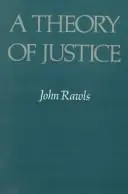
A theory of justice
by John Rawls · first published 1971
34% recommend61% neutral4% critical
Why HN recommends it
Rigorous, meticulously argued case for fairness via the veil of ignorance and the difference principle; a strong challenge to utilitarianism, suited to readers wanting the foundations of political ethics.
Summarised by Claude from recommending comments
The principles of justice Rawls set forth in this book are those that free and rational people would accept in an initial position of equality. In this hypothetical situation, which corresponds to the state of nature in social contract theory, no one knows his or her place in society; his or her class position or social status; his or her fortune in the distribution of natural assets and abilities; his or her intelligence, strength, and the like; or even his or her conception of the good. Thus, deliberating behind a veil of ignorance, people determine their rights and duties. The first section
Affiliate links. As an Amazon Associate I earn from qualifying purchases.
Mentions per year
What Hacker News says
Related books
 2008–2025
Anarchy, State, and Utopia
Robert Nozick
Recommended by 14 · mentioned by 4214 recommend · 42 mention14 recommend · 4214 recommend
 2010–2020
Liberalism and the Limits of Justice
Michael J. Sandel
Recommended by 1 · mentioned by 21 recommend · 2 mention1 recommend · 21 recommend
 2011–2022
Justice as Fairness
John Rawls
Recommended by 3 · mentioned by 73 recommend · 7 mention3 recommend · 73 recommend
 2010–2026
The tao is silent
Raymond M. Smullyan
Recommended by 9 · mentioned by 109 recommend · 10 mention9 recommend · 109 recommend
Myth of Sisyphus
Albert Camus, Daniel Ortega
Recommended by 36 · mentioned by 7036 recommend · 70 mention36 recommend · 7036 recommend
 2009–2026
The Story of Civilization [complete]
Will Durant, Ariel Durant
Recommended by 11 · mentioned by 2211 recommend · 22 mention11 recommend · 2211 recommend
 2010–2025
Will to Power
Friedrich Nietzsche
Recommended by 3 · mentioned by 133 recommend · 13 mention3 recommend · 133 recommend
…analytical, but has no empathy or emotional understanding whatsoever, should rule the world? I think an ideal society would be more in line with John Rawls' philosophy (https://en.wikipedia.org/wiki/A_Theory_of_Justice).
on “Meritocracy Is a Myth” ↗…Osama Bin Laden and the guys who funded the NRA. If the wealth is taxed then it is fought over in a shared space in which we all have a say, no matter how small. I like the argument that Rawls made in "A theory of Justice", where he said that when you are deciding how to make a fair society you should think from a perspective in which you do not know what role you will have in that society.
on “Interview with Paul Graham” ↗…often unwise to support a system you would not support if you did not have a favorable position within it. Is this an intentional reference to John Rawls' concept of the 'veil of ignorance' laid out in Theory of Justice? If not, you would definitely enjoy the ideas in the book. http://en.wikipedia.org/wiki/Veil_of_ignorance
on “The Rise and Rise of Television Torture” ↗Fortunately, this is a topic that has been widely discussed in academic philosophical circles. Read Rawls' "Theory of Justice" - he goes into great detail on how one ought to balance the competing forces of efficiency (e.g. maximal utility) and distributive justice.
on “Is ‘More Efficient’ Always Better?” ↗Yep yep. The John Rawls's theory of justice should be a required topic in school. What matters is how well the poorest in society are doing, not the income distribution. If a system creates a mega rich class but ends up with the poorest in society…
on “Technology and wealth inequality” ↗Check out A Theory of Justice by John Rawls. Best challenge to Utilitarian thinking I know of. (E.g. slavery is wrong not because bad outweighs good, but rather because it is inherently wrong when seen from the perspective of the…
on “Ask HN: Which non-technology book has influenced you the most and why?” ↗…on their own behalf, though, nobody should be considered above the norms of civil society. By definition - if it didn't work that way, society would not be civil. (I'd highly recommend reading both A Theory of Justice by John Rawls and Anarchy, State and Utopia by Robert Nozick for two different but equally thoughtful treatments of this sort of thing.)
on “EFF's response to social media companies' decisions to block Trump’s accounts” ↗Yes, that is absolutely the mainstream position. See John Rawls "A Theory of Justice" which is the basis for a lot of applied ethics today. And "sufficiently democratic" basically means freedom of political speech, adult citizens can vote, representatives are chosen by majority rule,…
on “Princeton mandates proctoring in-person exams, upending 133 years of precedent” ↗Look into John Rawls' theory of justice. It'll answer a lot of your questions.
on “People Want Fairness, Not Economic Equality” ↗A classic text on the philosophical underpinnings of (US) liberalism with regard to economic redistribution policies is A Theory of Justice by John Rawls, a renowned professor of philosophy at Harvard. After reading Rawls, I'd suggest maybe reading Robert Nozick's libertarian leaning Anarchy, State, and Utopia. Nozick was another distinguished…
on “Why Are the Highly Educated So Liberal?” ↗…shallow in some places, but written by a philosopher, so not a toothless compilation. Obscure but made an impression on me: Ways of Worldmaking by Nelson Goodman. If you can get through it: John Rawls's A Theory of Justice...an important book with a few very important ideas. Stuff by Amartya Sen. On philosophy of science, the historical narratives do the job I think, like The Sleepwalkers by Arthur Koestler (a great read…
on “Ask HN: Best Philosophical Books?” ↗…Mind: In Search of a Fundamental Theory Gottlob Frege, Die Grundlagen der Arithmetik Thomas Hobbes, Leviathan David Hume, An Enquiry Concerning Human Understanding J.S. Mill, On Liberty John Rawls, A Theory of Justice Stewart Shapiro, Philosophy of Mathematics: Structure and Ontology
on “Ask HN: Best Philosophical Books?” ↗anarchy, state, and utopia: http://www.amazon.com/Anarchy-State-Utopia-Robert-Nozick/dp/... or, if you find yourself particularly liberal, a theory of justice: http://www.amazon.com/Theory-Justice-Original-John-Rawls/dp/... thank you for the moment of nostalgia -- CC was a formative class in my college experience: http://www.college.columbia.edu/core/classes/cc.php
on “Ask HN: Can anyone recommend some philosophy reading?” ↗…degree and agree there are no really great introductions. I finished my degree somewhat disengaged with the subject and haven't pursued it seriously since. My favourite book though was John Rawls' A Theory of Justice.
on “Rarely Asked Questions” ↗If you still have a copy of A Theory of Justice, definitely pick it back up. If you'd like to work through his later-life work, then you'll want to grab Political Liberalism and Justice as Fairness: A Restatement, in which he revisits his original…
on “Rich Kid, Poor Kid: For 30 Years, Baltimore Study Tracked Who Gets Ahead” ↗