A Secular Age
by Charles Taylor · first published 2008
30% recommend70% neutral
"What does it mean to say that we live in a secular age? Almost everyone would agree that we - in the West, at least - largely do. And clearly the place of religion in our societies has changed profoundly in the last few centuries. Charles Taylor takes up the question of what these changes mean - of what, precisely, happens when a society in which it is virtually impossible not to believe in God becomes one in which faith, even for the staunchest believer, is only one human possibility among others." "Taylor offers a historical perspective. He examines the development in "Western Christendom"
Affiliate links. As an Amazon Associate I earn from qualifying purchases.
Mentions per year
What Hacker News says
Related books
 2014–2023
Atheist delusions
David Bentley Hart
Recommended by 3 · mentioned by 43 recommend · 4 mention3 recommend · 43 recommend
 2020–2026
Dominion
Tom Holland, Mark Meadows, Joan Eloi Roca
Recommended by 20 · mentioned by 2320 recommend · 23 mention20 recommend · 2320 recommend
 2013–2026
The Varieties of Religious Experience
William James, Dr. William James, James, William, CrossReach Publications
Recommended by 13 · mentioned by 2713 recommend · 27 mention13 recommend · 2713 recommend
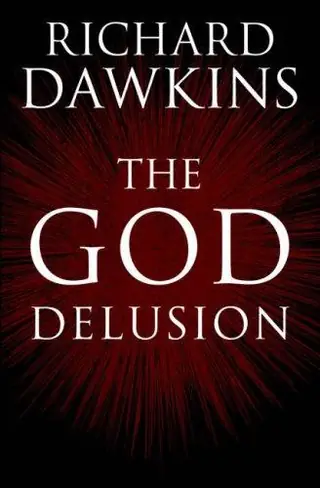 2008–2026
The God Delusion
Richard Dawkins
Recommended by 41 · mentioned by 10341 recommend · 103 mention41 recommend · 10341 recommend
Beyond good and evil
Friedrich Nietzsche
Recommended by 35 · mentioned by 8535 recommend · 85 mention35 recommend · 8535 recommend
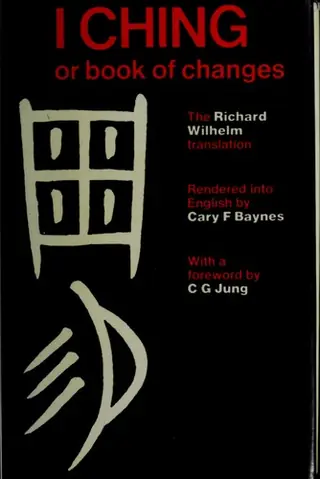 2009–2026
I Ching
Richard Wilhelm, Cary F. Baynes, Carl Gustav Jung
Recommended by 10 · mentioned by 4710 recommend · 47 mention10 recommend · 4710 recommend
Not the commenter you replied to, but I recommend the book A Secular Age by Charles Taylor as an 874-page answer to your question. The short version: modern secularity is really more like a new development, where new influences interact in a (still essentially) Christian,…
on “Plato at the Googleplex: Why Philosophy Won't Go Away” ↗If you are interested in this topic, I really cannot recommend reading A Secular Age by the philosopher Charles Taylor enough. It’s a huge book but the basic takeaway is this: the modern secular world is a thing that was created over the course of many centuries and cultural developments.…
on “As religious faith has declined, ideological intensity has risen” ↗…well to scrutiny, either; much of what we consider “Western secular” values and ideas are really just modifications and reinterpretations of old Christian and Greco-Roman ideas. I recommend the book A Secular Age by Charles Taylor if you are interested in how this process has gone (and continues to go.) 2. There are extensive and thorough philosophical traditions in the Islamic world, Russian world, Indian world,…
on “So You Want to Study Philosophy” ↗…is basically the dream of eternal life recast for a modern disenchanted world. If this topic interests you, I highly recommend reading some books by Charles Taylor. https://en.m.wikipedia.org/wiki/A_Secular_Age https://ubcgcu.files.wordpress.com/2012/08/taylor-and-immane...
on “Longevity FAQ: A beginner's guide to longevity research” ↗…maintain a list (it's on my to-do list), but sure! Here are some good books I've read/am reading lately. - Nietzsche's Philosophy of Religion by Julian Young - The Portable Nietzsche by Kaufmann - A Secular Age by Charles Taylor - The Art of the Islamic Garden by Emma Clark - Notes on Culture by T. S. Eliot - In Praise of Shadows by Tanizaki - The Qur'an: Oxford World Classics - On Bohemia by Graña - The…
on “U.S. eyes building nuclear power plants on the moon, Mars” ↗…history, and basically everything else. Needless to say, this is a topic which has been written upon and studied for thousands of years. Suggested reading: - Christianity: The First 3,000 Years - A Secular Age by Charles Taylor - The Genealogy of Morality by Friedrich Nietzsche - The New Oxford Annotated Bible (quite large, but full of footnotes that highlight the extreme complexity of the topic)
…specific features of Protestantism lead to market capitalism arising in Northern Europe, rather than in India or China. https://en.wikipedia.org/wiki/The_Protestant_Ethic_and_the_S... - Charles Taylor, A Secular Age. This book really changed the way I think about the modern world and what I'll call "the preference for scientistic, humanistic atheism". Taylor essentially argues that modern secularity is not merely…
on “Patrick Collison's Questions” ↗…again, one might characterize the technological successes of the West in the last ±500 years as deliberately ignoring cyclical time in favor of linear “Progress.” > Seeing that you've mentioned Taylor's A Secular Age, maybe I should start reading it I really do recommend it. It’s a bit dense but I’ve found the concepts he uses (the immanent frame and the Nova Effect to name a couple) to be extremely useful in understanding…
on “Longevity FAQ: A beginner's guide to longevity research” ↗…or an active effort or choice, than a simple delusion they are unable to perceive. There's a very interesting conversation there that dawkins wasn't willing or maybe able to have. Charles Taylor's "a secular age" is one place where you could pick up the conversation our society has been having with itself for centuries about the mechanisms, role & effects of belief, delusion, religion & faith if you were interested…
on “My Controversial Diatribe Against “Skeptics”” ↗It’s a huge book and not particularly well-written, but I recommend Charles Taylor’s A Secular Age. It helped clarify a lot of things about the modern Western world and our relationship with religion and secularity.
on “Ask HN: What's the Best Book on Religion” ↗One of my favorite philosophy books is A Secular Age by Charles Taylor. It has a lot of interesting ideas, but a key one is that the “subtraction thesis” of secularity is wrong. By this, he means the narrative that secular society today simply “subtracted”…
on “Young people are flocking to astrology” ↗A Secular Age by Charles Taylor. So much of contemporary conflicts / culture / etc. have been illuminated to me by understanding this book. It’s super long, however, so you may want to read How Not to Be Secular by…
on “Ask HN: Which book do you keep asking people to read?” ↗Disenchantment (the term used to describe the loss of magic in the world) is a bit more complicated and started earlier. Charles Taylor’s book A Secular Age is an excellent read if you’re interested in how (and if) it happened: https://intotheclarities.com/2014/08/23/charles-taylor-on-di... https://en.m.wikipedia.org/wiki/A_Secular_Age It’s a huge tome…
on “Magic died when art and science split” ↗There is this really useful word, immanence, that I wish were more widely known. Basically it means “focused on this world and human experience.” I learned this in A Secular Age, a fantastic book by the philosopher Charles Taylor. Basically the book is about how modern western society is increasingly immanent, focused on this reality and not on what is after life; e. g., heaven…
on “Spirituality Is Secure Attachment with Reality” ↗…catholicism to escape it. But I don't believe he found what he was looking for, because it simply isn't there to be found. Charles Taylor explores this problem/contradiction/experience in incredible depth in A Secular Age. I wish waugh had been able to read it but I wonder if he would have.