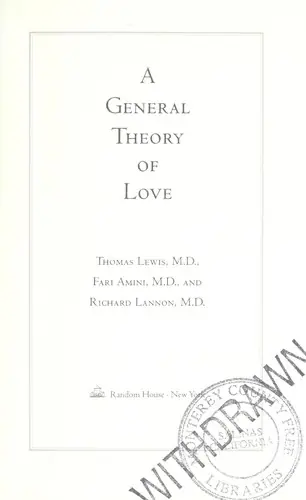
A general theory of love
by Lewis, Thomas, Thomas Lewis, Fari Amini, Richard Lannon, Thomas Lewis MD, Richard Lannon MD, Chris Sorensen · first published 2000
75% recommend25% neutral
"A primordial area of the brain creates both the capacity and the need for emotional intimacy that all humans share. A General Theory of Love describes the workings of this ancient, pivotal urge and reveals that our nervous systems are not self-contained. Instead, our brains link with those of the people close to us, in a silent rhythm that makes up the very life force of the body. These wordless and powerful ties determine our moods, stabilize and maintain our health and well-being, and change the structure of our brains.". "A General Theory of Love applies these and other insights to some
Affiliate links. As an Amazon Associate I earn from qualifying purchases.
Mentions per year
What Hacker News says
Related books
 2017–2024
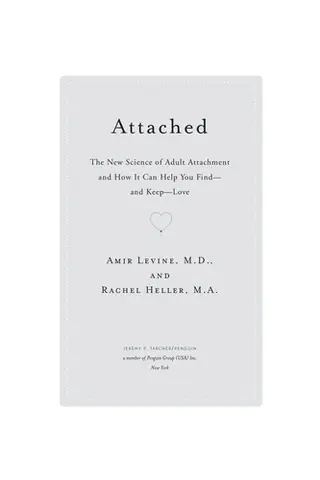
Attached
Amir Levine
Recommended by 11 · mentioned by 1111 recommend · 11 mention11 recommend · 1111 recommend
 2018–2026
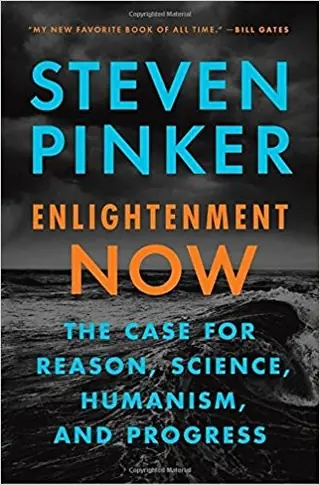
Enlightenment now
Steven Pinker, Pablo Hermida Lazcano
Recommended by 51 · mentioned by 9751 recommend · 97 mention51 recommend · 9751 recommend
 2015–2026
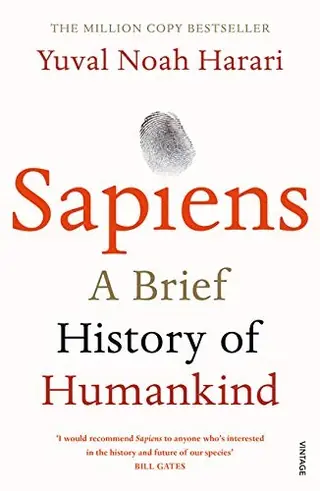
Sapiens
Yuval Noah Harari
Recommended by 201 · mentioned by 376201 recommend · 376 mention201 recommend · 376201 recommend
 2007–2026
How to Win Friends and Influence People
Dale Carnegie
Recommended by 579 · mentioned by 853579 recommend · 853 mention579 recommend · 853579 recommend
Whatever that list of 1000 must-reads books, I would include "Guns, Germs and Steel" and "Collapse" by Jared Diamond, and "A General Theory of Love" by Thomas Lewis et al.
on “Ask HN: Are books worth it?” ↗…life choices. It also suggests a method for change and ongoing personal development. Here are some books on Attachment Theory: Attached https://www.amazon.com/Attached-Science-Adult-Attachment-You... A General Theory of Love https://www.amazon.com/General-Theory-Love-Thomas-Lewis/dp/0... Attachment Disturbances in Adults: Treatment for Comprehensive Repair [academic/professional text] https://www.amazon.com/Attachment-Disturbances-Adults-Treatm...…
on “Ask HN: What breakthrough helped you build and maintain better relationships?” ↗I would highly recommend "A General Theory of Love" as the antidote to belief in the last example you gave. A poetically beautiful book.
on “As religious faith has declined, ideological intensity has risen” ↗“A General Theory of Love” by T. Lewis et al.
on “Life Changing Books on Sex and Relationships” ↗…something like endorphins or blood pressure, you'd see there was more enjoyment with someone than without. There are tons of studies that already do this, e.g. the ones written up by UCSF profs in "A General Theory of Love."
on “Start doing more things alone” ↗