A First Course in Mathematical Analysis
by David A. Brannan · first published 2006
50% recommend50% neutral
Mathematical Analysis (often called Advanced Calculus) is generally found by students to be one of their hardest courses in Mathematics. This text uses the so-called sequential approach to continuity, differentiability and integration to make it easier to understand the subject.Topics that are generally glossed over in the standard Calculus courses are given careful study here. For example, what exactly is a 'continuous' function? And how exactly can one give a careful definition of 'integral'? The latter question is often one of the mysterious points in a Calculus course - and it is quite dif
Affiliate links. As an Amazon Associate I earn from qualifying purchases.
Mentions per year
What Hacker News says
Related books
 2010–2022
Yet another introduction to analysis
Victor Bryant
Recommended by 4 · mentioned by 44 recommend · 4 mention4 recommend · 44 recommend
 2015–2023
Learning to Reason
Nancy Rodgers
Recommended by 6 · mentioned by 66 recommend · 6 mention6 recommend · 66 recommend
 2010–2026
Understanding Analysis
Stephen Abbott
Recommended by 31 · mentioned by 3831 recommend · 38 mention31 recommend · 3831 recommend
 2013–2024
Mathematical proofs
Gary Chartrand, Albert D. Polimeni, Zhang, Ping, Ping Zhang
Recommended by 17 · mentioned by 2017 recommend · 20 mention17 recommend · 2017 recommend
 2008–2023
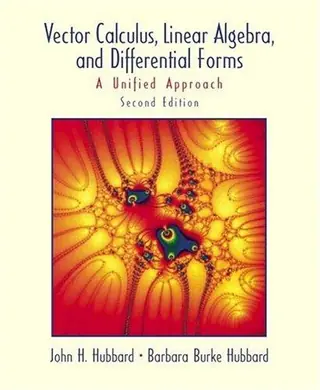
Vector calculus, linear algebra, and differential forms
Hubbard, John H., John H. Hubbard, Barbara Burke Hubbard
Recommended by 16 · mentioned by 1816 recommend · 18 mention16 recommend · 1816 recommend
 2015–2025
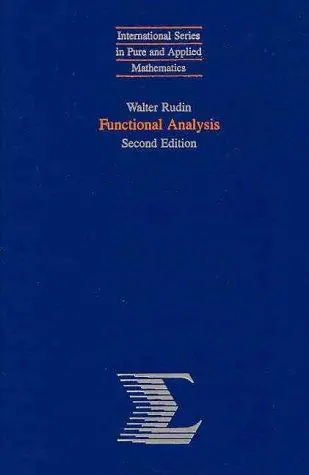
Functional Analysis
Walter Rudin
Recommended by 3 · mentioned by 33 recommend · 3 mention3 recommend · 33 recommend
 2015–2026
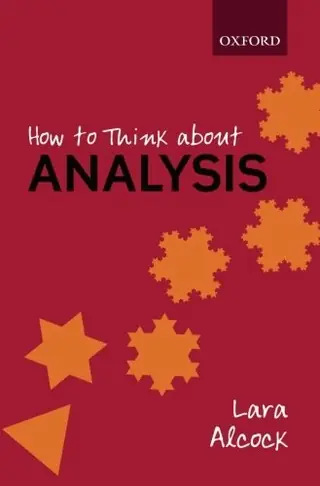
How to Think About Analysis
Lara Alcock
Recommended by 15 · mentioned by 1615 recommend · 16 mention15 recommend · 1615 recommend
 2010–2023
A transition to advanced mathematics
Smith, Douglas
Recommended by 15 · mentioned by 1715 recommend · 17 mention15 recommend · 1715 recommend
…Understanding Analysis by Stephen Abbot. Mathematical Analysis and Proof by David Stirling. Numbers and Functions: Steps into Analysis by Burn. Analysis: With an Introduction to Proof by Steven Lay. A First Course in Mathematical Analysis by David Brannan.
on “A Software Engineer’s Adventures in Learning Mathematics” ↗…in style but not to the point of being too difficult to follow (it's personal preference but I found I got on much better with this style of textbook): Davenport - The Higher Arithmetic Burkill - A First Course in Mathematical Analysis (and also A Second Course in Mathematical Analysis by Burkill and Burkill) Hardy and Wright - An introduction to the theory of numbers
on “Ask HN: Serious mathematics books that can replace a good teacher?” ↗…Abbott to introduction and exercises on continuity, differentiation, and integration. I thought that was an interesting pedagogical choice for an undergraduate book, especially when it is used for the very first course in mathematical analysis as in Princeton’s MATH215 (I do think it is a really nice book).
on “Weierstrass's Monster” ↗…needs because Rudin considers Euclidean Spaces proper, not just the reals. Other helpful books include "Yet Another Introduction to Analysis" by Bryant, "How to Think About Analysis" by Lara Alcock, "A First Course in Mathematical Analysis" by Brannan, "Real Analysis: A Long-Form Mathematics Textbook by Jay Cummings" etc. None of these books are perfect. For example, none of them (but that of Cummings) include the necessary topological…
on “Ask HN: The book that did it for you in math and/or CS?” ↗For real analysis, I'd recommend that you pick up a copy of "baby Rudin" regardless, but for learning real analysis, I'd recommend a book like "A First Course in Mathematical Analysis" by Burkill. Other viable options include "Calculus" by Spivak (it's really a book on real analysis at a level somewhere between a typical freshman calculus book and "baby Rudin"), "Real Mathematical…
on “Math Books Organized by Area of Mathematics” ↗…someone with little formal education a reasonable one? If it's not, this will still be my hobby. How can I remediate/fill in the gaps of my math education? - Book list for math: currently reading "A first course in mathematical analysis" by Burkhill for calculus (to refresh and extend high school), and then after that: my college linear algebra book (done wrong), Spivak's "Calculus on Manifolds", and "Differential Equations with Applications…
on “Ask HN: Advice for programmer with impostor syndrome motivated to study” ↗