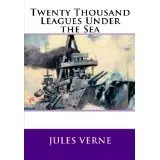
20,000 Leagues under The Sea
by Jules Verne · first published 1998
20% recommend70% neutral10% critical
Why HN recommends it
Adventure-driven classic of undersea exploration aboard the Nautilus. It is great fun and an early science fiction work ahead of its time, with highly rated translations and details.
Common criticism: Some find the long passages of natural-history description tedious.
Summarised by Claude from recommending comments
There is a monster lurking in the depths of the ocean. Join scientist Pierre Arronax as he goes on an expedition to find it. Is it an animal or a man-made War machine?
Affiliate links. As an Amazon Associate I earn from qualifying purchases.
Mentions per year
What Hacker News says
Related books
 2007–2025
The mysterious island
Jules Verne
Recommended by 32 · mentioned by 5132 recommend · 51 mention32 recommend · 5132 recommend
 2010–2026
The Pearl
John Steinbeck
Recommended by 5 · mentioned by 95 recommend · 9 mention5 recommend · 95 recommend
 2010–2024
Gridlinked
Neal L. Asher
Recommended by 9 · mentioned by 119 recommend · 11 mention9 recommend · 119 recommend
 2011–2024
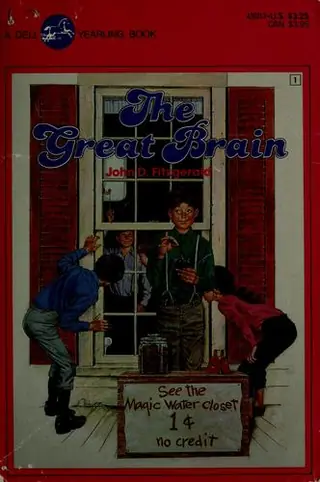
The great brain
John Dennis Fitzgerald
Recommended by 10 · mentioned by 1510 recommend · 15 mention10 recommend · 1510 recommend
 2011–2025
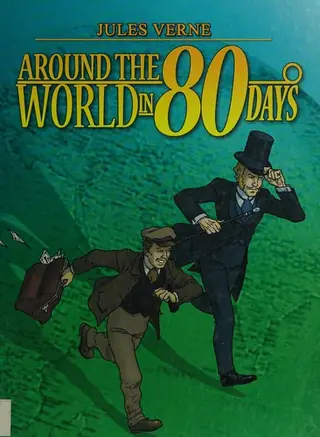
Around the World in 80 Days
Jules Verne
Recommended by 3 · mentioned by 143 recommend · 14 mention3 recommend · 143 recommend
 2010–2026
Anne of Green Gables
Lucy Maud Montgomery
Recommended by 4 · mentioned by 144 recommend · 14 mention4 recommend · 144 recommend
 2011–2026
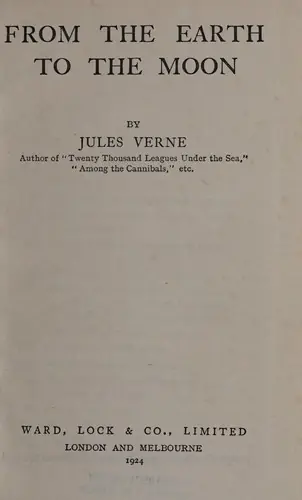
From the earth to the moon
Jules Verne
Recommended by 2 · mentioned by 162 recommend · 16 mention2 recommend · 162 recommend
 2010–2026
Great Expectations
Charles Dickens
Recommended by 5 · mentioned by 135 recommend · 13 mention5 recommend · 135 recommend
I really like books written by Jules Verne. Those books were really ahead of its time. He was a prolific and best Sci-fi writer. I would like to mention few of his works like 20,000 leagues under the sea, journey to the center of earth and Around the World in Eighty Days. https://en.wikipedia.org/wiki/Jules_Verne
on “Ask HN: What are your favorite books or essays written at least 100 years ago?” ↗Right now I'm reading "Game of Thrones" on my kindle. Before that I was on a Jules Verne kick: "Around the World in 80 Days", "Journey to the Interior of the Earth" and "20,000 Leagues under the Sea" are all great fun. Sometimes I even read something work-related: "Bureaucracy" by James Wilson and "Managing the Unexpected" by Weick and Sutcliffe.
on “Ask HN: Apart from Hacker News, what else you read?” ↗A good translation of "20,000 Leagues Under the Sea" has the same issue. Verne shoehorns pretty much every interesting fact about the ocean into it. Both books are among my favorites, pretty much because of their dedication to the "medium."
on “There Are Whales Alive Today Who Were Born Before Moby Dick Was Written” ↗Mysterious Island and 20,000 Leagues Under the Sea by Jules Verne (the stilted, nearly verbatim French->English translations STRONGLY preferred! the "improved" translations fail to convey so much of the fascinating details...) and also The Yearling by…
on “Ask HN: What book had a big impact on you as a child or teenager?” ↗…to my mind a my all favorite books: * no exit - jean-paul sartre * brave new world - adolous huxley * 1984 - george orwell * foucault's pendolum - umberto eco * l'etranger - albert camus * 20,000 Leagues Under the Sea - jules vernes
on “Ask HN: Interesting (Non software) books?” ↗Reminds me of two works of science fiction: 20,000 Leagues Under the Sea and Red October
on “New saltwater electrical generation could power submarines or medical devices” ↗Do you know if other of his works merit the sort of effort which has gone into re-translating and correcting _20,000 Leagues Under the Sea_? I was very glad to re-read it when: https://www.usni.org/press/books/20000-leagues-under-sea was published.
on “Jules Verne's Lost Novel” ↗…until you've read the whole book. I read about all of Jules Verne, Hector Malot, Enid Blyton and A. J. Cronin like that (I know, right?). On the other hand I remember a particularly tedious passage in 20,000 Leagues Under the Sea where several pages passed describing various molluscs found at the bottom of the sea. I actually read it all very carefully because I was curious to see how much it would last for and whether there was…
on “How to Read a Book [pdf]” ↗TFA uses 20 000 Leagues Under the Sea as a prototypical example of science fiction. I'm not sure that's a good example, because Jules Verne took his science and technology very seriously. As I recall, he didn't put fictional technology in…
on “Science Fiction vs. Science Fantasy” ↗Jules Verne wrote about electrical submarines (Nautilus in 20,000 leagues under the sea), tasers, newscasts and videoconferencing, all became reality
on “Science fact: Sci-fi inventions that became reality” ↗I like to point out to people that a lot of the things in Jules Verne books that seems futuristic were contemporary. People might be aware that submarines predates 20,000 Leagues Under the Sea (the first submarine named Nautilus dates to 1800), though a surprising number aren't. In general, mechanical things seems to be the things people are most likely to believe are that old. But when he…
on “Oldest recovered TV images (2013)” ↗20,000 Leagues Under the Sea by Jules Verne
on “Ask HN: What books are you currently reading?” ↗Surely that's like saying we've had nuclear submarines since Jules Verne wrote "20,000 leagues under the sea" insofar as Project Orion was little more than science fiction and didn't involve fusion drives ("atomic bomba" would be fission). (Verne's Nautilus was powered by primitive batteries.)
on “NASA-backed fusion engine could cut Mars trip down to 30 days” ↗This is a fairly good explanation of how there were actually two Captain Nemos. When Verne wrote 20,000 Leagues under the Sea, he modeled Nemo as a Polish aristocrat fighting the Russian empire. By the time he wrote The Mysterious Island, Verne's political focus had shifted and he recast Nemo as an Indian prince fighting the…
on “The Polish Aristocrat at the Helm of the Nautilus: The True Story of Capt. Nemo” ↗> Sci-Fi basically didn't exist before 1940. Um, seriously? What genre would you place either of The War of the Worlds or 20,000 Leagues under the Sea, then? That the books manage to get a lot of things wrong doesn't really alter the fact that they were early, very popular examples of science fiction (and there were a lot more dating back to before…
on “Letter from Orwell to his publisher regarding 1984” ↗