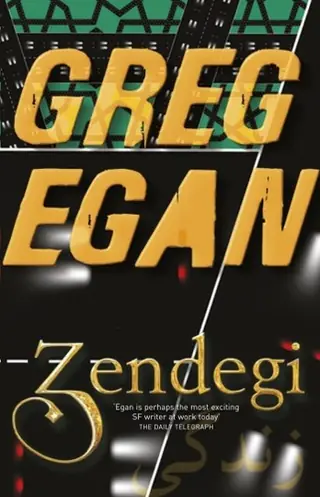
Zendegi
by Greg Egan · first published 2010
55% recommend36% neutral9% critical
Why HN recommends it
Hard sci-fi novel about mind uploading and brain-computer interfaces, exploring a father digitizing himself for his son; suits readers who enjoy speculative stories grounded in plausible near-future technology.
Summarised by Claude from recommending comments
Nasim is a young computer scientist, hoping to work on the Human Connectome Project: a plan to map every neural connection in the brain. But funding for the project is cancelled, and she ends up devoting her career to Zendegi, a computerised virtual world used by millions. Then, 15 years later, the Connectome Project is revived.
Affiliate links. As an Amazon Associate I earn from qualifying purchases.
Mentions per year
What Hacker News says
Related books
 2009–2024
Woken Furies
Richard K. Morgan
Recommended by 6 · mentioned by 116 recommend · 11 mention6 recommend · 116 recommend
 2019–2026
Recursion
Blake Crouch
Recommended by 12 · mentioned by 1512 recommend · 15 mention12 recommend · 1512 recommend
 2016–2026
Dark Matter
Blake Crouch
Recommended by 20 · mentioned by 2720 recommend · 27 mention20 recommend · 2720 recommend
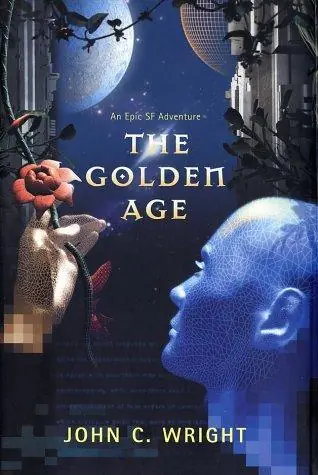 2011–2024
The golden age
John C. Wright
Recommended by 15 · mentioned by 2115 recommend · 21 mention15 recommend · 2115 recommend
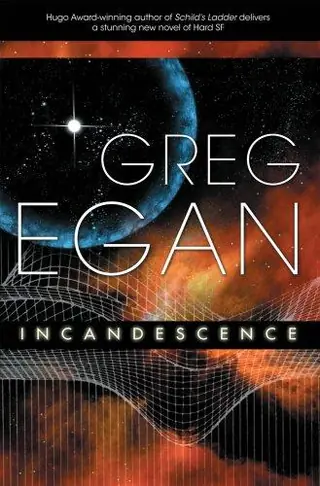 2014–2026
Incandescence
Greg Egan
Recommended by 12 · mentioned by 2212 recommend · 22 mention12 recommend · 2212 recommend
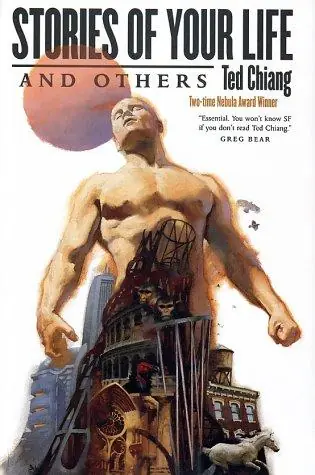 2010–2026
Stories of Your Life and Others
Ted Chiang
Recommended by 66 · mentioned by 8066 recommend · 80 mention66 recommend · 8066 recommend
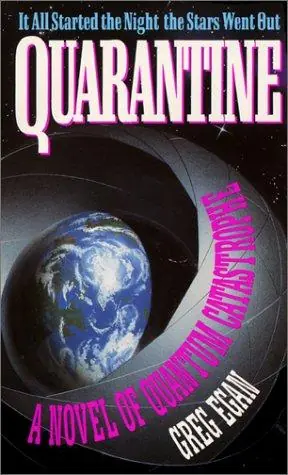 2009–2026
Quarantine
Greg Egan
Recommended by 19 · mentioned by 2619 recommend · 26 mention19 recommend · 2619 recommend
 2008–2026
Diaspora
Greg Egan
Recommended by 131 · mentioned by 184131 recommend · 184 mention131 recommend · 184131 recommend
…cart before the horse, because his brand of end-point transhumanism sorta assumes that we WON'T destroy ourselves through Huxwellian dystopias before getting to that level of technology. Read Egan's Zendegi for a more realistic take for how that technology integration will go down.
on “Much of the rise in autism is likely a statistical mirage” ↗…artificial intelligence is worth the read by itself. Egan's stuff divides evenly into near-future and distant future science fiction; the distant future stuff tends to be very abstract. His latest novel, Zendegi, is a very near-future setting, and coincidentally is a more accessible read than most of his other stuff. I'd recommend it to start with.
on “The Best Science Fiction Books (According to Reddit)” ↗If you like hard sci-fi I'd recommend reading Zendegi by Greg Egan. One of the main plot-lines is about a father creating a digital version of himself to leave for his son when he dies. - https://en.wikipedia.org/wiki/Zendegi - http://www.gregegan.net/ZENDEGI/ZENDEGI.html
on “Project Silica proof-of-concept stores movie on quartz glass” ↗If you haven't already, you need to read as much Greg Egan as you can. His short stories "Learning To Be Me" and "Closer" are as disturbing as they are wonderful, but it's the novel "Zendegi" where Egan really starts to explore the challenges of BCI and actual integration or digitization of a human mind.
on “A soft, wearable brain–machine interface” ↗Also something like this happens in the Greg Egan book Zendegi. It starts off with a anecdote about someone ripping their music files and the issues that arise from the copy (or something along those lines). But definitely an interesting read and one that tackles…
on “A simulation of me: fine-tuning an LLM on 240k text messages” ↗Another book by Greg Egan - "Zendegi" - has more overlap with MMAcevedo. It covers a different approach to mind uploading (possibly) more practical in near future: a generic model of the brain is fine-tuned on responses from a specific human.…
on “MMAcevedo aka Lena by qntm” ↗Zendegi, by Greg Egan, is basically about this.
on “Creating a AI Replica of Myself for My Son to Communicate with After I'm Gone” ↗…original us will eventually die, and the digital version may behave like us but internally is something else (like, not our full memories, or behaving different in different situations, or whatever). Zendegi by Greg Egan a bit touches this approach. But this new reading is about the present, our western capitalistic trends and how most of us is used by them. It is not just about work. And usually we are…
on “"Lena" isn't about uploading” ↗…itch, going further with some of the ideas, and Schild's Ladder is in the same bucket. Distress and Incandescence are both something different, but Incandescence's subtlety took me a while to appreciate. Zendegi ... skip it. It seems to be written with outright disdain to sci-fi fans with weird author tracts and caricatures, and it doesn't really tread new ground otherwise. Is Greg Egan getting sick of the fan…
on “Timeline of the far future” ↗In Greg Egan's[1] latest novel, "Zendegi", the uprising people use cellular handsets reprogrammed into a peer-to-peer mesh network to continue email, messaging, and phone calls when the authorities shut down the cellular towers. The hardware…
on “Three projects to create a government-less Internet, and why it is needed.” ↗This reminded me of a scene from Greg Egan's SF novel, Zendegi. http://gareth-rees.livejournal.com/31182.html You know AcTrack? It's a reality-mining plug-in that learns about academic networking using physical proximity, along with email and calling patterns. Last…
on “The Girls Around Me App Takes Creepy to a New Level” ↗…identity aspects of mind transfer, as well as the financial and computing aspects (i.e. hardware, software, processing power) of maintaining "copies." In Egan's Permutation City (1994), Diaspora (1997) and Zendegi (2010), "copies" are made by computer simulation of scanned brain physiology. See also Egan's "jewelhead" stories, where the mind is transferred from the organic brain to a small, immortal backup computer…
on “Altered Carbon – All the DNA of great science-fiction with some missing links” ↗I'm a big fan of Egan, having read a few of his books and a bunch of short stories. Personally, Zendegi was the weakest of his books by quite a bit. (Still good, just... not great.)
on “Permutation City (1994)” ↗