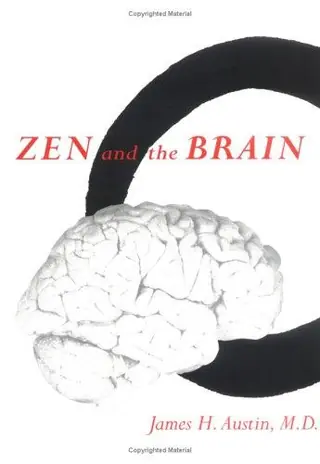
Zen and the Brain
by James H. Austin · first published 1998
80% recommend20% neutral
Why HN recommends it
Connects meditation practice with neuroscience, covering what brain research says about Zen, other meditation forms, and consciousness. Suits readers with a science or medical background.
Summarised by Claude from recommending comments
In this book Zen Buddhism becomes the opening wedge for an extraordinarily wide-ranging exploration of consciousness. In order to understand which brain mechanisms produce Zen states, one needs some understanding of the anatomy, physiology, and chemistry of the brain. Austin, both a neurologist and a Zen practitioner, interweaves the most recent brain research with the personal narrative of his Zen experiences. The science is both inclusive and rigorous; the Zen sections are clear and evocative. Along the way, Austin examines such topics as similar states in other disciplines and religions, s
Affiliate links. As an Amazon Associate I earn from qualifying purchases.
Mentions per year
What Hacker News says
Related books
 2011–2024
Mastering the core teachings of the Buddha
Daniel M. Ingram
Recommended by 21 · mentioned by 2821 recommend · 28 mention21 recommend · 2821 recommend
 2020–2026
Breath
James Nestor
Recommended by 41 · mentioned by 5941 recommend · 59 mention41 recommend · 5941 recommend
 2007–2026
The Man Who Mistook His Wife for a Hat
Oliver Sacks
Recommended by 61 · mentioned by 7761 recommend · 77 mention61 recommend · 7761 recommend
 2015–2026
The mind illuminated
Culadasa John Yates, Matthew Immergut PhD, Sean Runnette, Jeremy Graves
Recommended by 79 · mentioned by 11179 recommend · 111 mention79 recommend · 11179 recommend
 2008–2026
Mindfulness in Plain English
Bhante H. Gunaratana
Recommended by 99 · mentioned by 12299 recommend · 122 mention99 recommend · 12299 recommend
 2007–2026
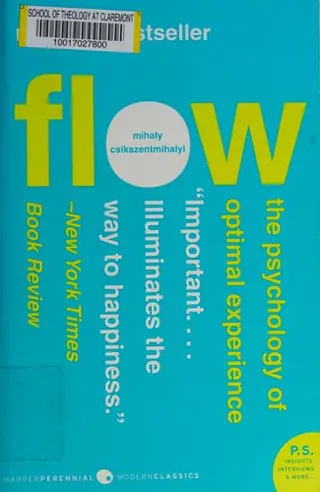
Flow
Mihaly Csikszentmihalyi
Recommended by 68 · mentioned by 12068 recommend · 120 mention68 recommend · 12068 recommend
If you're more interested in the science side, you might like James Austin's Zen and the Brain. It's a bit old, but pretty interesting. For more modern analysis of meditation, the Mind and Life Institute has funded a lot of research, but much of it requires access through a university library,…
on “Blind man shocks researchers with what he sees.” ↗A book suggestion: Zen and the Brain – Toward an Understanding of Meditation and Consciousness By James H. Austin https://mitpress.mit.edu/books/zen-and-brain (Austin is a professor emeritus of neurology, neurologist, researcher, and Zen…
on “A Study of Meditation Under the Influence of Psilocybin” ↗Powerbreathe seems like an unnecessary uni-tasking gadget conforming to western sensibilities. Zen and the Brain by James Austin details his study of Zen monks brains which revealed this breathing-stress connection scientifically decades ago. If I remember correctly, the exhale is especially important to triggering…
on “5-min breathing workout lowers blood pressure as much as exercise, drugs (2021)” ↗…logically, and in stepwise progression. You can learn here: http://www.audiodharma.org/talks-intromed.html If you're interested in empirical studies of samadhi, Dr. James Austin published a book called "Zen and the Brain: Toward an Understanding of Meditation and Consciousness" from MIT press. I hope this helps alleviate your panic and brings you clarity and harmony of mind.
on “Hallucinogens Have Doctors Tuning In Again” ↗…meditation. Walking up to the relevant shelf at Borders, it can look like a bunch of aging hippies and new age woo. Which is normally a big GET AWAY sign for me. One thing I found useful was the book "Zen and the Brain" by Dr. James H. Austin, published by MIT Press. Austin is an emeritus professor of neuroscience, and has been practicing Zen since he spent some time in Japan in the late 60s. The book is a massive,…
on “MRI shows meditation changes brain structure in 8 weeks” ↗Zen and the Brain by James Austin (MIT Press) is also good. The author is an emeritus professor of neuroscience, who started doing Zen during the 60s while he was working in Japan. It's a huge, dense book, about 900 pages.
on “Why Meditation Doesn't Directly Increase Happiness” ↗The classic book on this subject is Zen and the Brain: Toward an Understanding of Meditation and Consciousness by James H. Austin - https://en.wikipedia.org/wiki/Zen_and_the_Brain and https://mitpress.mit.edu/9780262511094/zen-and-the-brain/ and http://www.zenandthebrain.com/…
on “Meditation and Unconscious: A Buddhist Monk and a Neuroscientist (2022)” ↗…to be helpful during a period when I was sitting regularly. I prefer just vipassana, watching the breath and watching thoughts as they arise and fade. No chanting or 'OMMM'. An interesting book is "Zen and the Brain" by an emeritus professor of neurology, published by MIT Press. The author started doing zen while in Japan in the late 60s. Over about 1000 pages, he tries to come up with testable hypotheses explaining…
on “Meditation: Why Bother?” ↗For those interested in the science/medical side of things: * "Zen and the Brain" (written by a meditation practising neurologist) * "The Buddha Brain" (about the neurological/physiological background of a couple of buddhist principles)
on “100 Days of Meditation” ↗…contentment and appreciation of the simple fact of just being. There's a podcast that talks about these things, for example this episode: https://deconstructingyourself.com/dy-014-diving-deep-jhanas... Zen and the Brain is a good book on the connections with neuroscience.
on “How can you make subjective time go slower?” ↗…For example, see Thomas Metzinger's latest research on these kind of states presented here: https://www.youtube.com/watch?v=8f4ykI9har8 (and in the followup video) Another good resource is the book "Zen and the Brain". And this interview with Daniel Ingram mentions some fascinating research on his own capacities developed in meditation: https://www.youtube.com/watch?v=APOKB59pVpE
on “How scientists are bringing advanced meditation out of the monastery” ↗…meditation allows this midway state filled with mental scenarios coming to surface at lower focus level. The condition is best described here(the focusing and persistence of hypnagogic process): "In his book, Zen and the Brain, James H. Austin cites speculation that regular meditation develops a specialized skill of "freezing the hypnagogic process at later and later stages" of the onset of sleep, initially in the alpha wave…
on “There’s a dark side to meditation that no one talks about” ↗…called A Physiological Handbook for Teachers of Yogasana) with a huge reference section of research papers from various journals. Another example; the neuroscientist James Austin wrote a mammoth book Zen and the Brain: Toward an Understanding of Meditation and Consciousness where he tried to map his knowledge of neuroscience to his experiences from Zen meditation practice. Empirical practices which have survived for…
on “Altered states of consciousness induced by breathwork accompanied by music” ↗Current: Zen and the Brain Previous: Gödel, Escher, Bach (still working on that one, actually)
on “Ask HN: What was the latest book you read? ” ↗