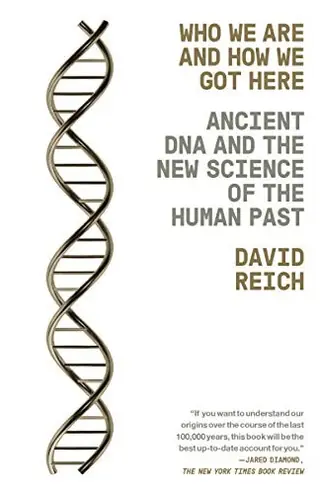
Who we are and how we got here
by David Reich · first published 2018
76% recommend21% neutral3% critical
Why HN recommends it
Up-to-date popular overview of what ancient DNA reveals about human migrations, mixing with Neanderthals and Denisovans, Indo-European origins, and caste endogamy; suits readers curious about population history.
Summarised by Claude from recommending comments
"A groundbreaking book about how technological advances in genomics and the extraction of ancient DNA have profoundly changed our understanding of human prehistory while resolving many long-standing controversies. Massive technological innovations now allow scientists to extract and analyze ancient DNA as never before, and it has become clear--in part from David Reich's own contributions to the field--that genomics is as important a means of understanding the human past as archeology, linguistics, and the written word. Now, in The New Science of the Human Past, Reich describes with unprecedent
Affiliate links. As an Amazon Associate I earn from qualifying purchases.
Mentions per year
What Hacker News says
Related books
 2015–2026
The Human Past
Christopher Scarre, Chris Scarre
Recommended by 5 · mentioned by 55 recommend · 5 mention5 recommend · 55 recommend
 2014–2025
Neanderthal Man
Svante Pääbo
Recommended by 3 · mentioned by 63 recommend · 6 mention3 recommend · 63 recommend
 2022–2025
Upgrade
Blake Crouch
Recommended by 5 · mentioned by 85 recommend · 8 mention5 recommend · 85 recommend
 2019–2026
Say Nothing
Patrick Radden Keefe, Ariel Font Prades
Recommended by 9 · mentioned by 109 recommend · 10 mention9 recommend · 109 recommend
 2013–2022
The beak of the finch
Jonathan Weiner
Recommended by 5 · mentioned by 85 recommend · 8 mention5 recommend · 85 recommend
 2020–2025
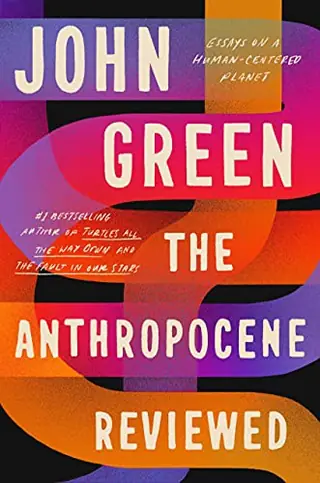
The Anthropocene Reviewed
John Green
Recommended by 5 · mentioned by 85 recommend · 8 mention5 recommend · 85 recommend
 2017–2026
7 Powers
Hamilton Helmer
Recommended by 5 · mentioned by 105 recommend · 10 mention5 recommend · 105 recommend
 2022–2026
The Man from the Future
Ananyo Bhattacharya
Recommended by 16 · mentioned by 2116 recommend · 21 mention16 recommend · 2116 recommend
If anyone wants to understand the huge impact paleogenomics is having on writing human history a very good book is "Who We Are and How We Got Here" by David Reich. It describes the seminal work of Dr. Paabos and many others. The main focus are the 3 big migrations of hominids to Europe (early nomadic settlers, farmers from Anatolia and the corded…
on “Svante Pääbo awarded Nobel Prize for studies of extinct human ancestors” ↗…gene pool (likely) - Did homo sapiens who left Africa encounter and breed with other hominin species? (definitely, and those other species also originated in Africa) David Reich's book from last year, "Who We Are and How We Got Here", covers a lot of the recent discoveries.
on “New human species found in Philippines” ↗I recommend the above too and add David Reich’s “Who we are and how we got here” which speaks to aspects of human biology and migration through genetics. https://www.goodreads.com/book/show/35749414-who-we-are-and-...
on “Lidar reveals pre-Hispanic low-density urbanism in the Bolivian Amazon” ↗…recognize bits of this story, but it quickly gets out of control in novel ways. Astonishing story. What Money Can't Buy: The Moral Limits of Markets by Michel Sandel The Attention Merchants by Tim Wu Who we are and how we got here by David Reich: ancient DNA and human history The Book of Why by Judea Pearl; liked it but I need to reread this one a few more times to comprehend completely or go to his textbooks Empire of Cotton:…
on “Ask HN: Favorite nonfiction books of 2018?” ↗As a recent reader of Reich's book "Who We Are and How We Got Here" I concur that he explicitly and forcefully refutes the notion of racial or ethnic categories as having any meaning over the lifetime of our species. Simply put, humans have migrated a lot and interbred…
on “Letter in Response to Jan. 17 Article in The New York Times” ↗If this kind of stuff interests you, "Who We Are and How We Got Here: Ancient DNA and the New Science of the Human Past" by David Reich is interesting and very up to date. https://www.goodreads.com/book/show/35749414-who-we-are-and-...
on “Indonesia’s Ancient ‘Hobbits’ May Have Evolved Quickly” ↗Recommended reading David Reich: Who We Are and How We Got Here. This was my second exposition, in general, to ancient DNA. The first was several papers which have invalidated everything we knew or thought we knew of Hungarian prehistory. But, as A Brief History of…
on “Three kinds of early humans unearthed living together in South Africa” ↗The excellent Who We Are And How We Got Here book by David Reich among many other interesting details mentions Neanderthal and modern humans mixing.
on “Siberian cave hosted Neanderthals, Denisovans, and modern humans” ↗For those interested in genetic analysis of human evolution I highly recommend David Reich - Who We Are and How We Got Here. It is really a fantastic book.
on “Philippine ethnic group has most Denisovan DNA” ↗…humans (Neanderthals, Denisovarians, etc). It also shows that the migratory currents had a lot of details that we barely got to understand. To understand Dr. Paabo's (and others) work, I suggested above "Who We Are and How We Got Here" by David Reich. Read it. It is easy reading. If you liked Sapiens I guarantee you will like that book too.
on “Svante Pääbo awarded Nobel Prize for studies of extinct human ancestors” ↗…everything in Chapter 11 ("The Genomics of Race and Identity," pp. 247-273) is well worth the read. [0] https://www.nytimes.com/2018/03/23/opinion/sunday/genetics-r... [1] https://sackett.net/reich_who_we_are_and_how_we_got_here.pdf
on “Landmark ancient-genome study shows surprise acceleration of human evolution” ↗If you're interested in the ancient DNA, I highly recommend "Who We Are and How We Got Here: Ancient DNA and the New Science of the Human Past" by David Reich.
on “Rethinking our human origins in Africa” ↗I also recommend the book Who We Are and How We Got Here by geneticist David Reich, whose group made a lot of these DNA-based discoveries in population genetics and ancient human migrations.
on “The population history of northeastern Siberia since the Pleistocene” ↗As I noted elsewhere in this thread: read David Reich's Who We Are and How We Got Here. To quote: > The Han Chinese are truly a large population. They have been mixing freely for thousands of years. In contrast, there are few if any Indian groups that are demographically very large, and…
on “Comparative genetic analysis of 2019-nCoV receptor ACE2 in different populations” ↗You may David Reich’s book “Who We Are and How We Got Here” interesting. One of the assertions is that while modern Europeans have some Neanderthal genes, the Neanderthal population is one from Asia, not Europe. I “read” it by checking the audiobook out from…
on “More evidence that Neanderthals were ‘absorbed’ by humans, not wiped out” ↗